


Skip to content

NOVA Acoustics

Visit Songbird Acoustic Panels

Do I Need a Noise at Work Risk Assessment or a Noise Survey? (UK Employer Guide)

Do I need a noise at work risk assessment or a noise survey?
If workers may be exposed to harmful noise (around 80 dB(A) or above), UK law requires a noise at work risk assessment. If exposure cannot be confidently estimated, a noise survey with measurements is required

Adam Martin

8 January 2026

Categories:

Noise at Work, Risk Assessments, Noise Surveys

Article

Quick take

These are not alternatives. Where work is liable to expose employees to noise at or above 80 dB(A) (daily or weekly personal exposure) or a 135 dB(C) peak, the Control of Noise at Work Regulations 2005 require a suitable and sufficient noise risk assessment. A noise survey is the measurement that feeds into it. The Regulations call for measurement “if necessary”, and in our experience it usually is wherever machinery, power tools or sustained loud noise are part of the working day. A simple HSE check: if people have to raise their voices to talk normally about 2 metres apart for part of the day, look properly.

The short answer

“Risk assessment or survey?” is a false choice. The risk assessment is the legal duty: your recorded judgement about who is exposed to noise, how much, for how long, and what you will do about it. The survey is one way of gathering the information that judgement depends on, and usually the most reliable one. In most noisy workplaces you end up with both.

Regulation 5 of the Control of Noise at Work Regulations 2005 requires an employer whose work is liable to expose employees at or above a lower exposure action value to make a suitable and sufficient assessment of the risk. That assessment should draw on observation of working practices, relevant information on probable noise levels and, if necessary, measurement. HSE’s guidance, L108, explains how to apply this in practice. The stakes are real: noise-induced hearing loss is permanent, and it develops slowly enough that people rarely notice it until the damage is done.

Our noise at work overview covers the basics. This article is Part 1 of a three-part series:

For the full step-by-step process of conducting a noise risk assessment, including documentation and review requirements, see our complete noise risk assessment guide.

Risk assessment vs noise survey: the difference in one minute

A noise risk assessment decides. It identifies the noise sources, who is exposed and for how long, whether exposure is likely to reach the action values, and which controls are needed. The Regulations require you to record its significant findings and the measures you are taking.

A noise survey measures. Using calibrated sound level meters and, where exposure varies through the day, personal noise dosemeters, it produces daily personal noise exposure (LEP,d) and peak sound pressure (LCpeak) figures for the roles and tasks assessed.

The assessment tells the survey what to measure. The survey gives the assessment numbers it can stand on.

For a full explanation of what a workplace noise survey measures, how dB(A) and dB(C) results are expressed, and how to read them against the UK action values, see our guide to workplace noise surveys.

Which do you need? A decision matrix

Work through these four questions in order. Most employers reach a clear answer by question 3.

Question 1: Is there any workplace noise that could plausibly be harmful?

If the answer is clearly no (a quiet office with no machinery, no plant nearby and no significant noise coming in from outside), the specific assessment duty in the Noise at Work Regulations is not triggered. Noise still falls within the general risk assessment duty under the Management of Health and Safety at Work Regulations 1999, so our recommendation is to record that you considered it and why you concluded the risk is low. You do not need a survey, but revisit the decision if conditions change.

If the answer is yes, or you are not sure, carry on.

Question 2: Can you show, without measuring, that exposure stays below 80 dB(A)?

Sometimes you can. Evidence that may be good enough includes:

  • manufacturer noise emission data for the specific equipment, used the way you actually use it (declared values are measured under test conditions and can differ a lot from real use)

  • published noise data for comparable tasks that genuinely match your setup

  • a previous survey that still reflects current equipment, layout and working patterns

HSE’s noise exposure calculator can turn reliable levels and durations into an estimated daily exposure. If the evidence clearly puts exposure below 80 dB(A), you can complete the assessment without a new survey; write down what the conclusion rests on.

In our experience this is the exception. Levels shift with task, location and duration, and most sites with real noise sources don’t have data good enough to settle the question. If you can’t show it, measure it.

Question 3: Are any of the warning signs present?

  • People have to raise their voices to hold a normal conversation about 2 metres apart for at least part of the day (HSE’s rule of thumb that noise may be at or above 80 dB(A))

  • Noisy powered tools, machinery or plant are used for a meaningful part of the day

  • There is impact or impulsive noise, such as hammering, pressing, stamping or drop forging

  • Hearing protection is already handed out, even informally

  • Workers report ringing ears or dulled hearing after a shift

  • Machinery, layout or production rates have changed since the last assessment

If any one of these applies, our advice is to commission a survey.

Question 4: Does someone else need to see the evidence?

An HSE inspector, insurer, ISO 45001 auditor, tender or client audit may want to see how you reached your conclusion. In our experience, where exposure could be near the action values, they usually expect measured data.

For most workplaces with machinery or sustained noise, the answer comes out the same: you need both, and the survey is what lets you finish the assessment with confidence.

Situation

Risk assessment needed?

Survey needed?

Typical next step

Clearly quiet workplace (office, no plant or noisy equipment)

No specific Noise at Work assessment; consider noise in your general risk assessment

No

Record why risk is low; review if things change

Low noise, but you are not sure

Yes, if exposure could reach 80 dB(A)

Only if existing data can’t settle it

Check equipment data or use HSE’s calculator; measure if still uncertain

Machinery, power tools or plant in regular use

Yes

Usually

Commission a survey to complete the assessment

Hearing protection already issued

Yes

Usually

Survey to confirm exposure and check the protection is suitable

Equipment, layout or production has changed

Review the existing assessment

Usually, for the affected areas or roles

Re-measure where conditions changed

Evidence needed for HSE, insurers, audits or tenders

Yes

Usually, where exposure may approach the action values

Survey with a written report

If the decision points to a survey, our team can scope it quickly and give you a proportionate, no-obligation quote. Where exposures are high, variable or difficult to characterise, working with qualified acoustic consultants gives you greater confidence in the result.

Book a noise at work survey

Real-world scenarios by sector

These are the patterns we see most often.

Manufacturing and engineering workshops

Several sources running at once, with levels that change by task and location. Estimates alone are rarely reliable, so a survey is almost always part of the assessment.

Construction and demolition

Mobile plant, breakers, impact noise and a site that changes week to week. A survey is normally needed, and task-based measurement or personal dosimetry usually gives a truer picture than fixed-position readings.

Warehousing and logistics

Often assumed to be quiet, and much of the floor may be. But forklifts, conveyors and reversing alarms can push exposure up for particular roles, so a survey is likely for those roles even if the rest of the site needs nothing more.

Food and drink production

Packaging lines, compressors, washdown areas and hard, reflective rooms all add up, and a survey is commonly needed. Our occupational noise survey for PepsiCo International shows how this works on a large, multi-area site.

Hospitality kitchens and busy bars

Easy to overlook. Extraction, dishwashing and sustained crowd or music noise can bring staff exposure close to the action values over a long shift. A survey makes sense where any of the warning signs above apply.

Woodworking and joinery

Saws, planers, routers and extraction are among the noisier workshop equipment, and in our experience exposure at or above the action values is common. Plan on a survey.

Offices and professional services

Usually low risk. A short recorded note that noise was considered and found to be low is typically enough, with no survey, unless there is a specific source such as a server room, a plant room or noisy neighbouring premises.

Entertainment and live music venues

The Regulations have applied to the music and entertainment sectors since 2008. Bar staff, security and technical crew can be exposed to high levels for hours, so a survey is needed, covering both peak levels and exposure across a shift.
Do you usually need both?

For most workplaces with real noise sources, yes. The survey gives you measured exposure data, and the assessment turns it into decisions: which roles are affected, what controls to put in place, and who needs hearing protection, training or health surveillance. They are two stages of one job and are usually delivered together.

A survey may not be needed in genuinely quiet workplaces, or where solid existing data still matches current conditions. Treat that as the exception, not the starting assumption. And a survey doesn’t have to be a large or expensive exercise: scope should follow risk.

Why "we think it's fine" is not enough

Many employers believe they are compliant because:

  • hearing protection is available

  • no one has complained

  • the noise has always been there

  • exposure is probably below the limits

None of these tells you what anyone’s exposure actually is. Hearing damage builds slowly and without pain, so a lack of complaints says very little, and making hearing protection available suggests someone already suspects a problem. If you cannot explain how you know exposure is below the action values, the honest answer to “do I need a survey?” is yes.

For everything the Noise at Work Regulations require beyond deciding on a survey, including controls, training and health surveillance, see our HSE L108 compliance checklist.

What happens when you commission a survey

Scoping. A short conversation about your sites, roles, shifts and noise sources so we can size the work. If it shows a survey isn’t needed, we will tell you.

On site. We measure during normal work, use personal dosimetry where exposure varies, and measure peak levels wherever there is impact noise. Most sites take half a day to a full day; multi-area or multi-shift operations take longer.

The report. Exposure levels by role or task, comparison with the action values, a plain-English risk summary and practical control recommendations. It gives you a clear record if an inspector, insurer or auditor asks how you reached your conclusions.

Afterwards. We can help with noise control at source, hearing protection selection and follow-up measurements to check that controls are working.

Tell us about your site and we will confirm whether you need a survey, a risk assessment, or both, and scope it accordingly.

Get in touch

Why choose NOVA Acoustics

Deciding whether you need a survey is the easy part. What matters is an assessment and survey done well enough to protect your workers and hold up when someone asks questions.

Qualified acoustic consultants. Our team includes Institute of Acoustics members with experience across manufacturing, construction, food production, hospitality and entertainment.

Class 1 measurement equipment. We use Class 1 sound level meters and personal noise dosemeters, with calibration checks before and after every session recorded in the report.

Honest scoping. If you don’t need a survey, we will say so.

National coverage. Offices in Leeds, Manchester, London, Birmingham, Nottingham, Liverpool, Cambridge and Newcastle, so we can mobilise quickly when an inspection puts you on a deadline.

UKAS accredited. NOVA Acoustics is a UKAS accredited testing laboratory (No. 8568) for sound insulation testing.

Talk to our team about your workplace. We will confirm what you need and provide a no-obligation quote.

NOVA Acoustics delivers workplace noise surveys nationwide, including:

• Manchester
• Leeds
• Newcastle
• Nottingham
• Sheffield
• Cambridge
• London & Home Counties
• Hull & East Yorkshire
• Birmingham
• Bristol
• Liverpool 

If you are searching for acoustic consultants near you who understand HSE expectations and real-world workplaces, NOVA Acoustics can help.

Get in touch

Frequently asked questions

Do I need a noise risk assessment, a noise survey, or both?

In most workplaces with real noise sources, both. Where work is liable to expose employees at or above the lower exposure action values, the Regulations require a risk assessment, and the survey lets you complete it with confidence. You can skip the survey where reliable existing information clearly shows exposure stays below 80 dB(A). Where it doesn’t, our advice is to measure.

When is a noise survey legally required?

The Regulations don’t use the word “survey”. They require a risk assessment where work is liable to expose employees at or above 80 dB(A) daily or weekly, or 135 dB(C) peak, including measurement if necessary. In our view, measurement is necessary when observation and existing information can’t tell you with reasonable confidence where exposure sits against the action values, which is the case in most workplaces with machinery or sustained noise.

Can I do a noise risk assessment myself without a survey?

For genuinely low-noise workplaces, often yes: a competent person can record that exposure is clearly below the action values and why. The Regulations don’t require an external consultant. Where exposures are high, variable or difficult to characterise, measured data and a suitably qualified acoustic consultant can give you greater confidence in the result.

How do I know if my workplace is loud enough to need a survey?

Start with HSE’s rule of thumb: if people have to raise their voices to talk normally about 2 metres apart for at least part of the day, noise may be at or above 80 dB(A). The other warning signs in the decision matrix above apply too.

How much does a noise at work survey cost?

It depends on site size, the number of noisy tasks and whether personal dosimetry is needed. We quote in proportion to the risk, so a small single-site job isn’t priced like a multi-shift industrial one.

How long does a workplace noise survey take?

Most surveys take between half a day and a full day on site. Multi-area or multi-shift operations take longer, which we account for when scoping.

We already give out hearing protection. Do we still need an assessment?

Almost certainly. Handing out hearing protection suggests someone already thinks exposure may reach the action values, which is where the Regulations require an assessment. Hearing protection also isn’t the first line of defence: the Regulations require you to reduce exposure by other means so far as is reasonably practicable. An assessment tells you whether your protection is suitable and what else you should be doing.

Can you help if HSE is already involved?

Yes. We regularly support employers responding to inspections, improvement notices and compliance queries, and can mobilise quickly.

Summary

“Risk assessment or survey?” is usually a false choice. Where work is liable to expose employees at or above the lower action values, the Regulations require a risk assessment, and in most workplaces with real noise sources a survey is what lets it reach a conclusion you can stand behind.

Deciding whether you need one comes down to a single test: can you show, without measuring, that exposure stays below 80 dB(A)? If you can, record how you know. If you can’t, or if any of the warning signs apply (raised voices at 2 metres, noisy tools, impact noise, hearing protection already in use), measure.

NOVA Acoustics scopes this work in proportion to the risk and tells you honestly when a survey isn’t needed. Whether you need a survey, a risk assessment, or both, NOVA Acoustics can confirm what is required and handle it end to end.

Book a noise at work survey | Contact your nearest NOVA team

Sources

Recent posts

Permitted development does not remove Building Regulations duties. This guide explains which acoustic requirements loft conversions, extensions and changes of use trigger, and when testing or a noise assessment is needed.

A Construction Noise Management Plan (CNMP) sets out how a construction project will identify, assess and control the noise and vibration affecting nearby sensitive receptors: residents, schools, healthcare facilities and businesses. CNMPs are usually required as a planning condition on major projects, as part of a Section 61 consent application, or as a procurement requirement from developers and clients.

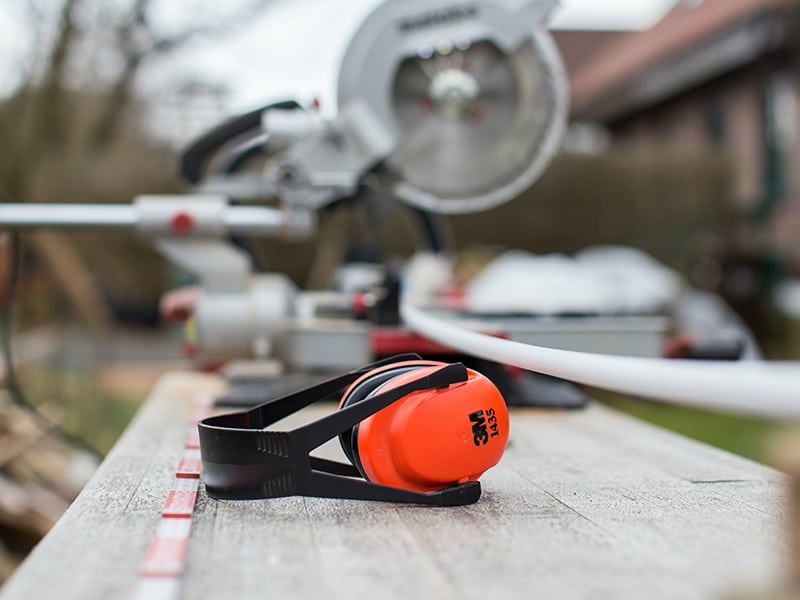
Image of saw and ear protectors, illustrating the importance of workplace noise risk assessments and compliance with the Control of Noise at Work Regulations 2005 by NOVA Acoustics.

In recent years, the knowledge that noise at work can cause permanent and disabling hearing damage has impacted the design and construction of workplaces in the UK, especially those where manufacturing processes are part of the day-to-day activity.