




Permitted development does not remove Building Regulations duties. This guide explains which acoustic requirements loft conversions, extensions and changes of use trigger, and when testing or a noise assessment is needed.






A Construction Noise Management Plan (CNMP) sets out how a construction project will identify, assess and control the noise and vibration affecting nearby sensitive receptors: residents, schools, healthcare facilities and businesses. CNMPs are usually required as a planning condition on major projects, as part of a Section 61 consent application, or as a procurement requirement from developers and clients.
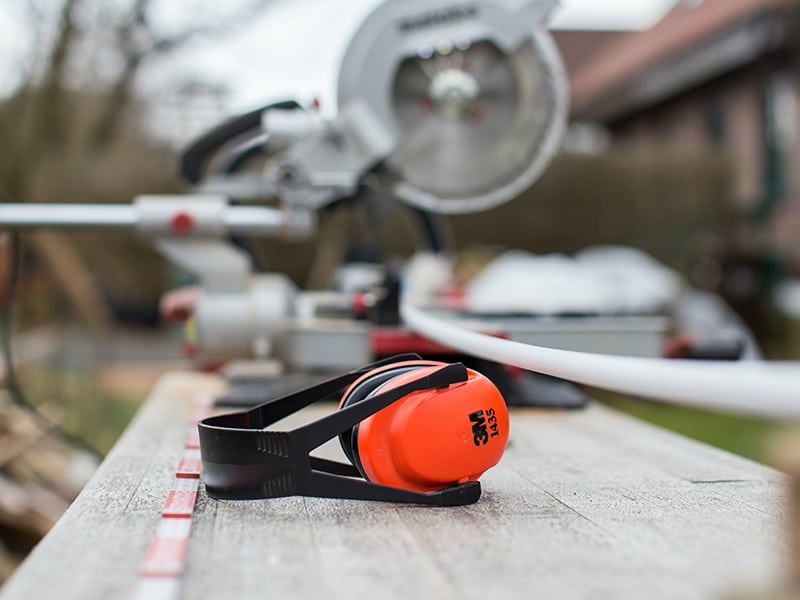
In recent years, the knowledge that noise at work can cause permanent and disabling hearing damage has impacted the design and construction of workplaces in the UK, especially those where manufacturing processes are part of the day-to-day activity.

How do I comply with the Noise at Work Regulations? To comply with the Noise at Work Regulations, employers must assess noise exposure, reduce noise at source where reasonably practicable, manage remaining risk with organisational controls and hearing

Swift by Songbird is a 40mm fabric-wrapped acoustic panel with a self-adhesive backing. No drilling, no fixings, no installer required: peel, position, and press. It achieves Class A sound absorption, the highest performance classification

ProPG (Professional Practice Guidance on Planning and Noise) is a 2017 document published jointly by the Association of Noise Consultants, the Institute of Acoustics, and the Chartered Institute of Environmental Health to guide acoustic professionals
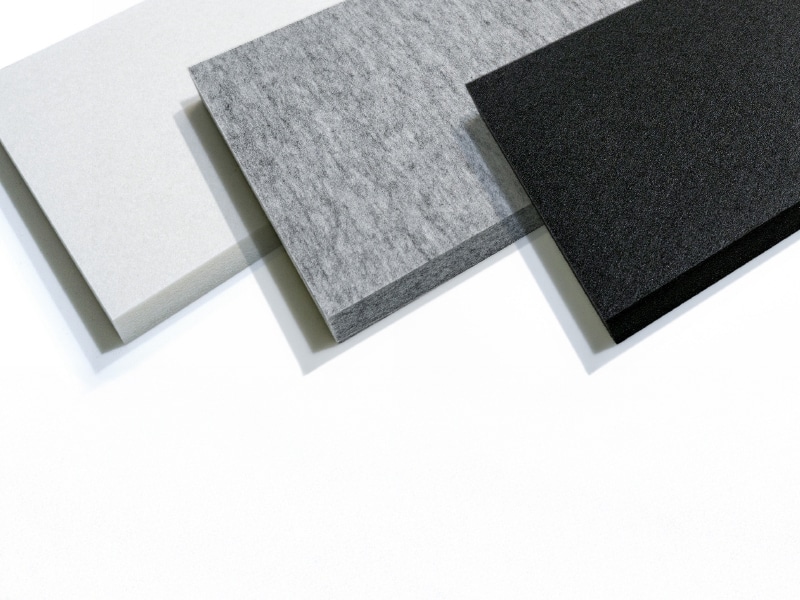
Acoustic panels are rarely on the shortlist when sustainability teams review a fit-out's environmental credentials, but they should be. Conventional acoustic foam is petroleum derived, carries significant embodied carbon, and cannot be recycled at end of life.

Pre-completion sound testing is the on-site acoustic measurement required to demonstrate that a new residential building or conversion meets Part E of the Building Regulations before it can be occupied. Tests measure airborne sound insulation (through

The National Planning Policy Framework requires planning authorities in England to consider noise as a material planning consideration. It does not set noise limits. Instead, it establishes the policy principles that govern when noise assessments are required, how significance is determined, and

BS8233:2014 is the British Standard used to assess whether residential development near roads, railways, or other noise sources can achieve acceptable internal and external noise levels for future occupants. It sets out criteria for bedrooms, living rooms, and gardens

Open plan office acoustics comes down to three things: controlling reverberation so speech is clear, managing background noise so people can concentrate, and achieving speech privacy so conversations do not travel. The key targets for open plan offices are a reverberation time
Part E of the Building Regulations sets minimum sound insulation standards for new residential buildings and dwellings created through material change of use. Compliance is demonstrated through pre-completion sound testing, an on-site

BS 4142 is the British Standard used to assess the impact of industrial and commercial noise on nearby sensitive premises. It works by comparing the rating level of a specific noise source (adjusted for acoustic character)

A noise impact assessment (NIA) is a technical report submitted as part of a planning application to demonstrate that a proposed development will not cause unacceptable noise. You will typically need one if your development is near a

Acoustic panels reduce echo, reverberation, and noise build-up within a room by absorbing sound. They do not block sound between rooms. The right panel depends on five things: the material (polyester fibre or fabric-wrapped), the thickness, how it will be

Rw is a laboratory-measured sound reduction index that tells you how well a partition performs under ideal, controlled conditions. DnT,w is the equivalent measured on-site, accounting for real-world variables like flanking transmission, room geometry, and

What does a workplace noise survey measure? A workplace noise survey measures average noise exposure over time (dB(A)) and peak or impact noise (dB(C)) to determine whether workers exceed UK legal action values under the Control of Noise at Work
Do I need a noise at work risk assessment or a noise survey? If workers may be exposed to harmful noise (around 80 dB(A) or above), UK law requires a noise at work risk assessment. If exposure cannot be confidently estimated, a noise survey with measurements is required