








Permitted development does not remove Building Regulations duties. This guide explains which acoustic requirements loft conversions, extensions and changes of use trigger, and when testing or a noise assessment is needed.
- 8 Minute Read
Noise at Work Compliance Checklist: HSE L108 Explained (UK Employers’ Guide)
How do I comply with the Noise at Work Regulations? To comply with the Noise at Work Regulations, employers must assess noise exposure, reduce noise at source where reasonably practicable, manage remaining risk with organisational controls and hearing

Adam Martin
17 September 2026
Categories:
Noise at Work, HSE Compliance, Hearing Protection
Quick take
To comply with the Control of Noise at Work Regulations 2005, employers must do eight things: assess noise exposure for everyone who may be at risk; reduce noise at source where reasonably practicable; use organisational controls to limit how long people are exposed; provide and enforce suitable hearing protection where risk remains; set up hearing protection zones; train workers on the risks and controls; run health surveillance where it applies; and keep records of all of it. HSE L108 is the guidance document that explains how to meet each duty. Relying on hearing protection alone, with no evidence of assessment, source reduction, or training, is a common compliance failure.
What compliance actually means in practice
Noise at work compliance is widely misunderstood. Employers often assume they are compliant because hearing protection is available, because nobody has complained, or because the noise has always been part of the job.
None of those hold up to scrutiny. From HSE’s point of view, compliance is not about intent. It is about evidence, control, and prevention. Hearing damage is permanent, and once it happens it cannot be reversed. HSE’s own figures put the scale of the problem in context: around 17,000 people in the UK have deafness, tinnitus, or other ear conditions caused or made worse by noise at work, and the damage is almost always preventable. Our guide to avoiding noise-induced hearing loss covers why that matters for the people on your floor.
Enforcement is real. L108 is not guidance in the soft, optional sense; it accompanies statutory regulations. Employers who cannot demonstrate compliance can face improvement notices, prohibition notices, and prosecution. HSE publishes enforcement notices on its website, so the reputational cost lands even where there is no court case.
The part that catches employers out is where the burden of proof sits. HSE does not have to prove that anyone was harmed. It only has to establish that duties were not met. An employer who has not assessed exposure, cannot evidence any control measures, and has no training records is in a weak position at inspection, whether or not a single worker has actually lost any hearing.
This is Part 3 of our noise at work series. Part 1 covers whether you need a noise risk assessment or a noise survey, Part 2 covers how to read workplace noise survey results, and this one turns results into action. If you want the broader picture of employer duties first, our employer’s guide to managing workplace noise sets the scene.
If you have not yet assessed noise exposure in your workplace, that is the first step, and nothing else can be judged without it. NOVA Acoustics provides HSE-aligned workplace noise surveys across the UK.
The legal framework: the Regulations and HSE L108
The Control of Noise at Work Regulations 2005
The Regulations brought the EU Physical Agents (Noise) Directive (2003/10/EC) into UK law and came into force for most sectors in April 2006. After Brexit they remain in force as retained law, so nothing about your duties has lapsed.
They apply everywhere in Great Britain where workers may be exposed to noise that risks their hearing: construction, manufacturing, entertainment, agriculture, and any office or service environment where noise is significant. The duties they place on employers cover risk assessment, noise reduction, hearing protection, hearing protection zones, information and training, and health surveillance. Which specific duties apply depends on the exposure levels, set out in the action values in the next section. The Control of Noise at Work Regulations standards page in our technical hub gives the regulatory detail.
HSE L108: Controlling noise at work
L108 is the guidance document that accompanies the Regulations, now in its third edition (published 2021). The update kept HSE’s noise policy the same and made only minor changes to the regulatory wording; the emphasis stays firmly on controlling and managing risk rather than papering over it with PPE.
L108 is the practical reference for both employers and HSE inspectors. Knowing what it says, and being able to show that your programme lines up with it, is the foundation of a defensible position. Where an employer chooses not to follow the approach in the guidance, they need to be able to show they have controlled the risk in a way that is at least as effective.
Who is covered
The duties reach further than your direct employees. They cover all employees exposed to noise as part of their work, self-employed workers (who count as both employer and employee), and contractors and agency workers on your premises, whose exposure is the responsibility of the business that controls the workplace. Young workers and anyone with a pre-existing hearing condition may need extra consideration, and L108 gives specific guidance on both.
The action values and exposure limit value
This is the most looked-up piece of information on the whole topic, so it is worth getting precise.
Two kinds of measurement matter. Daily personal noise exposure (written LEP,d or LEX,8h) is the dose a worker takes over an eight-hour day, combining how loud the noise is with how long it lasts. It is time-averaged, so two hours at 88 dB(A) works out the same as eight hours at 82 dB(A). Most noise surveys report exposure this way. Peak sound pressure (LCpeak) is the instantaneous peak of a single noise event, which matters for impulsive and impact noise such as hammering or cartridge tools, and it is measured in dB(C) rather than dB(A).

Here are the three tiers:
Value | Daily exposure (LEP,d) | Peak (LCpeak) |
Lower Exposure Action Value (LEAV) | 80 dB(A) | 135 dB(C) |
Upper Exposure Action Value (UEAV) | 85 dB(A) | 137 dB(C) |
Exposure Limit Value (ELV) | 87 dB(A) | 140 dB(C) |
One distinction trips people up. The action values are based on a worker’s exposure before hearing protection is taken into account. The exposure limit value is different: it is the level a worker must not actually be exposed to after the attenuation from their hearing protection is applied. In other words, protection counts towards the limit value but not towards the action values.
At or above the Lower Exposure Action Value (80 dB(A) / 135 dB(C)) you must: provide information and training; make hearing protection available on request; provide health surveillance for those at risk; and assess the risk and consider controls.
At or above the Upper Exposure Action Value (85 dB(A) / 137 dB(C)) you must: put in place a planned programme of noise control; establish hearing protection zones; ensure hearing protection is worn, which now becomes mandatory rather than optional; and provide health surveillance.
The Exposure Limit Value (87 dB(A) / 140 dB(C)) must never be exceeded. This is an absolute ceiling. No worker may be exposed above it once their hearing protection is accounted for, and exceeding it is the most clear-cut regulatory breach there is, and the easiest basis for enforcement.
One practical note: where a worker’s daily noise varies a lot from day to day, exposure can be averaged over a week (LEP,w) instead. That is a judgement worth confirming with an acoustic consultant, because it is easy to average away a genuinely high-exposure day.
Not sure whether your workers exceed the action values? A professional noise survey is the only reliable way to establish exposure. NOVA Acoustics provides HSE-aligned noise surveys with clear, actionable results.
What HSE means by compliance: the evidence standard
HSE compliance comes down to one principle: prevent hearing damage so far as reasonably practicable, and be able to demonstrate that you have done so. Paperwork on its own is not enough, and neither is good informal practice with nothing written down. Inspectors look for four kinds of evidence.
Evidence of assessment means a written noise risk assessment covering everyone at risk, dated, signed, and reviewed. A verbal acknowledgement that the place is loud does not count.
Evidence of control means documented control measures: engineering changes, maintenance records, process changes, and, importantly, the reasoning behind what was and was not done. If a control was ruled out as not reasonably practicable, HSE wants to see why.
Evidence of training means dated records with the names of who attended, what was covered, and who delivered it. Inspectors ask for these directly.
Evidence of review means a real programme triggered by changes to equipment, layout, or work patterns, not a vague promise to look at it again “periodically.”
That phrase, “reasonably practicable,” does a lot of work in the Regulations. It is a legal test that weighs the cost and difficulty of a control against the risk it removes. It is not a licence to do nothing because a control is inconvenient or expensive. It asks whether the control is achievable at a proportionate cost, and if it is, the expectation is that you do it.
The compliance checklist, step by step

Step 1: Confirm whether exposure exceeds the action values
Everything else depends on this. You cannot make sensible decisions about control or protection until you know where workers sit against the action values.
There are two tools, and they are not the same thing. A noise risk assessment identifies who may be at risk and broadly estimates exposure. A noise survey produces measured data using calibrated equipment. Often you need both: the assessment to scope the problem, the survey to pin down the numbers. A desk-study risk assessment can be enough where exposure is clearly low or clearly high, but the moment there is genuine doubt about whether workers cross the Lower Exposure Action Value, you need measurement.
The employer or a competent person can carry out the assessment. Where exposures are high, variable or difficult to characterise, using a suitably qualified acoustic consultant can provide greater confidence that exposure has been assessed correctly.
What HSE wants to see is a written, dated noise risk assessment that names the noise sources, identifies who is exposed, and gives the estimated or measured levels. The common failure here is skipping straight to buying ear defenders without ever establishing the numbers, which leaves every later decision as guesswork.
Unsure whether you need a full survey or whether a risk assessment is enough? Our guide on risk assessment versus noise survey covers the distinction in detail.
Step 2: Reduce noise at source
L108 is unambiguous: reducing noise at source comes first, before you reach for protection. The noise regulations follow the same hierarchy of controls as general risk management: eliminate the noise, substitute a quieter process, apply engineering controls, apply organisational controls, and only then rely on PPE. Hearing protection sits at the bottom for a reason.
The measures that do the most work, with the reasoning behind each:
Quieter machinery procurement is the most cost-effective control available, because it is far cheaper to buy quiet than to silence something loud after the fact. Specify maximum noise emission levels in purchase contracts; most manufacturers publish sound power data.
Acoustic enclosures contain noise around fixed machinery. They work well but need proper engineering so the machine does not overheat and so access for maintenance is preserved.
Damping and anti-vibration mounts cut the noise radiated from vibrating panels and mountings. They are relatively cheap and routinely overlooked.
Maintenance is both a control and an evidence document. Worn bearings, loose guards, and poor lubrication all push noise levels up, so a maintenance programme that explicitly addresses noise pays off twice.
Process redesign changes the job itself: swapping pneumatic tools for electric, or replacing an impact process with a pressing one.
HSE wants documentation of what you considered, what you implemented, and, where a control was rejected, why it was not reasonably practicable. “What have you done to reduce the noise itself?” is the question inspectors always ask, and pointing only at ear defenders is not an acceptable answer if other controls were within reach.
Step 3: Use organisational controls to limit exposure
Where you cannot get the noise low enough at source, the next lever is time. Because exposure is a dose, cutting the time on a noisy task cuts LEP,d directly: halving the time at a given level takes 3 dB off the dose, which is often exactly the margin needed to drop below an action value.
A worked example makes it concrete. If one worker spends eight hours on a task at 88 dB(A), their daily exposure is 88 dB, above the Upper Exposure Action Value. Split that task equally between two workers, four hours each, and each one’s daily exposure falls to about 85 dB, at the action value rather than above it, and lower for each individual.
The limitation is worth being honest about. Job rotation lowers each person’s exposure, but it does not reduce the total noise dose the workforce absorbs; it spreads it. It is a genuine control, not a substitute for reducing the noise at source. Other organisational measures include separating noisy activities from quiet ones, scheduling noisy work when fewer people are present, and putting distance between workers and the source.
HSE wants to see documented shift patterns and rotation schedules, and the reasoning for how they reduce exposure.
Step 4: Hearing protection: selection, use, and enforcement
This is where most compliance failures actually happen. Issuing protection is not the same as being compliant, and inspectors know the difference.
Selection has to be right. Protection must bring exposure below the Upper Exposure Action Value, but not so far that it over-attenuates and cuts situational awareness to a dangerous level, which is its own hazard around moving plant or warning alarms. The SNR (Single Number Rating) or HML method is used to check adequacy, and both need the noise level at the ear and the rated attenuation of the protector.
Suitability for the task matters too. Protection that suits an intermittent noise environment may be wrong for continuous high-level exposure, so the protector has to match the actual noise, not just carry a high number on the box.
Fit is the quiet failure point. Ear defenders fit fairly consistently, but earplugs vary enormously between individuals, and a poorly fitted plug can lose much of its rated protection. L108 recommends that where earplugs are used, workers are shown how to fit them and their fit is checked. Real-world testing repeatedly shows protection delivering less than its rated figure in practice, which is another reason PPE is a last line rather than a first answer.
Enforcement is the part that gets skipped. Handing out protection is not compliance; HSE expects you to supervise its use, deal with people who do not wear it, and document how you do that. The evidence HSE wants covers what protection is provided, why it was selected, how suitability was assessed, what training was given on correct use, and how use is enforced.
Step 5: Establish hearing protection zones
A hearing protection zone is a defined area or task where wearing protection is mandatory. You have to establish the zone, mark it clearly, and enforce it.

Zones are required wherever exposure is at or above the Upper Exposure Action Value, or wherever you have decided protection must be worn to control residual risk. They need signage that is visible, legible, and in a language the workforce understands; HSE guidance points to the ISO 11684 safety-sign conventions for this. The rule itself should be simple and unambiguous, along the lines of “hearing protection must be worn beyond this point.”
Zones apply to everyone who enters, not just your own staff. Contractors, maintenance crews, and visitors all have to be told and given protection, and that responsibility sits with you as the business controlling the site. HSE wants zone maps showing the boundaries, photographic evidence of the signage, and records of briefing contractors and visitors.
Step 6: Information, instruction, and training
Training is a legal duty from the Lower Exposure Action Value (80 dB(A)) upwards. At a minimum it should cover the risks noise poses to hearing; what the action values mean; the control measures in place and why; how to use and look after hearing protection; why consistent use matters, since even short spells without protection sharply reduce its effectiveness; the zone rules and signage; how to report a problem; and how to access health surveillance where it applies.
HSE does not prescribe a format. Toolbox talks, e-learning, classroom sessions, and video are all fine as long as the content is covered and recorded. Training also has to be understandable to everyone it is aimed at, so where workers have limited English, provide materials in the right languages or lean on visual aids.
The evidence HSE expects is dated training records showing the content, the delivery method, the names of attendees, and who delivered it. This is one of the first things an inspector asks for, and “we talk about it on the job” is not a record.
Step 7: Health surveillance
Health surveillance is triggered by residual risk, not by noise alone. It applies where workers are exposed at or above the Upper Exposure Action Value, or where the risk assessment concludes noise remains a risk after controls. It is not required in every noisy workplace.
In practice it usually means audiometry: pure-tone hearing tests at regular intervals designed to catch early signs of noise-induced hearing loss before they become serious. Suitably trained personnel can carry out the screening, though clinical oversight is needed to interpret results, and many occupational health providers offer it as part of a wider programme.
The results have to be acted on. If audiometry flags early loss, you review the risk assessment and the controls, and the worker must be told their own results. Significant deterioration should trigger a medical referral. Records are confidential and should be kept at least as long as the worker remains employed, and many employers retain them for longer, because the long latency of hearing loss means enquiries can arise years after someone has left. Our employer’s guide to health surveillance goes into the obligations in more depth.
HSE wants to see audiometry records, evidence that you reviewed things after any abnormal result, and referral records where they apply.
Step 8: Keep records and evidence
If it is not recorded, it is very hard to prove. Here is what to keep:
- Written noise risk assessment: date, assessor, workers covered, noise sources, estimated or measured levels, and the control measures specified.
- Noise survey reports: where professional surveys were done, keep the full report, including methodology, calibration records, and results.
- Control measures log: what was implemented, when, and where relevant the cost, so you can evidence “reasonably practicable” judgements.
- Hearing protection records: types provided, quantities issued, supplier data, and the selection rationale.
- Training records: as set out in Step 6.
- Hearing protection zone records: zone maps, signage installation dates, and updates after any layout change.
- Health surveillance records: audiometry results, kept for a minimum of 40 years.
- Review dates and triggers: when the assessment was last reviewed, what prompted it, and what changed as a result.
Step 9: Review and reassess when things change
The review is a real check that your controls still work under changed conditions, not a box to tick. Trigger a review when any of these happen:
- New or replacement machinery, since even a like-for-like replacement can be noisier.
- Higher production rates or longer shifts, because more throughput at the same level means a higher dose.
- Layout changes, such as moving noisy plant closer to people or removing screening.
- Workforce changes, including new starters, younger workers, or anyone with a declared hearing condition.
- Complaints or reports from workers; any concern about noise or hearing is a trigger.
- Incidents or near misses, including cases where someone did not hear a warning because of the noise.
- An HSE inspection or improvement notice, which should always prompt a full review.
- Audit findings, internal or external, that reveal gaps.
Reviewing means repeating the assessment process, re-measuring where levels may have moved, updating the documentation, and re-briefing the affected workers.
Industry-specific considerations
The Regulations apply across every sector, but the practical challenges differ.
Construction is one of the highest-risk sectors. Breakers, compactors, concrete saws, and power tools produce variable, task-dependent exposure that is harder to assess accurately. Employers have to assess exposure for each trade and activity, and on multi-employer sites the principal contractor’s coordination duties under CDM 2015 interact with noise management. Practical controls include quiet plant procurement, engineering controls on equipment, zones set at site induction, and noise controls written into the site plan.

Manufacturing is more forgiving in one respect: fixed environments make engineering controls such as enclosures, isolation mounts, and process redesign more achievable than on a mobile site. Noise mapping, a plan of the facility showing levels across different zones, is common practice and useful for both compliance and communicating risk to staff.
Entertainment and music venues expose sound engineers, bar staff, and crew to very high levels. The industry has its own HSE guidance sitting alongside L108, and the Regulations apply in full. The idea that venues are somehow exempt, or that the nature of live music makes compliance impossible, is simply wrong.
Agriculture has significant sources in tractors, combines, ventilation, and grain drying, and historically low rates of formal assessment. Remote and variable conditions make assessment harder, but they do not soften the duty.
Hospitality and food service surprises people. Kitchen equipment, extraction, and busy service can push kitchen and bar staff towards or past the action values, and many operators only discover this once an assessment is done.
Noise exposure varies a lot by industry and task. NOVA Acoustics’ noise surveys are scoped to your specific workplace and produce HSE-compliant, actionable reports.
Common compliance failures and what they cost
The usual failures are familiar: no formal assessment, reliance on PPE alone, outdated surveys, unclear or unenforced zones, missing training records, and an inability to demonstrate exposure levels. What makes them worth taking seriously is the range of consequences.
Improvement notices require you to fix a specific failure within a set time. HSE publishes them online, so the reputational hit lands even without a prosecution.
Prohibition notices stop an activity immediately. A prohibition notice on a noisy process can halt production until the issue is resolved, which is an instant commercial problem.
Prosecution is available for serious breaches or for failing to comply with an improvement notice. Fines in the Crown Court are unlimited, and in serious cases custodial sentences for directors are possible.
Civil liability sits alongside all of that. Workers with noise-induced hearing loss can bring claims, which carry compensation and legal costs and, beyond the individual case, insurance and reputational consequences. Awards can be substantial; a former Royal Marine was awarded over £700,000 for noise-induced hearing loss in a 2023 case.
HSE takes a risk-based approach to where it looks. High-noise sectors such as construction, manufacturing, and entertainment get more proactive attention. Worker complaints are a common trigger for investigation, as are serious health incidents including reported hearing loss.
The reassuring point is that most failures are not deliberate. They come from inaction, out-of-date assessments, or a misunderstanding of what the Regulations actually require. Putting a proper programme in place almost always costs far less than enforcement, remediation, and claims combined.
What to expect from an HSE inspection
Inspectors turn up in three ways: proactively in high-risk sectors, reactively after a complaint or incident, or as part of a targeted campaign.
They look at more than your files. They ask to see the noise risk assessment, request evidence of control measures, observe the workplace, and speak to workers directly rather than only to management, then check training and health surveillance records. The questions come up again and again:
- How do you know your workers’ noise exposure levels?
- What have you done to reduce noise at source?
- How do you enforce hearing protection in the zones?
- When was the noise risk assessment last reviewed?
- What health surveillance do you have in place?
- Can I see your training records?
If HSE gets in touch, tell the relevant staff, pull together all the noise documentation (assessments, surveys, training records, health surveillance records), and bring in an acoustic consultant if you find gaps before the visit rather than after. If an improvement notice is served, respond within the timescale, address every requirement, and document what you did. Getting professional support to make sure the remediated programme meets HSE’s expectations is worth it.
If you have received an HSE improvement notice or you are preparing for an inspection, NOVA Acoustics can review your programme, identify gaps, and support remediation. Get in touch for a no-obligation discussion.
Why choose NOVA Acoustics
Noise at work compliance is not a desk exercise. It needs accurate measurement, a practical grasp of control measures, and documentation that stands up to HSE scrutiny. NOVA Acoustics provides all three, with a national team of acoustic consultants who understand both the regulatory framework and how workplaces actually run.
Our workplace noise surveys use calibrated Class 1 sound level meters operated by qualified consultants, and the reports are written in the format inspectors expect: clear exposure levels, comparison against the action values, the high-risk tasks and roles identified, and control recommendations you can act on.
We do not just deliver a report and leave. The team supports employers through hearing protection zone planning, protection selection, compliance-ready documentation, and follow-up assessments once controls are in. That is what turns a set of survey numbers into demonstrable compliance.
The sector experience is broad: manufacturing, construction, agriculture, hospitality, entertainment, healthcare, and education. That range means the right method is applied to each workplace, including the messy multi-source environments where a standard approach needs adapting.
When employers face an improvement notice or an investigation, our consultants can review the existing programme, find the gaps, and help build a remediation package that satisfies HSE. That is specialist work that needs both technical competence and regulatory familiarity.
NOVA has offices across England, including Leeds, Manchester, London, Birmingham, Liverpool, Cambridge, Newcastle, Nottingham, Sheffield, Bristol, and Hull, and surveys are available nationwide with fast mobilisation, which matters when you need assessment urgently ahead of an inspection. NOVA is also a UKAS-accredited testing laboratory (No. 8568). Workplace noise surveys do not require UKAS accreditation in the way Part E sound insulation testing does, but the accreditation reflects the quality framework behind all of our technical work.
Whether you are starting a noise compliance programme from scratch, reviewing an existing one, or responding to HSE contact, NOVA Acoustics can help. Explore our noise at work services or get in touch.
Frequently asked questions
Are hearing protection zones legally required?
Yes, where workers’ exposure stays at or above the Upper Exposure Action Value (85 dB(A)) after other controls, or where you have decided protection must be worn to manage residual risk. Zones must be clearly marked and enforced for everyone who enters, including contractors and visitors.
Can we rely on hearing protection instead of reducing noise at source?
No. The Regulations require you to reduce noise at source where reasonably practicable before relying on protection. PPE is the last line of defence, not the first response, and inspectors specifically ask what engineering and organisational controls you have used. An employer who can only point to ear defenders is likely to face enforcement.
What records does HSE expect to see?
A written noise risk assessment with exposure levels and controls; noise survey reports where measurements were taken; documentation of the engineering and organisational controls in place; hearing protection records (type, selection rationale, training); training records with names, dates, and content; health surveillance records where they apply; and a documented review programme. Health surveillance records must be kept for at least 40 years.
When should noise surveys be repeated?
When something changes that could affect exposure: new or replacement machinery, changes to work patterns or production rates, layout changes, new workers, complaints, incidents, or HSE contact. There is no fixed mandatory interval, but in a changing workplace an assessment older than three to five years may no longer reflect reality.
What triggers HSE enforcement action?
Proactive inspection in high-risk sectors; reactive investigation after a complaint or report; a serious health incident including reported hearing loss; failure to respond to an improvement notice; or a RIDDOR notification. The most common basis is failure to assess risk and failure to show that controls were applied in the right order.
Can acoustic consultants help after an HSE notice?
Yes. NOVA Acoustics regularly supports employers after inspections and improvement notices: reviewing existing assessments and surveys, identifying gaps, providing updated survey data where needed, advising on controls, and documenting the remediation. Getting support in quickly after a notice is strongly advisable.
What is the difference between the action values and the exposure limit value?
The Lower and Upper Exposure Action Values (80 and 85 dB(A)) are the levels that trigger specific duties, and they are based on exposure before hearing protection. The Exposure Limit Value (87 dB(A)) is the maximum a worker may actually be exposed to after protection is accounted for, and it must never be exceeded.
Do the Noise Regulations apply to offices?
They apply wherever workers may be exposed to noise that risks their hearing. Most standard offices sit well below the action values. Some do not: call centres, broadcast facilities, open-plan spaces with significant machinery noise, or offices next to production areas may need assessing. If there is any doubt, a short scoping assessment settles it quickly.
Summary
Noise at work compliance is a structured process, not a single action. It runs through assessment, source reduction, organisational controls, hearing protection, zones, training, health surveillance, and records, and each step has to be evidenced. The failures that cost employers the most, no assessment, reliance on PPE alone, out-of-date surveys, missing records, are all avoidable with proportionate professional support, and putting a programme in place costs far less than enforcement and claims.
NOVA Acoustics provides the full range: HSE-aligned surveys, control and zone planning, compliance-ready documentation, health surveillance guidance, and post-inspection support, delivered nationally by a UKAS-accredited team. Whether you are assessing noise risk for the first time or reviewing an existing programme, we can help you get it right.
Ready to act? Book a workplace noise survey or get in touch with your nearest NOVA team.
Sources
- HSE, Controlling noise at work (L108), third edition, 2021: https://www.hse.gov.uk/pubns/books/l108.htm
- The Control of Noise at Work Regulations 2005 (SI 2005/1643): https://www.legislation.gov.uk/uksi/2005/1643/contents
- HSE, Noise at work (guidance and key facts): https://www.hse.gov.uk/noise/ and https://www.hse.gov.uk/noise/keyfacts.htm
- HSE, Noise-induced hearing loss in Great Britain (statistics): https://www.hse.gov.uk/statistics/causdis/deafness/index.htm
- EU Physical Agents (Noise) Directive 2003/10/EC (the source directive implemented by the Regulations)
- NOVA Acoustics, noise at work surveys and assessments
- NOVA Acoustics, do I need a noise risk assessment or a noise survey?
- NOVA Acoustics, workplace noise surveys explained
Recent posts

A Construction Noise Management Plan (CNMP) sets out how a construction project will identify, assess and control the noise and vibration affecting nearby sensitive receptors: residents, schools, healthcare facilities and businesses. CNMPs are usually required as a planning condition on major projects, as part of a Section 61 consent application, or as a procurement requirement from developers and clients.
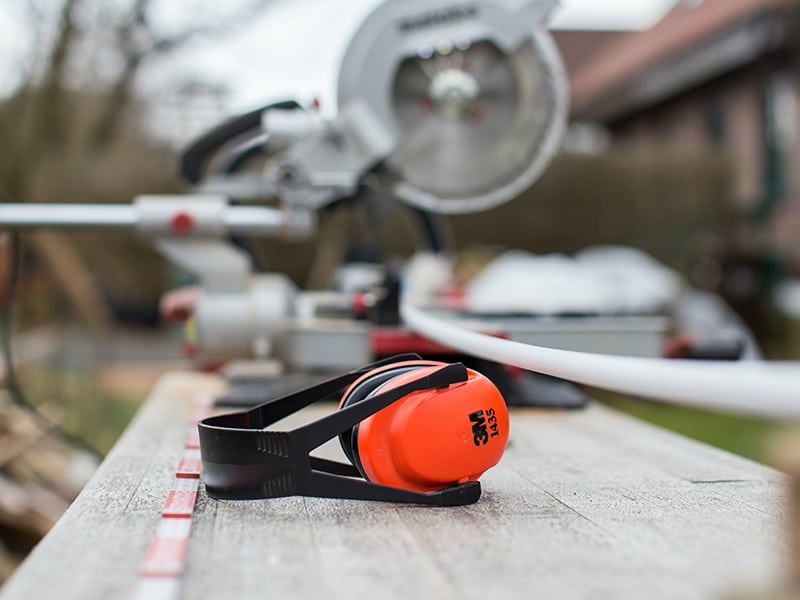
In recent years, the knowledge that noise at work can cause permanent and disabling hearing damage has impacted the design and construction of workplaces in the UK, especially those where manufacturing processes are part of the day-to-day activity.