

Skip to content

NOVA Acoustics

Visit Songbird Acoustic Panels

Home » Service Type - Acoustic Consultants

Service Type – Acoustic Consultants

IOA Members

Trade Accounts

Price Promise

Rapid Reports

Environmental Noise Surveys

Understand the impact of environmental noise with expert surveys that provide robust technical evidence, practical mitigation advice and the confidence to progress your project.

Expert Environmental Surveys | Trusted Acoustic Consultants

Projects in 2025
1725 +
Projects to date
14248 +

Get in Touch


    Response within 1 working day

    Industrial Noise Surveys

    Expert acoustic consultancy, delivered across the UK.

    An environmental noise survey is an acoustic assessment that measures and evaluates noise from external sources such as road traffic, railways, aircraft, industrial operations and commercial activities. NOVA Acoustics undertakes environmental noise surveys in accordance with recognised British Standards and industry guidance, including BS 4142, BS 8233, ProPG, DMRB and the National Planning Policy Framework (NPPF), providing robust technical evidence to support planning applications, environmental permits, residential developments and noise impact assessments across the UK.

    Simple, fast & fully managed

    Request a quote

    Confirm your survey date

    On-site assessment

    Rapid Report 

    Submit to decision maker

    What our clients have to say

    HOW WE SUPPORT YOU

    Planning Ready Report

    Fully Compliant

    Clear Conclusions

    Mitigation Advice

    Jargon Free & Clear

    Planning Approval Secured

    Who We Work With

    House Builders

    Property Developers

    Architects & Contractors

    Homeowners

    Project Managers

    Housing Associations

    Unlock the benefits of a trade account.

    Our trade accounts give property and construction professionals access to preferential pricing, priority service and a dedicated contact for straightforward project coordination.

    Nationwide support for every project.

    Expert acoustic advice across the UK.

    Our experienced consultants work with a variety of clients across the UK in a whole host of different sectors, providing practical acoustic guidance, technical expertise and trusted support at every stage of a project.

    Why choose NOVA Acoustics?

    What This Service Covers

    Baseline environmental noise monitoring
    Industrial and commercial noise assessments
    Road traffic and construction noise surveys
    Residential development noise evaluations
    Compliance with relevant British Standards
    Mitigation advice and planning-support reports

    Environmental Noise Surveys for Planning and Compliance

    Environmental noise surveys and assessments may be required during the approval of a wide variety projects. These can include industrial plants, inner-city residential developments or large, out of town developments.

    We have years of experience with projects of all sizes. Our environmental noise surveys and assessments are all performed in accordance with the latest guidance, standards and regulations including BS4142:2014 and BS8233:2014.

    An environmental noise survey is performed in accordance with the latest regulations to ensure that you meet the environmental criteria set by your local authority. Although the expect standard required for an environmental noise survey varies, this typically includes BS4142 or BS7445. Both British Standards are methods for rating and assessing industrial or commercial noise.

    Environmental noise surveys are required for new dwelling and home developments to ensure noise levels do not exceed specific noise levels for the local community. Examples of the source of noise pollution that may need to be assessed include; continuous noise, e.g. road traffic, industrial noises and processes, tonal noise, e.g. machinery and wind turbines and intermittent noise, e.g. construction.

    Book your assessment.

    Frequently Asked Questions

    An environmental noise survey measures and evaluates noise affecting a site or its surroundings. It helps determine whether noise levels meet planning, regulatory and local authority requirements.
    A survey may be required for planning applications involving residential developments, industrial facilities, commercial premises, construction projects or other noise-sensitive locations.
    The survey can assess continuous, tonal and intermittent noise from sources including road traffic, industrial processes, machinery, wind turbines and construction activity.
    Yes. The survey provides objective evidence of existing or predicted noise levels and can demonstrate how a proposed development will satisfy relevant planning conditions.
    Requirements vary by project, but assessments commonly refer to BS 4142, BS 7445 and BS 8233, alongside relevant local authority guidance and regulations.
    Acoustic consultants install monitoring equipment or undertake attended measurements to establish the noise environment. The collected data is then analysed and presented in a technical report.
    The consultant will recommend practical mitigation measures, which may include acoustic barriers, improved building construction, suitable glazing and ventilation, or changes to the site layout.
    The monitoring period depends on the site, noise sources and local authority requirements. Surveys may involve short attended measurements or monitoring over several days.
    Costs depend on the project’s location, complexity and monitoring requirements. A tailored quotation can be provided after the project information has been reviewed.

    Recent Projects

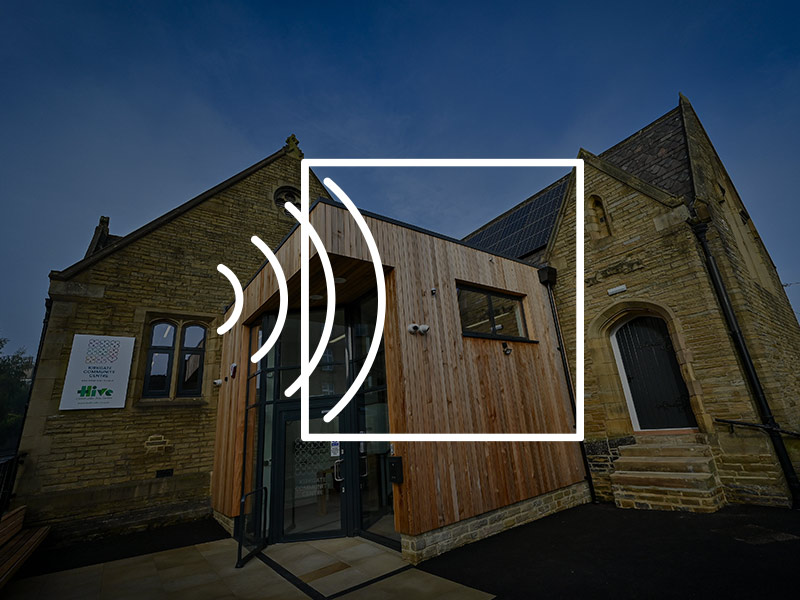
    Reverberation Testing, Consultancy, Design and Installation of Acoustic Panelling.

    Acoustic Consultancy and Design for Breeam HEA05 and POL05.
    Reverberation Testing, Consultancy, Design and Installation of Acoustic Panelling.

    Who we work with

    IOA Members

    Trade Accounts

    Price Promise

    Rapid Reports

    Noise Surveys For Residential Developments

    Maximise the development potential of your site with expert residential noise surveys that support planning applications, reduce project risk and deliver practical, cost-effective acoustic design solutions.

    Planning Approval Support | Optimise Site Potential

    Projects in 2025
    1725 +
    Projects to date
    14248 +

    Get in Touch


      Response within 1 working day

      Residential Noise Surveys

      Expert acoustic consultancy, delivered across the UK.

      A residential noise survey is an acoustic assessment undertaken to determine whether a proposed residential development can achieve suitable internal and external noise levels for future occupants. NOVA Acoustics carries out residential noise surveys and assessments in accordance with BS 8233, ProPG: Planning & Noise, the National Planning Policy Framework (NPPF) and the Noise Policy Statement for England (NPSE), providing robust technical evidence and practical acoustic design recommendations to support planning applications, discharge planning conditions and create high-quality residential developments across the UK.

      Simple, fast & fully managed

      Request a quote

      Confirm your survey date

      On-site assessment

      Rapid Report 

      Submit to decision maker

      What our clients have to say

      HOW WE SUPPORT YOU

      Planning Ready Report

      Fully Compliant

      Clear Conclusions

      Mitigation Advice

      Jargon Free & Clear

      Planning Approval Secured

      Who We Work With

      House Builders

      Property Developers

      Architects & Contractors

      Homeowners

      Project Managers

      Housing Associations

      Extra value with a trade account.

      Designed for construction and property professionals, our trade accounts provide competitive rates, priority assistance and a dedicated contact to keep your residential projects moving.

      Nationwide support for every project.

      Practical guidance from acoustic consultants.

      Our acoustic consultants support new-build, conversion and extension projects throughout the UK, providing noise assessments, technical advice and effective mitigation strategies.

      Why choose NOVA Acoustics?

      What This Service Covers

      Baseline environmental noise measurements
      Road, rail and industrial noise assessments
      Support for residential planning applications
      Internal and external noise-level calculations
      Glazing and ventilation specifications
      Mitigation advice and local authority reporting

      Supporting Planning Through Residential Noise Assessment

      If you’re applying for planning permission to create, extend or alter a residential dwelling near to a source of noise (e.g. traffic, rail or industrial noise), then it’s likely that you’ll require a residential noise survey to support your planning application.

      Residential noise surveys help to ensure that future residents are not adversely impacted, keeping noise to an acceptable level. The aim of a noise survey is to gain a baseline measurement of the noise environment within the vicinity of your proposed development.

      Once the noise environment has been defined, the potential noise impact on residential dwellings can be assessed. The level of noise impact is analysed according to British Standards and World Health Organisation guidelines to ensure the future occupants will not be adversely affected by noise.

      How much does a noise survey cost?

      Every noise survey is unique and therefore requires different amounts of resources. We are very competitive with our rates and will always provide our most cost-effective quotation.

      Simply contact us via the contact form or call us today for a no-obligation quote, or to get advice from our friendly, expert team.

      What does a residential noise survey require?

      We understand that gaining planning permission can be a frustrating procedure when time is of the essence. To ensure that your project progresses smoothly and efficiently we typically request the following information: Architect’s drawings or site plans – showing the site layout, including internal/external layout and construction details. A secure location on-site for monitoring equipment – we need to carry out a baseline noise survey on-site to establish the noise profile of the area. If this cannot be provided we will carry out manned monitoring to assess the suitability of site. We will carry out an environmental noise measurements and acoustic calculations to establish the noise levels across the development site. We recommend and assess appropriate mitigation measures to protect the external areas. We will calculate the internal noise levels to allow the provision of appropriate glazing and ventilation specifications for the development. We will provide a technical report for submission to your local authority to support your planning application
      Book your assessment.

      Frequently Asked Questions

      A residential noise survey measures existing noise levels around a proposed development and assesses the potential impact on future occupants.
      A survey may be required when creating, extending or altering a home near a significant noise source, such as a road, railway or industrial site.
      Yes. The resulting technical report provides evidence for submission to the local authority and demonstrates how acceptable living conditions will be achieved.
      The survey can assess road traffic, rail, aircraft, commercial and industrial noise affecting the proposed development.
      Acoustic consultants measure the existing noise environment on site, calculate noise levels across the development and assess the results against relevant guidance.
      Residential noise assessments are typically completed in accordance with applicable British Standards, planning guidance and World Health Organization recommendations.
      Yes. Where necessary, the report may recommend suitable glazing, ventilation, building-envelope improvements or changes to the site layout.
      Site plans, architectural drawings and details of the proposed development are normally required. A secure location for noise-monitoring equipment may also be needed.
      The cost depends on the site, monitoring requirements and complexity of the development. A project-specific quotation can be provided after reviewing the details.

      Recent Projects

      Reverberation Testing, Consultancy, Design and Installation of Acoustic Panelling.

      Acoustic Consultancy and Design for Breeam HEA05 and POL05.

      Reverberation Testing, Consultancy, Design and Installation of Acoustic Panelling.

      Who we work with

      IOA Members

      Trade Accounts

      Price Promise

      Rapid Reports

      Noise & Vibration Assessments

      From planning applications and environmental permits to construction and industrial projects, NOVA Acoustics delivers expert noise and vibration assessments that reduce risk, support compliance and keep your project moving.

      Trusted UK Specialists | Clear Practical Solutions

      Projects in 2025
      1725 +
      Projects to date
      14248 +

      Get in Touch


        Response within 1 working day

        Noise & Vibration Assessments

        Expert acoustic consultancy, delivered across the UK.

        A noise and vibration assessment is a technical study undertaken by acoustic consultants to evaluate the potential impact of noise and vibration from proposed developments, industrial operations, transport infrastructure and construction activities. NOVA Acoustics undertakes noise and vibration assessments in accordance with recognised British Standards and industry guidance, including BS 4142, BS 8233, BS 5228, DMRB, ProPG, BS 6472 and BS 7385, providing robust technical evidence to support planning applications, environmental permits, licensing, building design and regulatory compliance across the UK.

        Simple, fast & fully managed

        Request a quote

        Confirm your survey date

        On-site assessment

        Rapid Report 

        Submit to decision maker

        What our clients have to say

        HOW WE SUPPORT YOU

        Planning Ready Report

        Fully Compliant

        Clear Conclusions

        Mitigation Advice

        Jargon Free & Clear

        Planning Approval Secured

        Who We Work With

        House Builders

        Property Developers

        Architects & Contractors

        Homeowners

        Project Managers

        Housing Associations

        Trade accounts designed for professionals.

        Created for construction teams managing demanding schedules, our trade accounts offer preferential pricing, priority support and a dedicated contact who understands your project requirements.

        Reliable coverage across the country.

        Acoustic expertise from start to finish.

        Our consultants support residential, commercial and industrial developments throughout the UK. From initial advice to technical reporting, we provide dependable guidance at every stage.

        Why choose NOVA Acoustics?

        What This Service Covers

        Airborne noise and ground-borne vibration assessments
        Construction, transport and industrial noise sources
        Planning applications and environmental impact assessments
        Compliance with local authority requirements
        Assessments to relevant British Standards
        Practical, cost-effective mitigation recommendations

        What is an a Noise and Vibration Assessment?

        A noise and vibration survey is performed in accordance with the latest regulations to ensure that you meet the environmental criteria set by your local authority.

        Although the expect standard required for an environmental noise survey varies, this typically includes BS4142 or BS7445. Both British Standards are methods for rating and assessing industrial or commercial noise. Environmental noise surveys are required for new dwelling and home developments to ensure noise levels do not exceed specific noise levels for the local community.

        Examples of the source of noise pollution that may need to be assessed include; Continuous noise e.g. Road traffic, industrial noises and processes, Extractor fans, Tonal noise e.g. Machinery and Wind turbines. Intermittent noise e.g. Construction and Transport.

        Environmental noise and vibration is a critical issue in most countries

        This can be from sources of noise such as industrial noise, transport noise, entertainment noise or construction noise.
        These noise sources can cause an effect on the amenity of people living in the vicinity and also adverse effects on health and wellbeing. At NOVA Acoustics we assess the level of impact expected from various noise sources by undertaking a noise and vibration assessments.

        This could be assessing the noise emissions from a road, as a client is wanting to develop residential dwellings on land adjacent to the road. Or it could be consulting with an industrial premises to ensure the expansion of their facility will not cause undue harm (in terms of noise) to the neighbouring houses.

        Book your assessment.

        Frequently Asked Questions

        A noise and vibration assessment measures how airborne noise and ground-borne vibration could affect nearby people, properties and structures. The findings are compared with relevant standards and local authority requirements.
        An assessment may be required for a planning application, environmental impact assessment or regulatory approval. It is commonly requested where residential development is proposed near roads, railways, construction sites or industrial premises.
        Assessments can cover road traffic, construction activity, industrial processes, machinery, extractor fans, transport operations, entertainment venues and other continuous, tonal or intermittent sources.
        The appropriate standard depends on the project and the requirements of the local authority. Common standards include BS 4142, BS 7445, BS 8233, BS 5228, BS 6472 and BS 7385.
        Yes. A professional noise and vibration assessment can provide the technical evidence needed to demonstrate that a development meets planning policy and local environmental criteria.
        The process typically includes reviewing the site and proposed development, measuring existing conditions, assessing likely impacts and preparing a technical report with clear conclusions and recommendations.
        Where an assessment identifies a potential impact, suitable mitigation measures will be recommended. These may include changes to the site layout, building specification, operating methods or targeted noise and vibration controls.
        Yes. NOVA Acoustics delivers noise and vibration consultancy for residential, commercial, industrial and construction projects throughout the UK.

        Recent Projects

        Reverberation Testing, Consultancy, Design and Installation of Acoustic Panelling.

        Acoustic Consultancy and Design for Breeam HEA05 and POL05.

        Reverberation Testing, Consultancy, Design and Installation of Acoustic Panelling.

        Who we work with

        IOA Members

        Trade Accounts

        Price Promise

        Rapid Reports

        Industrial Noise Surveys

        Our acoustic expertise guarantees that your industrial noise survey includes everything necessary to ensure your project or development meets the required standards.

        Expert BS 4142 Assessments | Practical Mitigation Advice

        Projects in 2025
        1725 +
        Projects to date
        14248 +

        Get in Touch


          Response within 1 working day

          Industrial Noise Surveys

          Expert acoustic consultancy, delivered across the UK.

          An industrial noise survey measures and assesses noise from industrial, commercial, or mechanical sources — such as plant, machinery, manufacturing processes, or logistics operations — evaluated against BS 4142 to determine the impact on nearby noise-sensitive receptors. NOVA Acoustics provides industrial noise surveys for planning applications, environmental permit applications, nuisance complaints, and proactive noise management programmes.

          Simple, fast & fully managed

          Request a quote

          Confirm your survey date

          On-site assessment

          Rapid Report 

          Submit to decision maker

          What our clients have to say

          HOW WE SUPPORT YOU

          Planning Ready Report

          Fully Compliant

          Clear Conclusions

          Mitigation Advice

          Jargon Free & Clear

          Planning Approval Secured

          Who We Work With

          House Builders

          Property Developers

          Architects & Contractors

          Homeowners

          Project Managers

          Housing Associations

          Unlock benefits with a trade account.

          Built around the needs of busy construction professionals, our trade accounts include preferential rates, dedicated project assistance, priority service and a named account contact to help deliver projects smoothly and efficiently.

          Nationwide support for every project.

          Expert consultancy across the UK.

          Our experienced consultants work with residential, commercial and industrial clients across the UK, providing practical acoustic guidance, technical expertise and reliable support at every stage of a project.

          Why choose NOVA Acoustics?

          What This Service Covers

          Background sound level survey at nearest sensitive receptors
          Specific/rating level assessment of the industrial source in question
          BS4142:2014 impact rating (low, medium, or high impact)
          Mitigation recommendations where adverse impact is identified (relocation, enclosures, barriers, unit specification changes)
          Assessment of existing installations in response to noise complaints, as well as proposed installations
          Reporting suitable for planning submission or local authority/EHO review

          Understanding Rating Level vs. Background Level

          At the heart of a BS4142:2014 assessment is a comparison between two figures: the rating level and the background level. The background level is the underlying sound level in the area when the noise source being assessed isn’t operating, essentially, what the area sounds like normally. The rating level is the sound level of the specific source being assessed, adjusted to account for certain acoustic characteristics, such as tonality or impulsivity, that can make a noise more noticeable or intrusive than its measured level alone would suggest.

          BS4142:2014 works by comparing the rating level to the background level. Broadly speaking, the larger the difference, the greater the likelihood of an adverse impact, with the standard providing guidance on how to interpret differences of various sizes. Context also matters: the same numerical difference might be considered acceptable in one setting and significant in another, depending on factors such as the character of the area and the existing acoustic environment.

          The Survey Process

          While BS4142:2014 applies across many types of premises, certain sectors come up particularly often. Commercial kitchens and restaurants frequently need assessments covering extraction and refrigeration plant, particularly where premises are close to residential properties above or adjacent to the unit. Retail and logistics sites often need assessments covering HVAC plant, generators, and yard or loading bay activity. And light industrial units, especially on mixed-use sites where industrial and residential uses sit close together, commonly require assessments to support either new occupier fit-outs, planning applications for a change of use, or a response to a noise complaint from a neighbouring resident or business.

          Book your assessment.

          Frequently Asked Questions

          BS4142:2014 is the British Standard for rating and assessing industrial and commercial sound, used to determine whether noise from a fixed source, such as plant or equipment, is likely to have an adverse impact on nearby noise-sensitive premises. It commonly applies to new installations like air conditioning or refrigeration units, as well as existing industrial or commercial noise sources where impact needs to be assessed.
          The background level is the underlying sound level in the area without the source being assessed in operation. The rating level is the measured or predicted sound level of the source itself, adjusted where necessary for acoustic characteristics such as tonality. The assessment compares these two figures to determine the likely impact.
          Common examples include air conditioning and refrigeration units, kitchen extraction systems, generators, and various items of plant and machinery associated with manufacturing, logistics, or industrial processes.
          This depends on the specifics of the assessment, including whether background levels need to be measured across daytime and night-time periods. Once we have the information needed (site plans, equipment specifications, proposed operating hours), we aim to arrange surveys promptly and keep the process moving efficiently through to a completed report.
          If an assessment identifies a significant adverse impact, we’ll provide tailored recommendations to address it. Depending on the situation, this might involve relocating or re-orienting the unit, selecting a different specification, or installing acoustic enclosures or barriers to reduce noise transmission.
          Helpful information includes site plans showing the location of the proposed or existing installation, manufacturer specifications for the equipment in question, and the proposed or actual operational hours. Access to a secure location for monitoring equipment is also useful where a background survey is required.
          Potentially, yes, particularly if the unit includes plant such as air conditioning or kitchen extraction and is located near residential properties. Local authorities often request a BS4142 assessment as part of planning or licensing for these types of premises where noise-sensitive neighbours are nearby.
          Yes. For proposed installations, we can carry out an assessment based on the manufacturer’s specification data for the proposed equipment, combined with a background sound survey of the existing noise climate at the site, to predict the likely impact before the installation goes ahead.
          Yes. A BS4142 assessment of an existing installation works the same way as for a proposed one, measuring the rating level of the source against the background level to determine whether it’s likely to be causing an adverse impact. If the assessment confirms this, we can provide the same kind of mitigation recommendations, relocation, re-orientation, enclosures, or specification changes, tailored to an existing installation rather than one still being designed.

          Yes. Once an assessment has established a baseline and any necessary mitigation is in place, ongoing or periodic monitoring can confirm that the installation continues to operate within acceptable limits over time. Our environmental monitoring service can be set up to check ongoing compliance against BS4142 assessment outcomes on a rolling or periodic basis.

          Industrial noise surveys cover a wide range of equipment and sources. HVAC and refrigeration plant, including air conditioning condenser units, chillers, and refrigeration compressors, are among the most common sources we assess, particularly for commercial and retail premises. Extraction systems, such as kitchen extraction in restaurants and food premises, are another frequent source, often combined with concerns about both noise and odour. Generators, whether for backup power or as part of a site’s primary power supply, can be significant noise sources, particularly where they operate during sensitive hours. And manufacturing processes and loading bay activity, including the noise from vehicle movements, reversing alarms, and goods handling, are common considerations for industrial and logistics sites.

          We carry out industrial noise surveys and BS4142:2014 assessments across  Leeds, Manchester, London, Birmingham, Nottingham, Liverpool, Cambridge, Newcastle, Sheffield, Bristol and Hull.

          Recent Projects

          Reverberation Testing, Consultancy, Design and Installation of Acoustic Panelling.

          Acoustic Consultancy and Design for Breeam HEA05 and POL05.

          Reverberation Testing, Consultancy, Design and Installation of Acoustic Panelling.

          Who we work with

          IOA Members

          Trade Accounts

          Price Promise

          Rapid Reports

          BREEAM Noise Surveys

          Helping developers, architects and project teams achieve BREEAM acoustic credits through practical, cost-effective acoustic consultancy across the UK.

          Get Expert Advice | Maximise BREEAM Credits

          Projects in 2025
          1725 +
          Projects to date
          14248 +

          Get in Touch


            Response within 1 working day

            BREEAM Noise Surveys

            Expert acoustic consultancy, delivered across the UK.

            A BREEAM acoustic assessment typically spans several stages of a project, from concept design through to completion. During the design stage, our Suitably Qualified Acousticians (SQAs) review the building layout, construction specifications, building services, external plant and intended use of the development to assess compliance with Hea 05 (Acoustic Performance) and Pol 05 (Reduction of Noise Pollution) under BREEAM New Construction. We produce predictive acoustic assessments and, where necessary, provide practical acoustic design advice, including recommendations for enhanced wall, floor and façade constructions, improved glazing, building services noise control and external plant attenuation to help secure the targeted BREEAM credits.

            Simple, fast & fully managed

            Request a quote

            Confirm your survey date

            On-site assessment

            Rapid Report 

            Submit to decision maker

            What our clients have to say

            HOW WE SUPPORT YOU

            Breeam Ready Report

            Fully Compliant

            Clear Conclusions

            Mitigation Advice

            Jargon Free & Clear

            Breeam Credits Secured

            Who We Work With

            House Builders

            Property Developers

            Architects & Contractors

            Homeowners

            Project Managers

            Housing Associations

            Trade accounts that deliver more.

            Designed for construction professionals, consultants and developers, our trade accounts provide preferential rates, streamlined project management, responsive technical guidance and a dedicated account manager to support every stage of your project.

            Acoustic consultancy delivered nationwide.

            Your nationwide acoustics partner.

            From housing developments and commercial premises to complex mixed-use schemes, our experienced acoustic consultants deliver trusted advice, practical solutions and responsive support wherever your project is located.

            Why choose NOVA Acoustics?

            What This Service Covers

            Design stage acoustic strategy and predictive compliance assessment
            Specification review and acoustic design advice for BREEAM credit targets
            Evidence compilation and reporting for BREEAM assessor submission
            Construction stage acoustic testing (sound insulation, reverberation time, ambient noise)
            Pre-bid through to post-construction support across project stages

            BREEAM Acoustic Performance Credits

            BREEAM assesses the environmental performance of a building across a number of categories, and acoustic performance is one of the criteria that can contribute to a project’s overall credit total within the Health and Wellbeing category. Achieving these credits typically requires demonstrating that a building meets specified standards for sound insulation between rooms, indoor ambient noise levels, and reverberation time, depending on the building type and its intended use.

            Assessment Stages: Design Through to Completion

            A BREEAM noise assessment typically spans several stages of a project. At the design stage, we review the building’s layout, construction specifications, and intended use, and produce a predictive assessment of whether the proposed design is likely to meet the acoustic performance criteria required for the targeted BREEAM credits. Where the design falls short, we provide acoustic design advice covering specification changes, such as upgraded partition constructions, improved glazing, or additional acoustic treatment, needed to close the gap.

            At the construction stage, once the building is complete or nearing completion, we carry out acoustic testing to verify that the as-built performance meets the criteria assessed at design stage. This typically includes sound insulation testing between rooms, reverberation time measurement in relevant spaces, and indoor ambient noise level measurement. The results of this testing form part of the evidence compiled for submission to the BREEAM assessor.

            Acoustic Criteria by Building Type

            BREEAM’s acoustic performance criteria vary depending on the type of building being assessed. Education buildings, for example, have specific requirements around speech intelligibility and background noise levels in teaching spaces, reflecting the importance of clear communication for learning. Healthcare buildings have their own considerations, balancing the need for patient privacy and confidentiality with low background noise levels that support rest and recovery. Residential and commercial buildings have their own sets of criteria, often focused on sound insulation between dwellings or tenancies and control of external noise ingress.

            Understanding which criteria apply to your specific project, and at what level of BREEAM rating you’re targeting (Pass, Good, Very Good, Excellent, or Outstanding, with higher ratings often requiring more stringent acoustic performance), is an important first step in planning for BREEAM acoustic credits.

            How BREEAM Acoustic Requirements Relate to Part E

            BREEAM’s acoustic performance criteria often go beyond the minimum standards set out in Part E of the Building Regulations, particularly for sound insulation between spaces. A building that achieves a straightforward Part E pass on pre-completion sound testing won’t necessarily meet the more stringent criteria required for BREEAM acoustic credits, so it’s worth planning for BREEAM requirements from the design stage rather than assuming Part E compliance will be sufficient.

            Book your assessment.

            Frequently Asked Questions

            A BREEAM noise assessment evaluates a building’s acoustic performance against the criteria required to achieve BREEAM credits within the Health and Wellbeing category, covering aspects such as sound insulation, indoor ambient noise levels, and reverberation time. The specific credit and criteria depend on the building type and BREEAM scheme version.
            Ideally, at the design stage. A predictive assessment at this point can identify whether the proposed building specification is likely to meet the required acoustic criteria, allowing any necessary changes to be made before construction begins, which is far more cost-effective than addressing issues after the building is complete.
            Part E of the Building Regulations sets minimum sound insulation standards for new dwellings and conversions. BREEAM acoustic credits often require performance beyond these minimums, and can also cover additional criteria such as reverberation time and indoor ambient noise levels that aren’t part of standard Part E testing.
            BREEAM is used across many building types, including education, healthcare, residential, commercial, and industrial buildings, each with acoustic criteria suited to that building’s use. Any project being assessed under BREEAM that includes acoustic performance criteria within its targeted credits will need a BREEAM noise assessment.
            Construction stage testing typically includes sound insulation testing between relevant spaces, reverberation time measurement, and indoor ambient noise level measurement, depending on which criteria apply to the building type and targeted credits.
            The number of credits available depends on the BREEAM scheme version and building type.
            Yes. While starting at the design stage is ideal, we can also support projects where construction is already underway or complete, carrying out the necessary testing and helping compile the evidence required for submission, though the scope for design changes will naturally be more limited at later stages.
            BREEAM has versions and criteria applicable to refurbishment and fit-out projects as well as new construction, and acoustic performance criteria can apply to these projects too, though the specific requirements and how they’re assessed may differ from a new build.

            We provide BREEAM noise assessments, from design stage through to post-construction testing, for projects across Leeds, Manchester, London, Birmingham, Nottingham, Liverpool, Cambridge, Newcastle, Sheffield, Bristol and Hull.

            Recent Projects

            Reverberation Testing, Consultancy, Design and Installation of Acoustic Panelling.

            Acoustic Consultancy and Design for Breeam HEA05 and POL05.

            Reverberation Testing, Consultancy, Design and Installation of Acoustic Panelling.

            Who we work with

            IOA Members

            Trade Accounts

            Price Promise

            Rapid Reports

            Vibration Surveys

            Protect your project with expert ground-borne vibration surveys, practical mitigation advice and evidence-based reports that reduce risk and support planning approval.

            Reduce Vibration Risk | Protect Nearby Buildings

            Projects in 2025
            1725 +
            Projects to date
            14248 +

            Get in Touch


              Response within 1 working day

              Vibration Surveys

              Expert acoustic consultancy, delivered across the UK.

              A ground-borne vibration survey measures vibration transmitted through the ground from sources such as construction activity, rail networks, industrial machinery, or road traffic, assessed against BS 6472 for human response to vibration in buildings and BS 7385 for potential structural damage. NOVA Acoustics carries out ground-borne vibration surveys for planning applications, construction monitoring, and nuisance complaints across the UK.

              Simple, fast & fully managed

              Request a quote

              Confirm your survey date

              On-site assessment

              Rapid Report 

              Submit to decision maker

              What our clients have to say

              HOW WE SUPPORT YOU

              Planning Ready Report

              Fully Compliant

              Clear Conclusions

              Mitigation Advice

              Jargon Free & Clear

              Planning Approval Secured

              Who We Work With

              House Builders

              Property Developers

              Architects & Contractors

              Homeowners

              Project Managers

              Housing Associations

              Save with a trade account.

              Created for contractors, developers and industry professionals, our trade accounts offer exclusive pricing, priority project coordination, expert technical support and a dedicated account contact to make every project more efficient.

              Supporting projects throughout the UK.

              Acoustic specialists across the UK.

              Whether you’re delivering a residential scheme or a commercial development, our experienced consultants provide expert acoustic advice and dependable support across the UK.

              Why choose NOVA Acoustics?

              What This Service Covers

              Pre-construction baseline vibration survey
              Vibration monitoring during construction/operation (PPV and VDV reporting)
              Assessment against BS 6472 (human response) and BS 7385 (building damage)
              Trigger-level alerting for piling, demolition, or heavy plant activity
              Mitigation advice for vibration-sensitive sites

              Human Response to Vibration vs. Risk to Buildings

              When it comes to ground borne vibration, there are two quite different questions that often need answering, and it’s worth being clear about the distinction. The first is how vibration affects people, in terms of comfort, disturbance, and the ability to work or sleep normally. This is assessed under BS 6472, which provides criteria for evaluating human response to vibration in buildings, recognising that people can be affected by vibration levels far below those that would cause any damage to a structure.

              The second question is whether vibration poses a risk of damage to a building itself, whether that’s the structure undergoing the vibration-generating activity, such as a building being demolished, or neighbouring structures that might be affected by vibration from piling, excavation, or heavy plant. This is assessed using guidance such as BS 7385, which provides criteria for evaluating the risk of cosmetic, minor, or major structural damage based on measured vibration levels. A thorough vibration survey will often need to consider both of these questions together, since a level of vibration that’s perfectly acceptable in terms of building damage risk might still be noticeable, or even disruptive, to people in nearby properties.

              The Survey Process

              A ground borne vibration survey typically begins with the installation of triaxial geophones or accelerometers at locations representative of the receptors of concern, whether that’s a residential property near a construction site or a sensitive piece of equipment near an industrial process. These instruments measure vibration in three axes simultaneously, allowing both Peak Particle Velocity (PPV), commonly used for assessing building damage risk, and Vibration Dose Value (VDV), commonly used for assessing human response, to be calculated.

              Monitoring can be carried out over a defined period to establish baseline conditions, during specific activities such as piling to assess the vibration generated, or on an ongoing basis throughout a construction programme to track levels against agreed trigger thresholds.

              Mitigation Options

              Where a vibration survey identifies a risk, whether to people or to buildings, a range of mitigation options may be appropriate depending on the source and situation. For construction projects, this might include changes to construction methodology, such as switching from percussive to non-percussive piling techniques, or sequencing works to avoid particularly sensitive periods. 

              Isolation and damping measures can reduce the transmission of vibration from machinery into a building’s structure. And for ongoing construction activities, a trigger-and-respond approach, where work is paused or adjusted if monitored vibration approaches an agreed threshold, provides a practical way of managing risk in real time.

              Book your assessment.

              Frequently Asked Questions

              Ground borne vibration is vibration that transmits through the ground and into building structures, originating from sources such as construction activity, rail traffic, road traffic, or industrial machinery. It becomes a problem either when it’s noticeable enough to disturb people in nearby properties, or when it reaches levels that could risk damage to a building’s structure.
              BS 6472 is the British Standard covering the evaluation of human exposure to vibration in buildings. It provides criteria for assessing how vibration is likely to be perceived and how disruptive it might be to occupants, which is a different question from whether vibration poses a risk to the building itself.
              People can notice and be disturbed by vibration levels that are far too low to cause any damage to a building. Assessing human response (under BS 6472) and assessing building damage risk (under guidance such as BS 7385) are therefore two separate considerations, and a thorough survey often needs to address both.
              Common triggers include construction activities near existing buildings, particularly piling and demolition, developments close to railway lines, and the installation or operation of vibration-generating industrial machinery near vibration-sensitive receptors such as residential properties or sensitive equipment.
              Vibration is measured using triaxial geophones or accelerometers, which capture vibration in three directions simultaneously. This data is used to calculate Peak Particle Velocity (PPV) for assessing building damage risk, and Vibration Dose Value (VDV) for assessing human response.
              Yes. A baseline survey carried out before construction begins establishes the condition and vibration environment of nearby buildings beforehand, and ongoing monitoring during construction provides an objective record of vibration levels throughout the works, which can help resolve any concerns or claims that arise.
              Ideally, a baseline survey should be arranged before construction activities begin, so that conditions can be established beforehand and any necessary monitoring can be set up in time for the start of works. For projects involving piling or demolition near existing buildings, early planning is particularly important.
              Yes. Our monitoring systems can provide real-time vibration data with trigger-level alerts, allowing the project team to be notified immediately if vibration levels approach agreed thresholds during particularly
              Ground borne vibration arises from a range of sources, and the type of source often determines the most appropriate survey approach. Rail-adjacent developments are commonly affected by vibration from passing trains, which can transmit through the ground into nearby buildings, particularly where foundations are close to the track or where ground conditions are conducive to vibration transmission. Construction activities, especially piling, demolition, and the operation of heavy plant such as excavators and compactors, are a frequent source of vibration concern on and around development sites. Road traffic, particularly heavy goods vehicles on uneven surfaces, can also generate noticeable vibration in nearby properties. And industrial machinery, such as presses, compressors, or other heavy equipment, can transmit vibration through a building’s structure to occupied spaces.

              We carry out ground borne vibration surveys across Leeds, Manchester, London, Birmingham, Nottingham, Liverpool, Cambridge, Newcastle, Sheffield, Bristol and Hull.

              Recent Projects

              Reverberation Testing, Consultancy, Design and Installation of Acoustic Panelling.

              Acoustic Consultancy and Design for Breeam HEA05 and POL05.

              Reverberation Testing, Consultancy, Design and Installation of Acoustic Panelling.

              Who we work with

              IOA Members

              Trade Accounts

              Price Promise

              Rapid Reports

              Entertainment Noise Surveys

              Whether this is gaining planning permission, starting a new entertainment premises or staging a temporary event, an entertainment noise survey will likely be required by your local authority.

              Expert Planning Suport | Pragmatic & Clear Advice

              Projects in 2025
              1725 +
              Projects to date
              14248 +

              Get in Touch


                Response within 1 working day

                Entertainent Noise Surveys

                Expert acoustic consultancy, delivered across the UK.

                NOVA Acoustics provides noise surveys for entertainment venues, licensed premises, nightclubs, bars, restaurants, and music venues, assessing noise breakout, neighbour impact, and compliance with local authority licensing conditions. Surveys are conducted in line with the Pop Code and Noise from Pubs and Clubs Guide and relevant local authority entertainment noise guidelines, producing reports suitable for planning applications and licence applications.

                Simple, fast & fully managed

                Request a quote

                Confirm your survey date

                On-site assessment

                Rapid Report 

                Submit to decision maker

                What our clients have to say

                HOW WE SUPPORT YOU

                Planning Ready Report

                Fully Compliant

                Clear Conclusions

                Mitigation Advice

                Jargon Free & Clear

                Planning Approval Secured

                Who We Work With

                House Builders

                Property Developers

                Architects & Contractors

                Homeowners

                Project Managers

                Housing Associations

                Trade accounts with incentives.

                Access competitive trade pricing, dedicated project support, priority scheduling, and a single point of contact to help keep your projects running smoothly from enquiry through to completion.

                Nationwide reach. Local service.

                Acoustic expertise wherever you are.

                Our nationwide team of experienced acoustic consultants supports residential and commercial projects across the UK, delivering practical solutions, reliable advice, and responsive service from start to finish.

                Why choose NOVA Acoustics?

                What This Service Covers

                Baseline ambient noise survey at the venue and nearest sensitive receptors
                Source noise measurement, including low-frequency/bass content analysis
                Assessment against the Pop Code, the Noise from Pubs and Clubs Guide, and relevant local authority entertainment noise guidance
                Mitigation recommendations (noise limiters, acoustic treatment, operational controls)
                Support for premises licence applications, variations, and complaint responses

                Entertainment Noise Surveys and Premises Licence Applications

                Many of the scenarios that call for an entertainment noise survey are connected to licensing under the Licensing Act 2003. If you’re applying for a new premises licence, varying an existing licence, or responding to a licence review triggered by a noise complaint, a noise survey provides the evidence base licensing authorities look for when considering noise as one of the licensing objectives.

                For a new premises licence application, a survey can demonstrate that the proposed operation, including amplified music, late opening hours, or outdoor areas, won’t cause a public nuisance to nearby residents. For a variation, such as extending hours or adding outdoor entertainment, an updated survey helps show that the change won’t alter the noise impact in a way that affects the licensing objectives. And where a licence review has been triggered by complaints, a survey can identify the specific issue, often low-frequency bass transmission, and support a response that includes practical mitigation measures.

                Our surveys are carried out in line with the Pop Code and the Noise from Pubs and Clubs Guide, alongside relevant local authority entertainment noise guidance. For more on the Pop Code and how it’s applied to festivals and events specifically, see our festival and event noise monitoring page.

                Understanding Low-Frequency Noise

                Entertainment noise surveys place particular emphasis on low-frequency sound because it’s the part of the noise spectrum most likely to travel through party walls, floors, and building structures into neighbouring properties. While higher-frequency sounds are more readily absorbed or blocked by standard building materials, low-frequency bass from music systems can transmit with relatively little reduction, which is why a resident might describe being able to “feel” music from a neighbouring venue even when they can’t make out the lyrics.

                To assess this properly, our surveys analyse noise in octave or third-octave frequency bands rather than relying on a single overall noise level. This allows us to identify exactly which frequency ranges are causing the issue, which in turn informs the most effective mitigation, whether that’s structural improvements, changes to speaker positioning, or the installation of a noise limiter tuned to control problem frequencies specifically.

                Entertainment Venues, Places of Worship, Restaurants, and Temporary Events

                Entertainment noise surveys apply across a wide range of premises and event types. For nightclubs, bars, and live music venues, surveys typically focus on amplified music and crowd noise, both inside the venue and in any outdoor smoking or seating areas. For places of worship, surveys consider amplified speech, singing, and music, recognising that the acoustic priorities, clear communication during services balanced against noise to neighbouring properties, can differ from a typical entertainment venue.

                For restaurants and venues with live or amplified entertainment, an entertainment noise survey addresses the music and crowd noise side of things. Where the same premises also has kitchen extraction, refrigeration, or other plant, a separate BS4142 industrial noise survey may also be needed, and the two are often arranged together as part of the same visit.

                For temporary events, such as one-off parties, weddings with evening entertainment, or pop-up venues, a survey can be carried out even before the event takes place, based on the proposed scale and type of entertainment, to help inform licensing discussions and set appropriate noise management measures in advance. Where an event is part of a larger festival or outdoor gathering, our festival and event noise monitoring service provides ongoing monitoring throughout.

                Noise Limiters and Ongoing Compliance

                For many licensed venues, a noise limiter, a device that automatically restricts the output of an amplification system once it reaches a pre-set level, is one of the most effective and straightforward mitigation measures available. Limiters can be configured based on the findings of an entertainment noise survey to control overall levels, specific frequency bands, or both, and provide an ongoing, low-maintenance way of keeping noise within agreed limits without relying on staff to manage volume manually. Where a venue has had a noise limiter installed, periodic checks can confirm it remains correctly calibrated as sound systems or venue layouts change over time.

                Book your assessment.

                Frequently Asked Questions

                An entertainment noise survey is commonly required when applying for a new premises licence, varying an existing licence (such as extending hours or adding outdoor entertainment), responding to a licence review triggered by noise complaints, or assessing a venue or temporary event at the planning or pre-opening stage.
                The key difference is the focus on low-frequency sound. Entertainment noise surveys analyse noise in detail across frequency bands, particularly the low frequencies associated with amplified music, because this is the part of the noise spectrum most likely to transmit through buildings and affect neighbouring properties. A general noise impact assessment may not require this level of frequency-specific detail.
                Low-frequency sound, typically bass from music systems, transmits through building structures with less reduction than higher frequencies, meaning it can be felt or heard in neighbouring properties even when other sounds are well controlled. Assessing noise in frequency bands rather than as a single overall level allows us to identify and address this specific issue.
                Yes. A survey provides evidence that a proposed or existing operation won’t cause a public nuisance through noise, which is directly relevant to the licensing objectives under the Licensing Act 2003 for new applications, variations, and licence reviews.
                A noise limiter is a device that automatically restricts an amplification system’s output once it reaches a pre-set level, helping keep noise within agreed limits without relying on manual volume control. While not universally required, noise limiters are a common and effective condition attached to premises licences, particularly for venues with a history of noise complaints.
                Places of worship can be subject to the same noise considerations as other venues using amplified sound, particularly where neighbouring properties are close by. A survey can help balance the acoustic needs of the congregation, such as clear amplified speech, with the need to avoid causing nuisance to neighbours.
                For proposed venues, we base the assessment on the planned scale and type of entertainment, expected operating hours, and the building’s construction, combined with a baseline survey of the existing noise climate at the site and nearby receptors. This allows us to provide an informed assessment ahead of opening, supporting licensing discussions before the venue is operational.
                A survey carried out in response to complaints can identify the specific source and frequency characteristics of the noise causing concern, and inform practical mitigation, which might include adjustments to a noise limiter, changes to operating practices, or acoustic treatment within the venue.
                An entertainment noise survey covers the music and amplified sound side of a restaurant or venue’s operation. Where the same premises also has kitchen extraction, refrigeration, or air conditioning plant, this is usually assessed separately as part of a BS4142 industrial noise survey. We often arrange both as part of the same visit for venues that need to address both types of noise.

                We carry out entertainment noise surveys for venues, events, and places of worship across Leeds, Manchester, London, Birmingham, Nottingham, Liverpool, Cambridge, Newcastle, Sheffield, Bristol and Hull.

                Recent Projects

                Reverberation Testing, Consultancy, Design and Installation of Acoustic Panelling.

                Acoustic Consultancy and Design for Breeam HEA05 and POL05.

                Reverberation Testing, Consultancy, Design and Installation of Acoustic Panelling.

                Who we work with

                IOA Members

                Trade Accounts

                Price Promise

                Rapid Reports

                Construction Noise Assessments

                A construction noise and vibration assessment will likely be requested by your local authority during the planning stages of a new project, and will usually be performed in compliance with BS 5228.

                BS5228 Acoustic Specialists | Keep Projects Moving

                Projects in 2025
                1725 +
                Projects to date
                14248 +

                Get in Touch


                  Response within 1 working day

                  Construction Noise Assessments

                  Expert acoustic consultancy, delivered across the UK.

                  A construction noise assessment predicts or measures the noise and vibration generated by construction activities and evaluates the likely impact on nearby noise-sensitive receptors. NOVA Acoustics carries out construction noise assessments in accordance with BS 5228 for planning applications, environmental impact assessments, and Section 61 consent applications under the Control of Pollution Act 1974.

                  Simple, fast & fully managed

                  Request a quote

                  Confirm your survey date

                  On-site assessment

                  Rapid Report 

                  Submit to decision maker

                  What our clients have to say

                  HOW WE SUPPORT YOU

                  Planning Ready Report

                  Fully Compliant

                  Clear Conclusions

                  Mitigation Advice

                  Jargon Free & Clear

                  Planning Approval Secured

                  Who We Work With

                  House Builders

                  Property Developers

                  Architects & Contractors

                  Homeowners

                  Project Managers

                  Housing Associations

                  Trade accounts for profrssionals.

                  Our trade accounts are designed to make every project easier, offering preferential rates, dedicated account management, priority booking, and expert support from your first enquiry through to final delivery.

                  Service clients across the UK.

                  Experienced specialists across the UK.

                  From residential developments to commercial projects, our nationwide team provides dependable acoustic expertise, responsive support, and practical advice tailored to your requirements.

                  Why choose NOVA Acoustics?

                  What This Service Covers

                  Baseline noise surveys at sensitive receptors surrounding the development site

                  Identification and assessment of nearby noise-sensitive receptors and locations

                  Prediction of construction noise and vibration levels in accordance with BS 5228

                  Assessment of construction noise significance against BS 5228 ABC criteria

                  Preparation of Construction Noise Management Plans with practical mitigation measures

                  Support for Section 60/61 applications, monitoring strategies and environmental noise monitoring

                  What Is a Construction Noise Assessment?

                  A construction noise and vibration assessment evaluates the likely impact of a proposed construction project on nearby noise-sensitive receptors, typically prepared at the planning application stage and carried out in accordance with BS 5228. It looks at the proposed construction methodology and programme, identifies the equipment and activities likely to generate noise and vibration at each phase, and predicts the levels likely to be experienced at the nearest homes, schools, offices, or other sensitive locations.

                  Where this assessment identifies that noise or vibration is likely to have a significant effect, it’s common for planning conditions to require a Construction Noise Management Plan to be prepared and approved before works begin. We provide both services, often as part of a single continuous piece of work that takes a project from initial planning assessment through to a practical, implementable plan for the construction phase.

                  The Assessment Process

                  The assessment begins with understanding the proposed construction methodology and programme, including the sequence of phases (such as demolition, groundworks, substructure, superstructure, and fit-out), the type of plant and equipment likely to be used at each phase, and the anticipated duration of works.

                  Using this information alongside reference noise and vibration data from BS5228, we identify the nearest noise-sensitive receptors to the site and predict the likely noise and, where relevant, vibration levels at those locations during each phase of construction. These predicted levels are then compared against significance criteria to determine whether the construction activities are likely to have a significant effect on nearby receptors.

                  The ABC Method

                  BS 5228-1 sets out what’s commonly known as the ABC method for assessing the significance of construction noise. This approach uses threshold values that vary depending on the existing ambient noise level at the receptor location, recognising that the same construction noise level might be more or less significant depending on how noisy the area already is. Category A, B, and C threshold values provide a structured way of determining whether predicted construction noise levels are likely to represent a significant observed adverse effect, helping to inform both the assessment conclusions and any mitigation recommendations.

                  From Assessment to Management Plan

                  Where a construction noise assessment identifies that effects are likely to be significant, the next step is typically a Construction Noise Management Plan (CNMP). This takes the assessment’s findings and translates them into a detailed, phase-by-phase plan for managing noise and vibration on site.

                  For each phase of the works, the plan sets out the equipment and machinery likely to be used, the predicted noise and vibration levels at the nearest sensitive receptors based on BS5228 reference data, and the working hours during which activities will take place. Alongside these predictions, the plan sets out the specific mitigation measures that will be put in place, which might include the use of quieter plant, screening or hoarding, and restrictions on the timing of particularly noisy activities. It also includes a complaints procedure, giving residents and neighbouring businesses a clear point of contact if they’re concerned about noise or vibration during the works, and sets out how the project team will respond.

                  A CNMP is often the core supporting document for a Section 61 application (see below), since it sets out exactly the kind of information, the equipment schedule, predicted levels, working hours, and mitigation measures, that the local authority needs in order to grant consent.

                  Section 60 and Section 61 of the Control of Pollution Act 1974

                  Two sections of the Control of Pollution Act 1974 are particularly relevant to construction noise. Section 60 gives the local authority the power to serve a notice setting out requirements for how construction works are to be carried out, in terms of noise control measures, hours of working, and the types of plant that may be used. Section 61 provides a route for the contractor to apply in advance for the local authority’s consent to a proposed method of working, giving greater certainty that the works will be considered acceptable before they begin.

                  A construction noise assessment can help inform which route is appropriate for a given project, and a CNMP provides the detailed information needed to support a Section 61 application.

                  Monitoring Alongside Your Assessment or Management Plan

                  Where an assessment or management plan sets out predicted noise and vibration levels by phase, ongoing monitoring during construction provides the evidence that those predictions are being met in practice. Our environmental monitoring service provides real-time noise, vibration, and dust reporting via a cloud-based platform, and can be set up to align with the phases and limits set out in your management plan.

                  Mitigation Measures

                  Where a construction noise assessment identifies the potential for significant effects, it will typically include recommendations for mitigation. Common measures include restricting particularly noisy activities to certain hours, specifying quieter plant or alternative construction methods (such as non-percussive piling where ground conditions allow), and the use of screening or hoarding around the site boundary.

                  These recommendations then feed into the Construction Noise Management Plan, where they’re developed into a detailed, phase-by-phase implementation plan.

                  Book your assessment.

                  Frequently Asked Questions

                  A construction noise assessment evaluates the likely noise and vibration impact of a proposed construction project on nearby noise-sensitive receptors, typically prepared at the planning application stage. It’s commonly needed for developments near residential properties or other sensitive uses, where construction noise is likely to be a material planning consideration.
                  A Construction Noise Management Plan (CNMP) sets out how noise and vibration from a construction project will be controlled, phase by phase, including predicted levels, working hours, and mitigation measures. It’s commonly required as a planning condition for projects near residential areas or other noise-sensitive locations, and is often the core document used to support a Section 61 application.
                  A construction noise assessment is typically prepared earlier, often at the planning application stage, to assess the likely significance of construction noise and vibration. A construction noise management plan is typically prepared later, often as a planning condition, and sets out a detailed, phase-by-phase plan for managing noise and vibration once the project’s methodology and programme are confirmed. We provide both as part of a continuous service, taking a project from initial assessment through to an implementable plan.
                  BS 5228 is the British Standard providing guidance and reference data for predicting and controlling noise and vibration from construction and open sites. It’s used to predict likely noise and vibration levels from common construction activities and equipment, and to assess the significance of those levels at nearby receptors.
                  The ABC method, set out in BS5228-1, uses threshold values that vary depending on the existing ambient noise level at a receptor location, to help determine whether predicted construction noise levels are likely to represent a significant effect. It provides a structured, standard-based approach to significance assessment.
                  Yes, where relevant. Activities such as piling, demolition, and certain groundworks can generate vibration as well as noise, and a thorough assessment, and any resulting management plan, will consider both, particularly where vibration-sensitive receptors are nearby.
                  Section 60 allows the local authority to serve a notice on a contractor setting requirements for how construction works are carried out. Section 61 allows the contractor to apply in advance for the local authority’s consent to a proposed method of working, providing greater certainty before works begin. A construction noise assessment, and the management plan that follows it, can help inform which route is most appropriate for a given project and provide the supporting information needed.
                  Ideally, as early as possible, since the assessment’s findings can inform the design of the scheme (such as the location of plant or the sequencing of works) and any mitigation measures can be built into the proposal from the outset, rather than being added later in response to planning concerns.
                  This depends on the specific planning conditions attached to your project, but ongoing monitoring is commonly used alongside a CNMP to provide evidence that predicted levels are being met in practice, and to give early warning if levels are trending towards agreed limits.

                  We carry out construction noise and vibration assessments and prepare Construction Noise Management Plans for contractors and developers across Leeds, Manchester, London, Birmingham, Nottingham, Liverpool, Cambridge, Newcastle, Sheffield, Bristol and Hull.

                  Recent Projects

                  Reverberation Testing, Consultancy, Design and Installation of Acoustic Panelling.

                  Acoustic Consultancy and Design for Breeam HEA05 and POL05.

                  Reverberation Testing, Consultancy, Design and Installation of Acoustic Panelling.

                  Who we work with

                  IOA Members

                  Trade Accounts

                  Price Promise

                  Rapid Reports

                  Noise Mapping & Modelling

                  Noise Mapping and Modelling is an extremely powerful tool to evaluate and emulate various noise environments and enables the visualisation of sound propagation in a given environment.

                  Visualise Noise Impacts | Reduce Project Risk

                  Projects in 2025
                  1725 +
                  Projects to date
                  14248 +

                  Get in Touch


                    Response within 1 working day

                    Noise Mapping & Modelling

                    Expert acoustic consultancy, delivered across the UK.

                    Noise mapping and noise modelling are computational techniques used to predict and visualise the distribution of noise levels across a site or geographic area. NOVA Acoustics produces noise maps and acoustic models using Soundplan modelling software for planning applications, environmental impact assessments, noise action plans, and acoustic design.

                    Simple, fast & fully managed

                    Request a quote

                    Confirm your survey date

                    On-site assessment

                    Rapid Report 

                    Submit to decision maker

                    What our clients have to say

                    HOW WE SUPPORT YOU

                    Visualise Noise

                    Model Scenarios

                    Clear Conclusions

                    Pre & Post Mitigation

                    Jargon Free & Clear

                    Data Driven Decisions

                    Who We Work With

                    House Builders

                    Property Developers

                    Architects & Contractors

                    Homeowners

                    Project Managers

                    Housing Associations

                    Exclusive benefits for trade customers.

                    Designed to support busy professionals, our trade accounts provide competitive rates, responsive project assistance, priority scheduling, and personalised service from enquiry to completion.

                    Local knowledge. National coverage.

                    Trusted expertise. Nationwide service.

                    Our experienced acoustic consultants support residential and commercial projects across the UK, delivering expert advice backed by responsive local service.

                    Why choose NOVA Acoustics?

                    What This Service Covers

                    Site-specific noise survey to inform model inputs
                    3D acoustic modelling using SoundPlan
                    Noise contour mapping for single or multiple sources
                    Scenario testing (with and without proposed mitigation)
                    Predicted noise levels at identified sensitive receptors
                    Outputs suitable for planning submissions, BS4142 assessments, and environmental permit applications

                    What Is Noise Mapping and Modelling?

                    Noise mapping and modelling is a way of visualising how sound travels across a site or area, taking into account the position of noise sources, the layout of buildings and terrain, and the location of nearby receptors such as homes, schools, or offices. The output is typically a noise contour map, showing predicted noise levels as bands of colour across the area being studied, alongside tabulated predicted levels at specific points of interest.

                    Unlike a single-point measurement, which tells you the noise level at one location at one moment, a noise model lets you explore “what if” scenarios. What happens to noise levels at the nearest houses if a new access road is built? How much difference would a 3-metre acoustic barrier make to noise levels at a school playground? Noise modelling answers these questions before anything is built, which is why it’s such a valuable tool at the planning stage.

                    When Is Noise Modelling Used?

                    Noise modelling supports a wide range of projects and assessment types. It’s commonly used for master planning and strategic environmental assessments, where the cumulative noise impact of multiple developments or land uses needs to be understood across a wider area. It also plays a central role in industrial and plant noise impact predictions, where the noise from new or modified equipment needs to be assessed against the existing noise climate, often as part of a BS4142 industrial noise assessment.

                    For road and rail noise assessments, modelling helps predict how new transport infrastructure, or changes to existing infrastructure, will affect noise levels at nearby properties. And for mitigation design, noise modelling allows proposed measures such as barriers, screening, bunds, or glazing specifications to be tested in the model before they’re built, confirming they’ll achieve the required reduction.

                    How We Produce a Noise Model

                    It’s worth understanding the distinction between noise addressed under an Environmental Permit and noise dealt with as a statutory nuisance under separate legislation. Noise conditions within an Environmental Permit are set and enforced by the Environment Agency as part of the permit itself, focused on preventing pollution from the regulated process.

                    Statutory nuisance, by contrast, is typically a matter for the local authority’s environmental health team and applies more broadly to noise that unreasonably interferes with the use or enjoyment of land, regardless of whether a permit is involved. A site can, in principle, be compliant with its permit conditions while still facing a statutory nuisance complaint, which is why a clear understanding of both frameworks is valuable.

                    Typical Outputs

                    A noise mapping and modelling project typically produces a noise contour map showing predicted levels across the study area as colour-banded zones, tabulated predicted noise levels at specific receptor locations, and where relevant, scenario comparisons showing the effect of proposed mitigation.

                    These outputs are designed to be suitable for inclusion in planning submissions, BS4142 noise impact assessments, and Environmental Permit applications, and are presented in a format that’s accessible to planning officers and non-technical reviewers as well as acousticians.

                    Book your assessment.

                    Frequently Asked Questions

                    Noise mapping and modelling is a way of predicting how sound will behave across a site or area before anything is built or changed, using software to simulate noise sources, terrain, buildings, and receptor locations. It’s used to understand the likely noise impact of a proposal, test mitigation options, and produce evidence for planning and permitting applications.
                    We use SoundPlan, a leading 3D acoustic modelling software, which allows us to model complex environments with multiple noise sources and reflective surfaces and produce detailed noise contour maps and predicted levels at specific locations.
                    A noise model is often required where a proposed development could be affected by, or could itself generate, significant noise, particularly for sites near busy roads, railways, or industrial sources, or for developments that include new plant or infrastructure likely to generate noise. Your planning authority or our consultants can advise whether modelling is appropriate for your specific application.
                    A well-calibrated noise model, informed by a site-specific noise survey, can provide highly reliable predictions. The on-site survey data is used to validate the model against real conditions, which significantly improves accuracy compared to a model built purely from theoretical inputs. That said, a model is a prediction tool, and its outputs are interpreted alongside professional judgement.
                    Yes, this is one of the most valuable applications of noise modelling. We can run scenarios showing predicted noise levels both with and without a proposed barrier, screen, bund, or enclosure in place, helping confirm whether a proposed mitigation measure will achieve the reduction needed before any money is spent on construction.
                    This varies by project, but typically includes site plans or drawings showing the layout and any proposed buildings or infrastructure, details of the noise sources to be modelled (such as plant specifications or traffic data), and the locations of receptors you’d like assessed. We’ll also usually carry out a site-specific noise survey to inform and validate the model.
                    Yes. SoundPlan is designed to handle complex environments with multiple sources and reflective surfaces, so a single model can incorporate road traffic, rail, industrial plant, and other sources together, showing their combined effect on the surrounding area.
                    The relevant standards depend on the type of noise being modelled, for example road traffic noise and industrial noise are assessed against different reference methodologies. Our consultants will confirm the appropriate standards for your specific project as part of the assessment scope.

                    We provide noise mapping and modelling services for developers, planners, and local authorities across Leeds, Manchester, London, Birmingham, Nottingham, Liverpool, Cambridge, Newcastle, Sheffield, Bristol, and Hull.

                    Recent Projects

                    Reverberation Testing, Consultancy, Design and Installation of Acoustic Panelling.

                    Acoustic Consultancy and Design for Breeam HEA05 and POL05.

                    Reverberation Testing, Consultancy, Design and Installation of Acoustic Panelling.

                    Who we work with

                    IOA Members

                    Trade Accounts

                    Price Promise

                    Rapid Reports

                    Environmental Monitoring

                    We have years of experience providing noise, vibration and dust monitoring services for construction, demolition, festivals, motor sport, airports, and industrial processes.

                    Nationwide installation & support | Real-time alerts & reporting

                    Projects in 2025
                    1725 +
                    Projects to date
                    14248 +

                    Get in Touch


                      Response within 1 working day

                      Environmental Monitoring

                      Expert acoustic consultancy, delivered across the UK.

                      NOVA Acoustics provides long-term environmental monitoring of noise, vibration, and dust levels for infrastructure, energy, and construction projects where planning conditions or environmental permits require continuous or periodic measurement. Monitoring programmes are designed to meet local authority requirements and produce auditable records for regulatory reporting.

                      Simple, fast & fully managed

                      Request a quote

                      Confirm your monitoring dates

                      Install Onsite

                      Monthly Reporting

                      Assurance & Compliance

                      What our clients have to say

                      How we support you

                      Vibration Monitoring

                      Dust Monitoring

                      Fixed or Solar Power

                      Web Portal & Realtime Access

                      Fully Compliant Solutions

                      Who We Work With

                      Construction & Demolition Sites

                      Manufacturing & Industrial

                      Energy & Utilities
                      Data Centres & Plant Installations
                      Waste & Recycling
                      Infrastructure & Civil Engineering

                      Built for trade professionals.

                      Access competitive trade pricing, dedicated project support, priority scheduling, and a single point of contact to help keep your projects running smoothly from enquiry through to completion.

                      UK-wide service. Local knowledge.

                      Trusted experts. Nationwide service.

                      Our experienced consultants provide professional acoustic support for residential and commercial projects throughout the UK, combining local knowledge with a responsive nationwide service.

                      Why choose NOVA Acoustics?

                      What This Service Covers

                      Site assessment and monitoring strategy agreement with Local Authority

                      Equipment installation and calibration

                      Real-time cloud data access and threshold alerting

                      Scheduled reporting (weekly/monthly/on request)

                      Weather station integration, supporting Environment Agency MID requirements where applicable

                      Optional fully managed consultancy service vs. hire-only

                      Monitoring noise, vibration and dust when you are in close proximity to sensitive receptors is very important to avoid complaints or action from the Local Authority.

                      We can provide tailored packages to suit your exact requirements at either a hire only level or fully managed by our team of consultants. Major construction projects and developments or any process or activity that generates elevated levels of noise, vibration and dust has the potential to be disruptive to residents and business.

                      Monitoring these environmental parameters can help you identify, control, and reduce emissions and avoid complaints from residents or action from the Local Authority.

                      Our robust, cost effective and cloud-based noise vibration and dust monitoring systems can cover a range of applications and requirements. Whether you need to monitor construction sites, demolitions sites, industrial processes, outdoor festivals or music events, airports, or motorsport, we have you covered.

                      We offer a tailored service to each project to ensure that it provides you with a cost effective and viable solution that achieves compliance with the regulatory requirements for your project. This can be basic hire only service with automated reporting and access to your data via a customisable website Or we can offer a fully managed service including consultancy advice, custom reporting and management of the equipment onsite.



                      Monitoring Durations and Reporting by Project Type

                      The right monitoring approach depends heavily on the type of project. For construction and demolition sites, monitoring typically runs continuously for the duration of the works, with reporting issued weekly or monthly to demonstrate ongoing compliance with planning conditions or Section 61 consents. For festivals and short-term events, monitoring is usually set up for the event period only, with real-time dashboards giving event teams immediate visibility and a summary compliance report issued afterwards. For industrial sites, motorsport events, and airports, monitoring may run on a rolling or periodic basis, either continuously where a process or activity runs year-round, or at agreed intervals to check ongoing compliance with permit conditions or BS4142 assessment outcomes.

                      Whatever the project type, our cloud-based platform means reporting cadence can be adjusted as the project progresses, for example moving from weekly to monthly reporting once a construction project moves into a quieter phase.

                      How Monitoring Supports Compliance

                      Environmental monitoring data plays a direct role in demonstrating compliance with the conditions attached to planning permissions, Section 61 prior consents under the Control of Pollution Act 1974, and Environmental Permit conditions where applicable. Where a Construction Noise Assessment sets out predicted noise and vibration levels by phase, ongoing monitoring provides the evidence that those predictions are being met in practice, and gives an early warning if levels are trending towards agreed limits before they become a problem.
                      For sites operating under an Environmental Permit, our weather station integration also supports the Environment Agency’s Method Implementation Document requirement for on-site weather data measured at 15-minute intervals during noise monitoring.

                      This evidence base is also valuable if a complaint is received from a neighbouring resident or business. Rather than relying on anecdotal accounts, monitoring data provides an objective record of noise, vibration, or dust levels at the time in question, which can be shared with the local authority or used to inform a considered response.

                      Book your assessment.

                      Frequently Asked Questions

                      Environmental monitoring covers the measurement of noise, vibration, and dust levels around a site, typically to demonstrate compliance with planning conditions, Section 61 consents, or to provide an early warning if levels are approaching agreed limits. It’s commonly required for construction and demolition projects near residential areas, but is also used for industrial sites, festivals, motorsport, airports, and other activities likely to generate elevated levels of these parameters.
                      With a hire-only service, you receive the monitoring equipment along with access to the cloud-based reporting platform, and your team manages day-to-day oversight. With a fully managed service, our consultants handle the monitoring strategy, equipment management, data review, and reporting on your behalf, including liaison with the local authority where needed. Many clients choose fully managed for projects where compliance reporting needs to be robust and hands-off.
                      Our systems support real-time alerting via SMS or email, with multiple threshold triggers configurable for an unlimited number of recipients at each monitoring location. Alerts are sent as soon as a threshold is crossed, allowing your team to respond promptly, whether that means adjusting site activities or simply being aware that levels are elevated.
                      Our noise monitoring equipment meets Class 1 standards under IEC 61672-1:2013 and IEC 61260-1:2014. Our vibration monitoring equipment is a Class 1 vibration level meter as outlined in ISO 4866, BS 7385-1, and DIN 45669-1, with predefined settings available for commonly used criteria such as DIN 4150-3 or BS 7385-2, or a configurable criterion curve based on FFT or one-third octave analysis in accordance with local standards.
                      Yes. Our dust monitoring uses an MCERTS-certified air quality and particulate monitor (South Coast Science Praxis/Urban with an Alphasense optical particle counter), measuring particulates including PM1, PM2.5, and PM10 alongside a range of gas sensors covering CO, H2S, NO, NO2, O3, SO2, VOCs, and CO2, plus temperature, humidity, and barometric pressure. It can be deployed alongside our noise and vibration monitoring systems as part of a combined environmental monitoring package, with all data accessible through the same cloud-based platform.
                      MCS 020 compliance is the established route for demonstrating that a domestic air source heat pump meets permitted development noise requirements across England. While individual local authority approaches to enforcement can vary, having a documented MCS 020 calculation on file provides a clear record of compliance should it ever be requested.
                      Our cloud-based platform can be configured to suit your needs. Data can be kept private to your project team, shared with the local authority as part of compliance reporting, or made available publicly via a customisable, password-protected, or open website, depending on what’s appropriate for your project and any conditions attached to it.
                      Noise conditions within an Environmental Permit are set and enforced by the Environment Agency as part of the permit itself, focused on preventing pollution from the regulated process. Statutory nuisance is typically a matter for the local authority’s environmental health team and applies more broadly to noise that unreasonably interferes with the use or enjoyment of land, regardless of whether a permit is involved. A site can, in principle, be compliant with its permit conditions while still facing a statutory nuisance complaint, which is why understanding both frameworks matters.

                      Recent Projects

                      Reverberation Testing, Consultancy, Design and Installation of Acoustic Panelling.

                      Acoustic Consultancy and Design for Breeam HEA05 and POL05.

                      Reverberation Testing, Consultancy, Design and Installation of Acoustic Panelling.

                      Who we work with