





Reverberation Testing, Consultancy, Design and Installation of Acoustic Panelling.
IOA Members
Trade Accounts
Price Promise
Rapid Reports
Construction Noise Assessments
A construction noise and vibration assessment will likely be requested by your local authority during the planning stages of a new project, and will usually be performed in compliance with BS 5228.
BS5228 Acoustic Specialists | Keep Projects Moving

Projects in 2025
1725
+
Projects to date
14248
+


Expert acoustic consultancy, delivered across the UK.
A construction noise assessment predicts or measures the noise and vibration generated by construction activities and evaluates the likely impact on nearby noise-sensitive receptors. NOVA Acoustics carries out construction noise assessments in accordance with BS 5228 for planning applications, environmental impact assessments, and Section 61 consent applications under the Control of Pollution Act 1974.
Simple, fast & fully managed
Request a quote
Confirm your survey date
On-site assessment
Rapid Report
Submit to decision maker
What our clients have to say
“I plucked this company out of the air and I am so glad I did. Jaime has been most helpful and produced a report within a short time scale. The service has been first class and I have absolutely no hesitation in recommending NOVA acoustics.”
– Arnot Wilson
“We commissioned NOVA to conduct a sound test at our new house. From the get go Adam was incredibly helpful and knowledgeable. It is rare to meet professionals like that, who also go above and beyond to help and guide you through the process.”
– Na’ama Zisser
“The engineer who conducted the testing was friendly, professional and incredibly thorough. Overall I would say that NOVA provided an outstanding service from start to finish and I would not hesitate to recommend them.”
– Joe Bentley
“Really pleased with the service received from NOVA Acoustics on a recent noise risk assessment of our production room. The engineer Tom was great throughout and the report was clear and has made managing our noise control measures simple and effective.”
– Daniel Pontin
“NOVA Acoustics have been beyond helpful. Super speedy response and excellent communication. The noise impact assessment has been completed at a very fair price, and I’m really happy I chose NOVA Acoustics for the job.”
– Kelly Creates
“I used NOVA for acoustic reports for a project I’m working on converting retail units to residential, they was prompt, informative and well priced. I wouldn’t hesitate to use them again.”
– Peter Goldthorpe
“We have used NOVA Acoustics for a sound testing for installation of a new floor. Tom the engineer was very thorough, prompt and professional.”
– Anna Jóga
“Ryan and his team were very professional, installing monitoring equipment regarding a proposed planning application. We can definitely recommend NOVA Acoustics Ltd.”
– Pauline Whittle
HOW WE SUPPORT YOU

Planning Ready Report

Fully Compliant

Clear Conclusions

Mitigation Advice

Jargon Free & Clear

Planning Approval Secured
Who We Work With
House Builders
Property Developers
Architects & Contractors
Homeowners
Project Managers
Housing Associations
Trade accounts for profrssionals.
Our trade accounts are designed to make every project easier, offering preferential rates, dedicated account management, priority booking, and expert support from your first enquiry through to final delivery.
Service clients across the UK.
- Efficient site attendance arranged around your project schedule.
- Reports presented in a clear, practical and accessible format.
- Quick turnaround to support time-sensitive requirements.
- A nationwide consultancy with the benefit of local understanding.
Experienced specialists across the UK.
From residential developments to commercial projects, our nationwide team provides dependable acoustic expertise, responsive support, and practical advice tailored to your requirements.
Why choose NOVA Acoustics?
- Experience delivering acoustic support for planning applications.
- Consultants professionally qualified through the Institute of Acoustics.
- National coverage provided by locally based acoustic specialists.
- Expert advice aimed at streamlining the planning process.
What This Service Covers
Baseline noise surveys at sensitive receptors surrounding the development site
Identification and assessment of nearby noise-sensitive receptors and locations
Prediction of construction noise and vibration levels in accordance with BS 5228
Assessment of construction noise significance against BS 5228 ABC criteria
Preparation of Construction Noise Management Plans with practical mitigation measures
Support for Section 60/61 applications, monitoring strategies and environmental noise monitoring
What Is a Construction Noise Assessment?
A construction noise and vibration assessment evaluates the likely impact of a proposed construction project on nearby noise-sensitive receptors, typically prepared at the planning application stage and carried out in accordance with BS 5228. It looks at the proposed construction methodology and programme, identifies the equipment and activities likely to generate noise and vibration at each phase, and predicts the levels likely to be experienced at the nearest homes, schools, offices, or other sensitive locations.
Where this assessment identifies that noise or vibration is likely to have a significant effect, it’s common for planning conditions to require a Construction Noise Management Plan to be prepared and approved before works begin. We provide both services, often as part of a single continuous piece of work that takes a project from initial planning assessment through to a practical, implementable plan for the construction phase.
The Assessment Process
The assessment begins with understanding the proposed construction methodology and programme, including the sequence of phases (such as demolition, groundworks, substructure, superstructure, and fit-out), the type of plant and equipment likely to be used at each phase, and the anticipated duration of works.
Using this information alongside reference noise and vibration data from BS5228, we identify the nearest noise-sensitive receptors to the site and predict the likely noise and, where relevant, vibration levels at those locations during each phase of construction. These predicted levels are then compared against significance criteria to determine whether the construction activities are likely to have a significant effect on nearby receptors.
The ABC Method
BS 5228-1 sets out what’s commonly known as the ABC method for assessing the significance of construction noise. This approach uses threshold values that vary depending on the existing ambient noise level at the receptor location, recognising that the same construction noise level might be more or less significant depending on how noisy the area already is. Category A, B, and C threshold values provide a structured way of determining whether predicted construction noise levels are likely to represent a significant observed adverse effect, helping to inform both the assessment conclusions and any mitigation recommendations.
From Assessment to Management Plan
Where a construction noise assessment identifies that effects are likely to be significant, the next step is typically a Construction Noise Management Plan (CNMP). This takes the assessment’s findings and translates them into a detailed, phase-by-phase plan for managing noise and vibration on site.
For each phase of the works, the plan sets out the equipment and machinery likely to be used, the predicted noise and vibration levels at the nearest sensitive receptors based on BS5228 reference data, and the working hours during which activities will take place. Alongside these predictions, the plan sets out the specific mitigation measures that will be put in place, which might include the use of quieter plant, screening or hoarding, and restrictions on the timing of particularly noisy activities. It also includes a complaints procedure, giving residents and neighbouring businesses a clear point of contact if they’re concerned about noise or vibration during the works, and sets out how the project team will respond.
A CNMP is often the core supporting document for a Section 61 application (see below), since it sets out exactly the kind of information, the equipment schedule, predicted levels, working hours, and mitigation measures, that the local authority needs in order to grant consent.
Section 60 and Section 61 of the Control of Pollution Act 1974
Two sections of the Control of Pollution Act 1974 are particularly relevant to construction noise. Section 60 gives the local authority the power to serve a notice setting out requirements for how construction works are to be carried out, in terms of noise control measures, hours of working, and the types of plant that may be used. Section 61 provides a route for the contractor to apply in advance for the local authority’s consent to a proposed method of working, giving greater certainty that the works will be considered acceptable before they begin.
A construction noise assessment can help inform which route is appropriate for a given project, and a CNMP provides the detailed information needed to support a Section 61 application.
Monitoring Alongside Your Assessment or Management Plan
Where an assessment or management plan sets out predicted noise and vibration levels by phase, ongoing monitoring during construction provides the evidence that those predictions are being met in practice. Our environmental monitoring service provides real-time noise, vibration, and dust reporting via a cloud-based platform, and can be set up to align with the phases and limits set out in your management plan.
Mitigation Measures
Where a construction noise assessment identifies the potential for significant effects, it will typically include recommendations for mitigation. Common measures include restricting particularly noisy activities to certain hours, specifying quieter plant or alternative construction methods (such as non-percussive piling where ground conditions allow), and the use of screening or hoarding around the site boundary.
These recommendations then feed into the Construction Noise Management Plan, where they’re developed into a detailed, phase-by-phase implementation plan.
Book your assessment.
Frequently Asked Questions
What is a construction noise assessment and when is one needed?
A construction noise assessment evaluates the likely noise and vibration impact of a proposed construction project on nearby noise-sensitive receptors, typically prepared at the planning application stage. It’s commonly needed for developments near residential properties or other sensitive uses, where construction noise is likely to be a material planning consideration.
What is a Construction Noise Management Plan and do I need one?
A Construction Noise Management Plan (CNMP) sets out how noise and vibration from a construction project will be controlled, phase by phase, including predicted levels, working hours, and mitigation measures. It’s commonly required as a planning condition for projects near residential areas or other noise-sensitive locations, and is often the core document used to support a Section 61 application.
What's the difference between a construction noise assessment and a construction noise management plan?
A construction noise assessment is typically prepared earlier, often at the planning application stage, to assess the likely significance of construction noise and vibration. A construction noise management plan is typically prepared later, often as a planning condition, and sets out a detailed, phase-by-phase plan for managing noise and vibration once the project’s methodology and programme are confirmed. We provide both as part of a continuous service, taking a project from initial assessment through to an implementable plan.
What is BS 5228 and how is it used in construction noise assessments?
BS 5228 is the British Standard providing guidance and reference data for predicting and controlling noise and vibration from construction and open sites. It’s used to predict likely noise and vibration levels from common construction activities and equipment, and to assess the significance of those levels at nearby receptors.
What is the ABC method used for assessing construction noise significance?
The ABC method, set out in BS5228-1, uses threshold values that vary depending on the existing ambient noise level at a receptor location, to help determine whether predicted construction noise levels are likely to represent a significant effect. It provides a structured, standard-based approach to significance assessment.
Do construction noise assessments cover vibration as well as noise?
Yes, where relevant. Activities such as piling, demolition, and certain groundworks can generate vibration as well as noise, and a thorough assessment, and any resulting management plan, will consider both, particularly where vibration-sensitive receptors are nearby.
What's the difference between Section 60 and Section 61 of the Control of Pollution Act 1974?
Section 60 allows the local authority to serve a notice on a contractor setting requirements for how construction works are carried out. Section 61 allows the contractor to apply in advance for the local authority’s consent to a proposed method of working, providing greater certainty before works begin. A construction noise assessment, and the management plan that follows it, can help inform which route is most appropriate for a given project and provide the supporting information needed.
How early in the planning process should a construction noise assessment be carried out?
Ideally, as early as possible, since the assessment’s findings can inform the design of the scheme (such as the location of plant or the sequencing of works) and any mitigation measures can be built into the proposal from the outset, rather than being added later in response to planning concerns.
Is ongoing noise monitoring required alongside a Construction Noise Management Plan?
This depends on the specific planning conditions attached to your project, but ongoing monitoring is commonly used alongside a CNMP to provide evidence that predicted levels are being met in practice, and to give early warning if levels are trending towards agreed limits.
Where do you provide construction noise assessments and management plans?
We carry out construction noise and vibration assessments and prepare Construction Noise Management Plans for contractors and developers across Leeds, Manchester, London, Birmingham, Nottingham, Liverpool, Cambridge, Newcastle, Sheffield, Bristol and Hull.
Recent Projects

Acoustic Consultancy and Design for Breeam HEA05 and POL05.
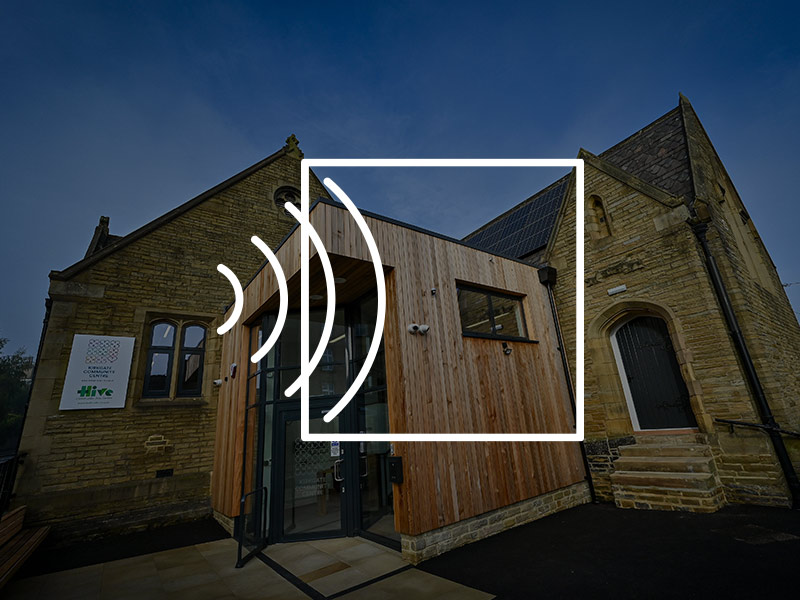
Reverberation Testing, Consultancy, Design and Installation of Acoustic Panelling.
Who we work with