




Reverberation Testing, Consultancy, Design and Installation of Acoustic Panelling.
IOA Members
Trade Accounts
Price Promise
Rapid Reports
Environmental Permit Noise Impact Assessments
Environmental permits have conditions that require operators to control pollution – this includes controlling noise and vibration.
Expert Noise Assessments | Planning & Permit Experts

Projects in 2025
1725
+
Projects to date
14248
+


Expert acoustic consultancy, delivered across the UK.
An environmental permit noise impact assessment is a technical assessment of the noise generated by a regulated facility — such as an industrial site, waste management operation, or energy installation — carried out to support an environmental permit application or variation under the Environmental Permitting (England and Wales) Regulations 2016. NOVA Acoustics produces these assessments in accordance with BS 4142 and Environment Agency H1 / MID guidance.
Simple, fast & fully managed
Request a quote
Confirm your survey date
On-site assessment
Rapid Report
Submit to decision maker
What our clients have to say
“I plucked this company out of the air and I am so glad I did. Jaime has been most helpful and produced a report within a short time scale. The service has been first class and I have absolutely no hesitation in recommending NOVA acoustics.”
– Arnot Wilson
“We commissioned NOVA to conduct a sound test at our new house. From the get go Adam was incredibly helpful and knowledgeable. It is rare to meet professionals like that, who also go above and beyond to help and guide you through the process.”
– Na’ama Zisser
“The engineer who conducted the testing was friendly, professional and incredibly thorough. Overall I would say that NOVA provided an outstanding service from start to finish and I would not hesitate to recommend them.”
– Joe Bentley
“Really pleased with the service received from NOVA Acoustics on a recent noise risk assessment of our production room. The engineer Tom was great throughout and the report was clear and has made managing our noise control measures simple and effective.”
– Daniel Pontin
“NOVA Acoustics have been beyond helpful. Super speedy response and excellent communication. The noise impact assessment has been completed at a very fair price, and I’m really happy I chose NOVA Acoustics for the job.”
– Kelly Creates
“I used NOVA for acoustic reports for a project I’m working on converting retail units to residential, they was prompt, informative and well priced. I wouldn’t hesitate to use them again.”
– Peter Goldthorpe
“We have used NOVA Acoustics for a sound testing for installation of a new floor. Tom the engineer was very thorough, prompt and professional.”
– Anna Jóga
“Ryan and his team were very professional, installing monitoring equipment regarding a proposed planning application. We can definitely recommend NOVA Acoustics Ltd.”
– Pauline Whittle
HOW WE SUPPORT YOU

EA Ready Report

Fully Compliant

Clear Conclusions

Mitigation Advice

Jargon Free & Clear

Permit Approval Secured
Who We Work With
Waste & Recycling
Manufacturing
Energy & Power Generation
Quarrying & Mineral Processing
Agriculture & Anaerobic Digestion
Water & Wastewater
Trade accounts with benefits.
Access competitive trade pricing, dedicated project support, priority scheduling, and a single point of contact to help keep your projects running smoothly from enquiry through to completion.
Nationwide coverage. Local expertise.
- Prompt site visits with flexible appointment availability.
- Straightforward, easy-to-understand reporting.
- Fast 24-hour response when required.
- Regional expertise supported by nationwide resources.
Experienced specialists. UK-wide support.
With highly experienced specialists across the UK, we’re here to support your residential and commercial needs.
Why choose NOVA Acoustics?
- Experience supporting planning applications across every sector.
- Qualified consultants accredited by the Institute of Acoustics.
- Local expertise delivered through a nationwide team.
- Practical guidance to help achieve planning approval.
What This Service Covers
Baseline noise survey at sensitive receptors near the permitted site
Noise impact assessment in accordance with BS 4142:2014+A1:2019 and the Environment
Pragmatic approach to assessing and managing noise emissions.
Mitigation advice where non-compliant (relocation, screening, enclosures)
Noise Management Plan development in line with Environment Agency guidance
Technical reporting suitable for submission with permit applications, plus optional support for technical meetings or design discussions
Environment Agency Noise Impact Assessments
The Environment Agency has a duty to regulate noise and vibration from certain industrial processes to protect and improve the environment, public health and wellbeing.
Any operator or permit applicant must consider the potential noise and vibration impact of their site. Noise impact assessments are required at the permit application stage, when applying to vary a permit and to comply with specific permit conditions. The environment agency will consider that if noise is audible at surrounding domestic and non domestic receptors there will be a possibility of causing impact. Where noise is possible causing impact then the operator or applicants assessment must determine the level of impact and what is requried to prevent and minimise noise pollution. NOVA Acoustics Ltd have assisted in supporting many permit applications, so please call to discuss your project.
What is involved in a noise impact assessment?
A good quality noise impact assessment will determine the existing level of noise (i.e. the baseline noise) at the closest receptors of the proposed development and predict the level of impact that the new proposal will have on this existing noise climate.
The specific type of noise impact assessment methodology will vary depending on the type of noise source that is of interest. However, a quality noise impact assessment will essentially involve measuring the existing noise climate that is associated with your development, as well as assessing the impact that the new proposal is likely to have on this climate. There are many different types of noise that can potentially impact on the surrounding area, including railway, aircraft, road traffic and industrial noise. NOVA Acoustics Ltd have years of experience aiding with all kinds of noise impact assessment and our work is always informed and undertaken to the latest Government legislation and guidance.
Statutory Nuisance vs. Permit Condition Noise
It’s worth understanding the distinction between noise addressed under an Environmental Permit and noise dealt with as a statutory nuisance under separate legislation. Noise conditions within an Environmental Permit are set and enforced by the Environment Agency as part of the permit itself, focused on preventing pollution from the regulated process.
Statutory nuisance, by contrast, is typically a matter for the local authority’s environmental health team and applies more broadly to noise that unreasonably interferes with the use or enjoyment of land, regardless of whether a permit is involved. A site can, in principle, be compliant with its permit conditions while still facing a statutory nuisance complaint, which is why a clear understanding of both frameworks is valuable.
What are Best Available Techniques (BAT)?
Best Available Techniques, or BAT, is the standard the Environment Agency expects permit holders to meet for controlling pollution from their process, including noise and vibration. It doesn’t necessarily mean installing the newest or most expensive equipment available.
It means demonstrating that the noise control measures in place for your site, whether that’s plant selection, enclosure design, operational scheduling, or specific attenuation measures, represent an effective and proportionate approach for an operation of your type and scale.
We conduct noise assessments for industrial and commercial sites—whether they are operational or still in the planning phase—provided we have sufficient detail about the proposed activities. If our assessment identifies excessive noise emissions, we offer expert guidance to help mitigate the issue. Our team has extensive experience delivering practical, cost-effective solutions across a range of sectors. These may include operational recommendations or the implementation of control measures such as attenuators, silencers, acoustic screens and enclosures.
These interventions have proven highly effective, enabling clients to meet regulatory requirements and operate successfully within their permitted noise thresholds. Many have gone on to secure environmental permits and maintain compliance through ongoing noise management strategies.
Because the scope of noise impact assessments can vary significantly depending on the nature of the site and its operations, we recommend contacting us directly to discuss your specific requirements. Our knowledgeable team will provide clear, actionable advice tailored to your project. Reach out via our contact form or give us a call to speak with one of our acoustic consultants.
Book your assessment.
Frequently Asked Questions
How much does an Environmental Permit noise impact assessment cost?
The cost can vary depending on the complexity of the site and the level of detail required. What’s typically included is noise modelling using specialist software such as SoundPlan to simulate site emissions, a noise management plan developed in line with Environment Agency guidance, a technical report suitable for submission with your permit application, and optional support for technical meetings or design discussions. Most assessments can begin within 2 to 4 weeks of instruction, depending on availability and project scope. Get in touch for a tailored quote based on your specific site or permit requirements.
What are the Environment Agency's guidelines on noise impact assessments?
The Environment Agency provides clear guidance on how noise should be assessed and managed when applying for or varying an environmental permit. You must carry out a noise impact assessment if your activity could cause noise pollution, identifying noise sources, measuring baseline levels, modelling predicted impacts, and comparing them against relevant standards such as BS 4142. If noise is likely to be an issue, you’ll also need to submit a noise management plan outlining mitigation strategies, monitoring procedures, and complaint response. This guidance aligns with the National Planning Policy Framework (NPPF) and the Noise Policy Statement for England (NPSE), which aim to avoid significant adverse impacts on health and quality of life. The Environment Agency may also require a vibration impact assessment where there’s a risk of vibration-related issues, and assessments should be proportionate to the scale and nature of the activity, based on robust, site-specific data.
Who is suitably qualified to submit noise impact assessments to the Environment Agency?
Noise Impact Assessments submitted to the Environment Agency must be prepared by individuals with appropriate technical expertise and professional standing in environmental acoustics, typically Chartered Engineers (CEng) with a specialism in acoustics or environmental noise, Members of the Institute of Acoustics (MIOA) or equivalent professional bodies, or consultants with demonstrable experience preparing these assessments in accordance with BS 4142:2014+A1:2019 and the Environment Agency’s Method Implementation Document (MID). The Environment Agency expects assessments to follow the BS 4142 methodology, be technically robust and clearly presented with site-specific data, modelling, and mitigation strategies, and may reject submissions not prepared by individuals with recognised qualifications or relevant experience.
How long does an Environmental Permit noise impact assessment take?
The duration depends on the complexity of the site, the type of assessment required, and access availability for survey work. On-site monitoring usually takes between a few hours and 48 hours, depending on whether attended or unattended monitoring is required. Data analysis and reporting typically takes 10 to 15 working days, including internal peer review. From initial instruction to final report delivery, most assessments are completed within 1 to 2 weeks, assuming no delays in access or weather conditions. Site access delays, adverse weather, and the complexity of the site can all affect timelines.
Why is the Environment Agency's Method Implementation Document (MID) important?
The MID is official guidance published by the Environment Agency, Natural Resources Wales, and the Northern Ireland Environment Agency, explaining how to correctly apply BS 4142:2014+A1:2019 when assessing industrial and commercial sound for environmental permitting purposes. It ensures consistent, high-quality noise assessments are submitted with permit applications, and clarifies how BS 4142 should be interpreted in regulatory contexts. Notably, the MID mandates that weather data must be measured on-site at 15-minute intervals during noise monitoring, third-party weather data is not acceptable. While BS 4142 is the formal standard, the MID is the Environment Agency’s regulatory interpretation and must be followed when submitting assessments for new or varied permits. Following the MID reduces the risk of delays, rejections, or enforcement action.
What is Best Available Techniques (BAT) for noise under an Environmental Permit?
MCS 020 compliance is the established route for demonstrating that a domestic air source heat pump meets permitted development noise requirements across England. While individual local authority approaches to enforcement can vary, having a documented MCS 020 calculation on file provides a clear record of compliance should it ever be requested.
How does an Environmental Permit noise assessment differ from a planning noise impact assessment?
MCS 020 compliance is the established route for demonstrating that a domestic air source heat pump meets permitted development noise requirements across England. While individual local authority approaches to enforcement can vary, having a documented MCS 020 calculation on file provides a clear record of compliance should it ever be requested.
What's the difference between noise covered by an Environmental Permit and a statutory nuisance complaint?
Noise conditions within an Environmental Permit are set and enforced by the Environment Agency as part of the permit itself, focused on preventing pollution from the regulated process. Statutory nuisance is typically a matter for the local authority’s environmental health team and applies more broadly to noise that unreasonably interferes with the use or enjoyment of land, regardless of whether a permit is involved. A site can, in principle, be compliant with its permit conditions while still facing a statutory nuisance complaint, which is why understanding both frameworks matters.
Where do you provide Environmental Permit noise impact assessments?
We support Environmental Permit noise impact assessments for operators across the UK, including; Leeds, Manchester, London, Birmingham, Nottingham, Liverpool, Cambridge, Newcastle, Sheffield, Bristol and Hull.
Recent Projects

Acoustic Consultancy and Design for Breeam HEA05 and POL05.
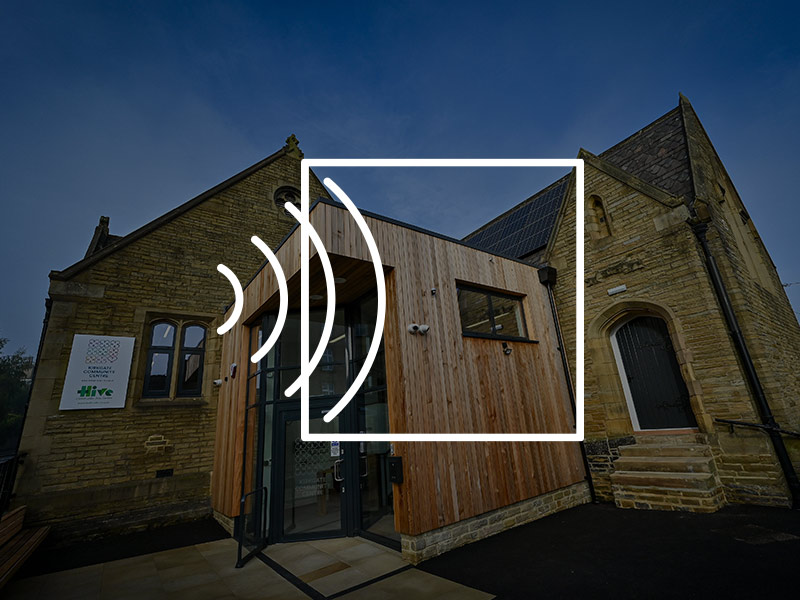
Reverberation Testing, Consultancy, Design and Installation of Acoustic Panelling.
Who we work with