










Skip to content

NOVA Acoustics

Visit Songbird Acoustic Panels

IOA Members

Trade Accounts

Price Promise

Rapid Reports

UK Wide Noise Impact Assessments

Get your project approved with a noise impact assessment prepared by expert acoustic consultants.

Secure Planning Fast | Meet Local Authority Requirements

Impact
Projects in 2025
1725 +
Projects to date
14248 +

Get in Touch

    Response within 1 working day

    Simple, fast & fully managed

    Request a quote

    Confirm your survey date

    On-site survey

    Pragmatic LPA ready report

    Submit to the Decision Maker

    What our clients have to say

    HOW WE SUPPORT YOU

    report within 48 hours

    Planning Ready Report

    on site testing

    Fully Compliant

    Consultants

    Clear Conclusions

    request a quote 2

    Mitigation Advice

    confirm your test date

    Jargon Free & Clear

    White check

    Planning Approval Secured

    Our Noise Impact Assessment Services

    Who We Work With

    House Builders

    Property Developers

    Architects & Contractors

    Homeowners

    Project Managers

    Housing Associations

    Trade accounts with preferential pricing.

    Preferential pricing for ongoing projects, project coordination support, priority scheduling and dedicated contact. 

    Local expertise. Nationwide coverage.

    Which projects.
    We Support.

    Why choose NOVA Acoustics?

    Book your assessment.

    Noise Impact Assessment: Frequently Asked Questions

    Typically, Noise Impact Assessments are requested by your Local Planning Authority or Environmental Health Officer to ensure that your development is not adversely impacting communal, residential or businesses that are situated nearby. As the name suggests, a noise impact assessment will try to predict the impact that noise from your development is likely to have on the surrounding area.

    There are many reasons that developments require a noise impact assessment. This could be anything from a business extending its hours of operation, to a new construction project in a city centre. In each of these examples, the client would need to know the likely impact that their project would have on the surrounding area. Finding out the answer to this question in advance can save a lot of money, hassle and time in the long run.

    A noise survey gives you a clear picture of the noise environment, taking measurements of ambient noise levels at various times of the day, including busy and quiet periods. It also identifies major noise sources, like road traffic, industrial machinery, or construction activities. After setting the baseline noise levels, we compare them with relevant noise criteria to understand the extent of impact.

    A good quality noise impact assessment will:

    • Determine the existing level of noise (i.e. the baseline noise) at the proposed development
      Predict the level of impact that the new proposal will have on this existing noise climate.
    • The specific type of noise impact assessment methodology will vary depending on the type of noise source that is of interest. However, a quality noise impact assessment will essentially involve measuring the existing noise climate that is associated with your development, as well as assessing the impact that the new proposal is likely to have on this climate.


    Many different types of noise can potentially impact the surrounding area, including railway, aircraft, road traffic, entertainment and industrial noise.

    NOVA Acoustics Ltd has years of experience aiding with all kinds of noise impact assessment and our work is always informed and undertaken to the latest Government legislation and guidance.

    Noise exists in all facets of life and is only a problem if it significantly impacts people who don’t want to hear it. The main purpose of a noise impact assessment is not to determine if a project is likely to cause noise, but if anybody is likely to be significantly adversely impacted by it.

    If this is the case, we can use our years of experience to help clients mitigate the impact of noise through realistic, tailored acoustic solutions.

    As the scope of noise impact assessments can vary enormously, the best thing you can do is contact us directly to discuss the specific needs of your project. We will offer you practical, cost-effective advice about how to proceed with the noise impact assessment for planning your project.

    Contact us via the form, or ring us, to speak with our friendly and knowledgeable team about your noise impact assessment requirements. Once you contact us, we’ll calculate the noise assessment cost and arrange to visit you on site. 

    Noise impact assessments are typically required by a Local Planning Authority or Environmental Health Officer to ensure that new developments do not adversely affect the surrounding environment.

    Noise impact assessments may be required for a wide range of projects, including:

    • New developments
    • Changes to operating hours
    • Commercial or industrial installations
    • City centre construction projects

    They are used to understand the likely impact before work begins.

    The purpose is to assess the existing noise environment and predict how a proposed development will change it, allowing potential issues to be identified and addressed in advance.

    Carrying out an assessment early helps avoid delays, reduce risk, and prevent costly redesigns by ensuring that noise impacts are understood before planning decisions are made.
    Yes — by identifying potential noise issues early, it allows mitigation measures to be implemented before problems arise, saving time, cost and disruption later in the project.

    A typical assessment includes:

    • Measuring existing background (baseline) noise levels
    • Identifying dominant noise sources
    • Predicting future noise levels from the proposed development
    • Comparing results against relevant standards

    This provides a clear understanding of potential impact.

    Baseline noise refers to the existing sound environment at a site before development. It is used as a reference point to assess how much additional noise a project will introduce.

    Noise impact assessments can consider a wide range of sources, including:

    • Road traffic
    • Railways and aircraft
    • Industrial and plant noise
    • Construction and entertainment noise

    Methodology & Standards

    Noise levels are measured on site and then assessed against recognised standards and criteria to determine whether the predicted impact is acceptable.

    The methodology depends on the noise source, but commonly includes standards such as:

    • BS4142 for industrial and commercial noise
    • Planning and environmental guidance

    The correct method is selected based on the project type.

    Noise is considered a problem when it causes a significant adverse impact on nearby receptors, rather than simply being present.

    Mitigation & Outcomes

    If significant impact is identified, mitigation measures can be recommended, such as:

    • Acoustic barriers or enclosures
    • Equipment selection or relocation
    • Operational controls

    Yes — experienced acoustic consultants can design practical, tailored solutions to minimise noise impact and achieve compliance.
    Yes — reports typically include clear guidance on how to reduce noise impact and meet planning or regulatory requirements.

    Process, Timescales & Cost

    The duration depends on the size and complexity of the project. Smaller assessments may take a few days, while larger or more complex projects can take several weeks.
    Once you make contact, the scope of the assessment is defined, costs are calculated, and a site visit is arranged to carry out measurements and analysis.
    The best approach is to speak with an acoustic consultant to discuss your project requirements and determine the appropriate scope and methodology. 
    Common triggers include: • Failure to assess noise risk • Exceeding exposure limits • Lack of documented control measures
     |

    Planning & Suitability

    Noise impact assessments are commonly required for:

    • Residential developments
    • Commercial and mixed-use schemes
    • Industrial installations
    • Leisure and entertainment venues

    Noise-sensitive receptors are locations where people may be affected by noise, such as homes, schools, hospitals and workplaces.
    Yes — consultants can support with: • Follow-up surveys • Compliance strategies • Implementing control measures • Providing evidence for regulators
     |

    Recent Projects

    Wilten f

    Acoustic Consultancy and Design for Breeam HEA05 and POL05.

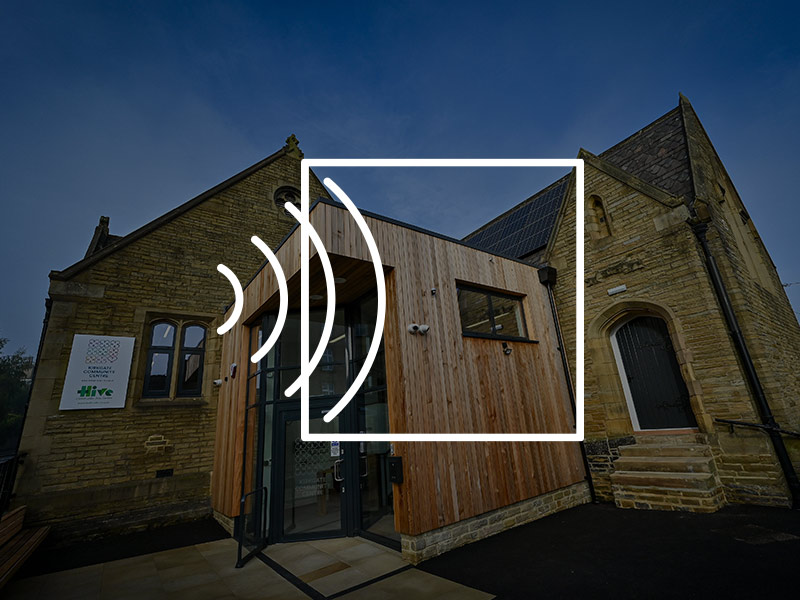
    Kirkgate Community Centre f

    Reverberation Testing, Consultancy, Design and Installation of Acoustic Panelling.

    Sports and Leisure Development in Essex f

    Acoustic Consultancy and Design for RIBA Stages 3 and 4 for redevelopment to form a Hotel.

    Who we work with