








Acoustic Consultancy and Design for Breeam HEA05 and POL05.

Environmental Permit Noise Impact Assessments
Environmental permits have conditions that require operators to control pollution – this includes controlling noise and vibration.
The Environment Agency has a duty to regulate noise and vibration from certain industrial processes to protect and improve the environment, public health and wellbeing.
Any operator or permit applicant must consider the potential noise and vibration impact of their site. Noise impact assessments are required at the permit application stage, when applying to vary a permit and to comply with specific permit conditions. The environment agency will consider that if noise is audible at surrounding domestic and non domestic receptors there will be a possibility of causing impact. Where noise is possible causing impact then the operator or applicants assessment must determine the level of impact and what is requried to prevent and minimise noise pollution. NOVA Acoustics Ltd have assisted in supporting many permit applications, so please call to discuss your project.
What is involved in a noise impact assessment?
A good quality noise impact assessment will determine the existing level of noise (i.e. the baseline noise) at the closest receptors of the proposed development and predict the level of impact that the new proposal will have on this existing noise climate.
The specific type of noise impact assessment methodology will vary depending on the type of noise source that is of interest. However, a quality noise impact assessment will essentially involve measuring the existing noise climate that is associated with your development, as well as assessing the impact that the new proposal is likely to have on this climate. There are many different types of noise that can potentially impact on the surrounding area, including railway, aircraft, road traffic and industrial noise. NOVA Acoustics Ltd have years of experience aiding with all kinds of noise impact assessment and our work is always informed and undertaken to the latest Government legislation and guidance.
What are Best Available Techniques (BAT)?
We conduct noise assessments for industrial and commercial sites—whether they are operational or still in the planning phase—provided we have sufficient detail about the proposed activities. If our assessment identifies excessive noise emissions, we offer expert guidance to help mitigate the issue. Our team has extensive experience delivering practical, cost-effective solutions across a range of sectors. These may include operational recommendations or the implementation of control measures such as attenuators, silencers, acoustic screens and enclosures.
These interventions have proven highly effective, enabling clients to meet regulatory requirements and operate successfully within their permitted noise thresholds. Many have gone on to secure environmental permits and maintain compliance through ongoing noise management strategies.
Because the scope of noise impact assessments can vary significantly depending on the nature of the site and its operations, we recommend contacting us directly to discuss your specific requirements. Our knowledgeable team will provide clear, actionable advice tailored to your project. Reach out via our contact form or give us a call to speak with one of our acoustic consultants.
Recent Projects
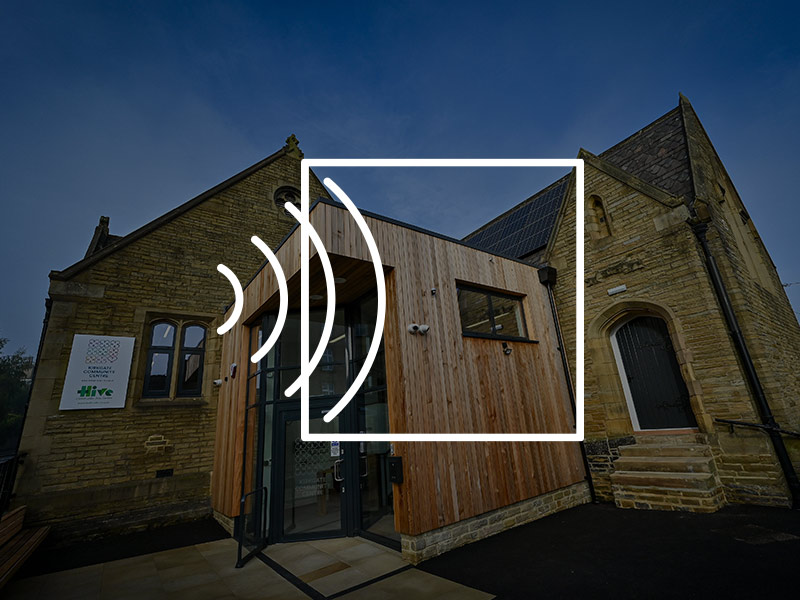
Reverberation Testing, Consultancy, Design and Installation of Acoustic Panelling.

Acoustic Consultancy and Design for RIBA Stages 3 and 4 for redevelopment to form a Hotel.
Who we work with



























































FAQs
How much does a Environmental Permit noise impact assessment cost?
The cost of an Environmental Permit noise impact assessment can vary depending on the complexity of the site and the level of detail required.
What’s Typically Included:
- Noise modelling using specialist software such as SoundPlan to simulate site emissions.
- A noise management plan developed in line with Environment Agency guidance.
- A technical report suitable for submission with your permit application.
- Optional support for technical meetings or design discussions.
Turnaround Time: Most assessments can begin within 2 – 4 weeks of instruction, depending on availability and project scope.
For a tailored quote based on your specific site or permit requirements, please get in touch with our team.
What are the Environment Agencys guidelines on Noise Impact Assessments?
The Environment Agency provides clear guidance on how noise should be assessed and managed when applying for or varying an environmental permit.
Key Requirements:
- Noise Impact Assessment (NIA): You must carry out a noise impact assessment if your activity could cause noise pollution. This includes identifying noise sources, measuring baseline levels, modelling predicted impacts, and comparing them against relevant standards such as BS 4142.
- Noise Management Plan (NMP): If noise is likely to be an issue, you’ll need to submit a noise management plan. This should outline mitigation strategies, monitoring procedures, and how you’ll respond to complaints.
- Legal Compliance: Operators must comply with environmental permit conditions that require control of noise and vibration. The guidance aligns with the National Planning Policy Framework (NPPF) and the Noise Policy Statement for England (NPSE), which aim to avoid significant adverse impacts on health and quality of life.
Additional Considerations:
- The Environment Agency may require a vibration impact assessment if there’s a risk of vibration-related issues.
- Assessments should be proportionate to the scale and nature of the activity and must be based on robust, site-specific data.
For more detailed information, you can view the full guidance on the UK Government website.
Who is suitably qualified to submit Noise Impact Assessments to the Environment Agency?
Noise Impact Assessments (NIAs) submitted to the Environment Agency must be prepared by individuals with appropriate technical expertise and professional standing in environmental acoustics.
Suitably Qualified Individuals Typically Include:
- Chartered Engineers (CEng) with a specialism in acoustics or environmental noise.
- Members of the Institute of Acoustics (MIOA) or equivalent professional bodies.
- Professionals with a postgraduate qualification in acoustics or environmental noise control.
- Consultants with demonstrable experience in preparing NIAs in accordance with BS 4142:2014+A1:2019 and the Environment Agency’s Method Implementation Document (MID).
What the Environment Agency Expects:
- Assessments must follow the BS 4142 methodology for rating and assessing industrial and commercial sound.
- Reports should be technically robust, clearly presented, and include site-specific data, modelling, and mitigation strategies.
- The Environment Agency may reject assessments that are not prepared by individuals with recognised qualifications or relevant experience.
This ensures that all submissions meet the technical and regulatory standards expected by the Environment Agency.
For more information, you can refer to the official guidance on GOV.UK .
How long does a noise impact assessment take?
The duration of a Noise Impact Assessment (NIA) depends on the complexity of the site, the type of assessment required, and the availability of access for survey work.
Typical Timeframes:
- On-site Monitoring: Environmental noise surveys usually take between a few hours and 48 hours to complete, depending on whether attended or unattended monitoring is required.
- Data Analysis & Reporting: Once the survey is complete, the data is analysed and a technical report is prepared. This process typically takes 10–15 working days, including internal peer review .
- Total Turnaround: From initial instruction to final report delivery, most assessments are completed within 1–2 weeks, assuming no delays in access or weather conditions.
Factors That May Affect Timelines:
- Site Access Delays: Incomplete access or last-minute changes can delay survey scheduling.
- Weather Conditions: Adverse weather may affect the accuracy of outdoor measurements and require rescheduling.
- Complexity of the Site: Larger or more acoustically complex sites may require extended monitoring or additional modelling.
Why is the Environment Agency’s Method Implementation Document (MID) important?
The Method Implementation Document (MID) is official guidance published by the Environment Agency (EA), Natural Resources Wales, and the Northern Ireland Environment Agency. It explains how to correctly apply the British Standard BS 4142:2014+A1:2019 when assessing industrial and commercial sound for environmental permitting purposes.
Purpose of the MID:
- To ensure consistent, high-quality noise assessments are submitted with environmental permit applications.
- To clarify how BS 4142 should be interpreted in regulatory contexts, especially where ambiguity or misapplication has been common.
Key Features:
- Measurement Requirements: The MID mandates that weather data must be measured on-site at 15-minute intervals during noise monitoring. Use of third-party weather data—even from nearby stations—is not acceptable.
- Assessment Integrity: It provides detailed expectations for background sound level determination, acoustic characterisation, penalty application, modelling, and uncertainty analysis.
- Contextual Judgement: Section 11 of the MID offers guidance on how to apply contextual considerations when interpreting BS 4142 results.
- Legal Standing: While BS 4142 is the formal standard, the MID is the Environment Agency’s regulatory interpretation. It must be followed when submitting assessments for new or varied permits.
When to Use the MID:
- When applying for a new environmental permit.
- When submitting noise monitoring data or assessments to the EA.
- When preparing a Noise Impact Assessment or Noise Management Plan for a regulated site.
Why It Matters: Following the MID ensures your assessment is not only technically robust but also aligned with the EA’s expectations—reducing the risk of delays, rejections, or enforcement actions.
You can access the full MID on the UK Government website