
Skip to content

NOVA Acoustics

Visit Songbird Acoustic Panels

Home » Product Type - Acoustic Mineral Wool

Product Type – Acoustic Mineral Wool

Nationwide Delivery
High Performance
Great Value
Expert Advice

Knauf RS60 25mm

Performance: Will vary due to featuring in acoustic systems.

Dimensions: 1200mm x 600mm x 25mm

Weight: 20kg

For: Homes and workplaces.

Compliance: Compliant with both Part E Building Regulations (England, Wales, Northern Ireland and the Republic of Ireland).*

Installation: Will vary depending on which system it features.

Where: For all cavities found between floor joists, stud frame walls and ceilings. Also in conjunction with acoustic cradles such as MuteCradle™ 45/60mm.

Universally recognised throughout the world of soundproofing, commonly used as part of an acoustic system, or combined with additional acoustic materials such as our MuteClip®. There is currently a shortage on Rockwool RW3, RWA45, Knauf RS60 and RS45 within the UK, please do contact do office before orders so we can indicate stock availability.

More Information

Specialist Acoustic Mineral Wool for Part E Building Regulations Compliance

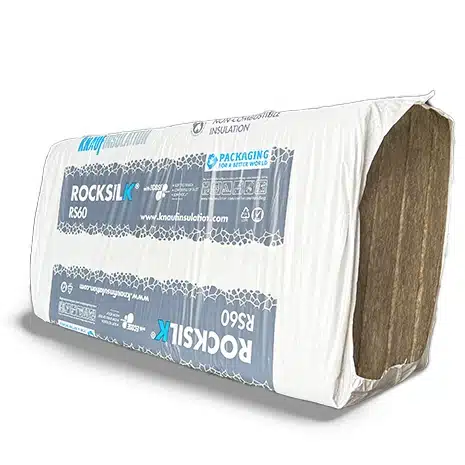
Knauf Acoustic Mineral Wool (RS60) (60kg per m3) is high-density acoustic mineral wool that is used to treat the ‘open spaces’, or cavities, between flooring joists, stud-frame walls and battened ceilings. As an open-fibrous material, it helps to reduce sound energy by turning it into heat, helping to reduce cavity resonance. As a standalone product, it is only effective against very light background noise issues. We recommend Knauf Acoustic Mineral Wool to be used as part of a system when a cavity is created or existing.

Acoustic Mineral Wool will also help to prevent Flanking Transmission adjacent open cavities. Any acoustic system fitted without this material will not achieve its full acoustic performance and may fall short of expectations or essential acoustic regulations.

Acoustic Mineral Wool has a greater density than thermal wool, and this is evident in their slab appearance. The reduction as an acoustic insulation material comes as an absorptive rating NRC (Noise Reduction Coefficient) which differs for each thickness. This means that it is an absorptive material as opposed to a dense soundproofing product. You will find all acoustic systems that Acoustic Mineral Wool is featured in by selecting the ‘Systems’ tab above. Here you will see how vital it is!

Information

A crucial component for all soundproofing systems with joists, battens, acoustic cradles or stud-frames.
To be used in cavities to provide optimum soundproofing performance for all systems
Slab dimensions 1200mm x 600mm x 30mm (18 per bale – 12.96m2)
Other thicknesses include: 100mm, 75mm and 50mm
Euroclass A1 fire rating
Always leave an air gap to ensure full performance a minimum of 10mm
A 3-5 day lead time can be expected with this product, please call ahead for availability

Knauf RS60 Pack Quantities

100mm
75mm
50mm
25mm
4 Slabs (2.88m2)
6 Slabs (4.32m2)
9 Slabs (6.48m2)
18 Slabs (12.96m2)

60kg is not its surface density, but the density of the product when measured in cubic meters, it is a fairly lightweight sound insulation material which is easy to cut and fit.
The 25mm thickness is the thinnest dense slab available and is used to help insulate small cavities, for using with ‘boxing in’ pipes with our MuteWrap and used with our MuteClip® direct to brick or block wall constructions where a small air gap is created. Do not compress Acoustic Mineral Wool between the sound source and soundproofed surface as this creates a direct path for sound to travel through, this will degrade the performance of the soundproofing system.
You will want to install Acoustic Mineral Wool in conjunction with dense soundproofing materials, and it is essential to note that as a lightweight, fibrous material, the sound will pass through it and that its prime function is to reduce noise reverberating around an empty cavity and not as a standalone to reduce noise transfer between rooms.
Acoustic Mineral Wool is a fibrous material, which means that fibres are released into the air when exposed and why it is usually used in a cavity or covered. It is not recommended to use as exposed panelling. We offer a vast range of sound absorption materials we tailor to your creative imagination with a variety of colours, as well as stock items in a range of designs and colours.
We have found that a bread knife usually makes for an excellent cutting tool if this is unavailable – a large pair of scissors will also work well.
There are no dangerous properties found in Acoustic Mineral Wool, but as it is fibrous it can give a slight irritation to the skin. Those with sensitive skin may experience itching, so we recommend the use of gloves and protective eye-wear. This will be the case for all mineral wool insulation.

Installation Guide

Acoustic Mineral Wool is not listed as a toxic or hazardous material, but when installing it does release small dust particles, so we recommend the use of gloves, eye protection and protective mask.

Measure the depth of the cavity first, or if you know the stud depth you are using, make sure that you choose a depth of Acoustic Mineral Wool that allows for a 10mm air gap on either side.

The reason you leave this air gap is to avoid compressing the fibrous properties between the two partitions you are soundproofing, for example, do not use a 100mm depth in a 50mm gap.

Acoustic Mineral Wool is easy to cut with large scissors, or we found a bread knife to be a great tool here.

Cut the slab a little larger than the stud or joist gap to friction hold, or use a form of wiring to hold it in place.

Sound insulation advice for Part E

Soundproofing Floors
Soundproofing Designs for Party Floors to achieve compliance with Part E of the Building Regulations.

Soundproofing Walls

Soundproofing Designs for Party Walls to achieve compliance with Part E of the Building Regulations.

Related Products

Rockwool RW3 50mm
Rockwool RW3 100mm
Knauf RS60 50mm
Knauf RS60 100mm

Who we work with

Nationwide Delivery
High Performance
Great Value
Expert Advice

Rockwool RW3 50mm

Performance: Will vary due to featuring in acoustic systems.

Dimensions: 1200mm x 600mm x 50mm

Weight: 20kg

For: Homes and workplaces.

Compliance: Compliant with both Part E Building Regulations (England, Wales, Northern Ireland and the Republic of Ireland).*

Installation: Will vary depending on which system it features.

Where: Wor all cavities found between floor joists, stud frame walls and ceilings.

Universally recognised throughout the world of soundproofing, commonly used as part of an acoustic system, or combined with additional acoustic materials such as our MuteClip®. There is currently a shortage on Rockwool RW3, RWA45, Knauf RS60 and RS45 within the UK, please do contact us before orders so we can indicate stock availability.

More Information

Specialist Acoustic Mineral Wool for Part E Building Regulations Compliance

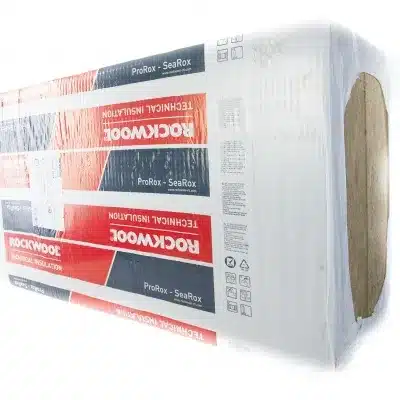
Rockwool PROROX SL930 Acoustic Mineral Wool (RW3) (60kg per m3) is high-density acoustic mineral wool that is used to treat the ‘open spaces’, or cavities, between flooring joists, stud-frame walls and ceilings. It is an open-fibrous material that when sound comes in to contact with, turns that sound energy into heat, essentially reducing the sound. Although, it is not used as a standalone and should always be used as part of a system where these open spaces exist. Acoustic Mineral Wool helps to prevent Flanking Transmission through the open cavities, and the sound amplifying. Any acoustic system fitted without it will not achieve its full acoustic performance and may fall short of expectations.

Acoustic Mineral Wool has a greater density than thermal wool comparisons which is evident in their slab appearance, the reduction in acoustic insulation for this material in the form of an NRC (Noise Reduction Coefficient) which differs for each thickness, what this essentially means is that it is an absorptive material as opposed to a dense, heavy soundproofing product. You will find all acoustic systems that Acoustic Mineral Wool is featured in, which there is most, by selecting the ‘Systems’ tab above.

Information

  • Essential for all soundproofing systems with joists or stud-frames.
  • To be used in cavities to provide optimum soundproofing performance for all systems
  • Slab dimensions 1200mm x 600mm x 50mm (8 per bale – 5.72m2)
  • Other thicknesses include; 100mm, 75mm and 30mm
  • Euroclass A1 fire rating
  • Always leave an air gap to ensure full performance a minimum of 10mm
  • A 3-5 day lead time can be expected with Rockwool, please call ahead for availability


Rockwool RW3 Pack Quantities

  • 100mm
  • 75mm
  • 50mm
  • 30mm
  • 4 Slabs (2.88m2)
  • 6 Slabs (4.32m2)
  • 8 Slabs (5.72m2)
  • 15 Slabs (10.8m2)
60kg is the measured density of the product in cubic meters – it is a lightweight sound insulation material that is easy to cut, easy to lay and most of all, essential for sound proofing projects installing to stud framing, joists or in any cavities. Use gloves and eye protection and keep the area ventilated during and after installation.
The 50mm thickness is best used to help treat stud frameworks and to use between flooring joists to treat cavities, leaving them untreated can lead to the remaining sound passing through and resonating in these areas. You will also want to avoid using a thicker size than the air gap provided and aim to have at least a 10mm air gap – using a 100mm thickness in a 50mm cavity will lead to compression of the acoustic mineral wool and a direct path of sound to travel through, degrading the effectiveness of any sound proofing system.
In almost all acoustic systems that look to soundproof over frameworks or help suspend materials like our MuteClip System or our MuteMat Systems. In soundproofing you use Rockwool acoustic mineral wool is to treat the cavities found in between frameworks and flooring joists to reduce sound from reflective around inside them, and then resonating. It is important to note that this is a lightweight, fibrous material and this means that sound will pass through it – so it is not effective in reducing airborne nor impact noise issues as a standalone product.
Acoustic Mineral Wool is fibrous, and this means that fibres can be released into the air when exposed, which is why you place them in cavities and not to use as an exposed sound absorption panelling. We offer a vast range of sound absorption materials where you can be as creative as you like, a variety of colours and 3D structures can all tailored to your space.
We have found that a bread knife usually makes for an excellent cutting tool if this is unavailable – a large pair of scissors will also work well.
The fibrous element can lend to slight irritation of the skin; those with sensitive skin may find a slight redness appear while installing, the use of gloves and protective eyewear is recommended.

Installation Guide

Although acoustic insulation used here is not toxic or hazardous, when installing it does release small dust particles, so do use gloves, goggles or face mask.

Measure the depth of the cavity first, or if you know the stud depth you are using, make sure that you choose a depth of Acoustic Mineral Wool that allows for a 10mm air gap on either side.

The reason you leave this air gap is to avoid compressing the fibrous properties between the two partitions you are soundproofing, for example, do not use a 50mm depth in a 30mm gap.

Acoustic Mineral Wool is easy to cut with large scissors, or we found a bread knife to be a great tool here.

Cut the slab a little larger than the stud or joist gap to friction hold, or use a form of wiring to hold it in place.

Sound insulation advice for Part E

Soundproofing Floors
Soundproofing Designs for Party Floors to achieve compliance with Part E of the Building Regulations.

Soundproofing Walls

Soundproofing Designs for Party Walls to achieve compliance with Part E of the Building Regulations.

Related Products

Rockwool RW3 30mm

Rockwool RW3 100mm
Knauf RS60 50mm
Knauf RS60 100mm

Who we work with

Nationwide Delivery
High Performance
Great Value
Expert Advice

Knauf RS60 50mm

Performance: Will vary due to featuring in acoustic systems.

Dimensions: 1200mm x 600mm x 50mm

Weight: 20kg

For: Homes and workplaces.

Compliance: Compliant with both Part E Building Regulations (England, Wales, Northern Ireland and the Republic of Ireland).*

Installation: Will vary depending on which system it features.

Where: For all cavities found between floor joists, stud frame walls and ceilings. Also in conjunction with acoustic cradles such as MuteCradle™ 45/60mm.

Universally recognised throughout the world of soundproofing, commonly used as part of an acoustic system, or combined with additional acoustic materials such as our MuteClip®. There is currently a shortage on Rockwool RW3, RWA45, Knauf RS60 and RS45 within the UK, please do contact do office before orders so we can indicate stock availability.

More Information

Specialist Acoustic Mineral Wool for Part E Building Regulations Compliance

Knauf Acoustic Mineral Wool (RS60) (60kg per m3) is high-density acoustic mineral wool that is used to treat the open spaces, or cavities, between flooring joists, stud-frame walls and battened ceilings. As Acoustic Mineral Wool is a fibrous material, it helps to lessen sound energy by turning it into heat, helping to decrease the remaining noise ‘bouncing’ around inside the cavity and amplifying. As a standalone product, it is only effective against very light background noise issues. We recommend Knauf Acoustic Mineral Wool to be used as part of a system when a cavity is created or existing.

Acoustic Mineral Wool will also help to prevent Flanking Transmission adjacent cavities. Any soundproofing system fitted without this material will not achieve its complete acoustic performance and may fall short of expectations or essential acoustic regulations.

Acoustic Mineral Wool has a greater density than thermal wool, and this is evident in their slab appearance. The reduction as an acoustic insulation material comes as an absorptive rating NRC (Noise Reduction Coefficient) which differs for each thickness. This means that it is an absorptive material as opposed to a dense soundproofing product. You will find all acoustic systems that Acoustic Mineral Wool is featured in by selecting the ‘Systems’ tab above. Here you will see how vital it is!

Information

  • A crucial component for all soundproofing systems with joists, battens, acoustic cradles or stud-frames
  • To be used in cavities to provide optimum soundproofing performance for all systems
  • Slab dimensions 1200mm x 600mm x 50mm (9 per bale – 6.48m2)
  • Other thicknesses include: 100mm, 75mm and 25mm
  • Euroclass A1 fire rating
    Always leave an air gap to ensure full performance a minimum of 10mm
  • A 3-5 day lead time can be expected with this product, please call ahead for availability


Knauf RS60 Pack Quantities

  • 100mm
  • 75mm
  • 50mm
  • 25mm
  • 4 Slabs (2.88m2)
  • 6 Slabs (4.32m2)
  • 9 Slabs (6.48m2)
  • 18 Slabs (12.96m2)
60kg is not its surface density, but the density of the product when measured in cubic meters, it is a fairly lightweight sound insulation material which is easy to cut and fit.
The 50mm depth is best used when treating stud frames, and between flooring joists to treat cavities, leaving them untreated can lead to the remaining sound passing through and ‘bouncing around’ in these areas. You will want to avoid using a thicker size than the air gap and aim to have at least a 10mm air gap on either side of the slab, for instance, using a 100mm thickness in a 50mm cavity will lead to compression of the acoustic mineral wool and a direct path of sound to travel through, degrading the effectiveness of any soundproofing system.
Acoustic Mineral Wool is used in almost all soundproofing systems that are installed with over a new or existing framework, or suspended by our MuteClip® System and MuteCradle™ Systems. In soundproofing, you use Acoustic Mineral Wool to treat the cavities found in between frameworks and flooring joists to reduce sound from reflective around inside them. It is vital to note that this is a lightweight, fibrous material and this means that sound will pass through it. It is not so effective in reducing airborne nor impact noise issues as a standalone product.

Acoustic Mineral Wool is fibrous, and this means that fibres can be released into the air when exposed, which is why you place them in cavities and not to use as an exposed sound absorption panelling. We offer a vast range of sound absorption materials where you can be as creative as you like, a variety of colours and 3D structures can all tailored to your space.

We have found that a bread knife usually makes for an excellent cutting tool if this is unavailable, a large pair of scissors will also work well.
The fibrous nature of the product can lend to slight irritation of the skin. Those with sensitive skin may find a slight redness appear while installing, the use of gloves and protective eyewear is recommended.

Installation Guide

Acoustic Mineral Wool is not listed as a toxic or hazardous material, but when installing it does release small dust particles, so we recommend the use of gloves, eye protection and protective mask.

Measure the depth of the cavity first, or if you know the stud depth you are using, make sure that you choose a depth of Acoustic Mineral Wool that allows for a 10mm air gap on either side.

The reason you leave this air gap is to avoid compressing the fibrous properties between the two partitions you are soundproofing, for example, do not use a 100mm depth in a 50mm gap.

Acoustic Mineral Wool is easy to cut with large scissors, or we found a bread knife to be a great tool here.

Cut the slab a little larger than the stud or joist gap to friction hold, or use a form of wiring to hold it in place.

Sound insulation advice for Part E

Soundproofing Floors
Soundproofing Designs for Party Floors to achieve compliance with Part E of the Building Regulations.

Soundproofing Walls

Soundproofing Designs for Party Walls to achieve compliance with Part E of the Building Regulations.

Related Products

Rockwool RW3 100mm
Knauf RS60 25mm
Knauf RS60 100mm

Who we work with

Nationwide Delivery
High Performance
Great Value
Expert Advice

Rockwool RW3 30mm

Performance: Will vary due to featuring in acoustic systems.

Dimensions: 1200mm x 600mm x 100mm

Weight: 20kg

For: Homes and workplaces.

Compliance: Compliant with both Part E Building Regulations (England, Wales, Northern Ireland and the Republic of Ireland).*

Installation: Will vary depending on which system it features.

Where: Wor all cavities found between floor joists, stud frame walls and ceilings.

Universally recognised throughout the world of soundproofing, commonly used as part of an acoustic system, or combined with additional acoustic materials such as our MuteClip®. There is currently a shortage on Rockwool RW3, RWA45, Knauf RS60 and RS45 within the UK, please do contact do office before orders so we can indicate stock availability.

More Information

Specialist Acoustic Mineral Wool for Part E Building Regulations Compliance

Rockwool PROROX SL930 Acoustic Mineral Wool (RW3) (60kg per m3) is high-density acoustic mineral wool that is used to treat the ‘open spaces’, or cavities, between flooring joists, stud-frame walls and ceilings. It is an open-fibrous material that when sound comes in to contact with, turns that sound energy into heat, essentially reducing the sound. Although, it is not used as a standalone and should always be used as part of a system where these open spaces exist.
Acoustic Mineral Wool helps to prevent Flanking Transmission through the open cavities, and the sound amplifying. Any acoustic system fitted without it will not achieve its full acoustic performance and may fall short of expectations.

Acoustic Mineral Wool has a greater density than thermal wool comparisons which is evident in their slab appearance, the reduction in acoustic insulation for this material in the form of an NRC (Noise Reduction Coefficient) which differs for each thickness, what this essentially means is that it is an absorptive material as opposed to a dense, heavy soundproofing product. You will find all acoustic systems that Acoustic Mineral Wool is featured in, which there is most, by selecting the ‘Systems’ tab above.

Information

  • Essential for all soundproofing systems with joists or stud-frames.
  • To be used in cavities to provide optimum soundproofing performance for all systems
    Slab dimensions 1200mm x 600mm x 100mm (4 per bale – 2.88m2)
  • Other thicknesses include; 75mm, 50mm and 30mm
  • Euroclass A1 fire rating
  • Always leave an air gap to ensure full performance a minimum of 10mm
  • A 3-5 day lead time can be expected with Rockwool, please call ahead for availability


Rockwool RW3 Pack Quantities

  • 100mm
  • 75mm
  • 50mm
  • 30mm
  • 4 Slabs (2.88m2)
  • 6 Slabs (4.32m2)
  • 8 Slabs (5.72m2)
  • 15 Slabs (10.8m2)
60kg is the density of the product when measured in cubic meters and not the weight of a single slab or bale of acoustic mineral wool – it is a reasonably lightweight sound insulation product that is easy to cut and easy to lay, use gloves and eye protection and keep the area ventilated during and after installation.
100mm is the thickest slab of acoustic mineral wool available and is best used as stud wall insulation, between flooring joists or flooring frameworks with our MuteCradle options to prevent cavities from resonating, leaving them untreated will lead to any remaining sound passing through into these areas. You will also want to avoid using a thicker size than the air gap provided and aim to have at least a 10mm air gap on either side. Using a 100mm thickness in a 50mm cavity, for example, will lead to compression of the acoustic mineral wool and a direct path of sound to travel through which will result in degrading the acoustic performance.
You will want to install acoustic mineral wool in timber and metal frameworks, in our suspended ceiling or wall systems such as in our MuteClip System and flooring cavities between joists or with our MuteCradle options it can be used to treat all these cavities to reduce sound from bouncing around inside them and resonating. But, it is essential to note that this is a lightweight, fibrous material and this means that sound will pass through it – so it is not effective in reducing airborne nor impact noise issues as a standalone solution.

Acoustic Mineral Wool is fibrous and will release fibres into the room when exposed, and it should only be placed in cavities and generally is not recommended to use as an exposed sound absorption material for this reason.

We offer a comprehensive range of sound absorption range that can are available in an almost unlimited range of possibilities across a broad range of colours.

As a fibrous material, it can lead to slight irritation of the skin, those with sensitive skin may find a slight redness appear while handling it – the use of gloves and protective eyewear is recommended.

Installation Guide

Although acoustic insulation used here is not toxic or hazardous, when installing it does release small dust particles, so do use gloves, goggles or face mask.

Measure the depth of the cavity first, or if you know the stud depth you are using, make sure that you choose a depth of Acoustic Mineral Wool that allows for a 10mm air gap on either side.

The reason you leave this air gap is to avoid compressing the fibrous properties between the two partitions you are soundproofing, for example, do not use a 100mm depth in a 50mm gap.

Acoustic Mineral Wool is easy to cut with large scissors, or we found a bread knife to be a great tool here.

Cut the slab a little larger than the stud or joist gap to friction hold, or use a form of wiring to hold it in place.

Sound insulation advice for Part E

Soundproofing Floors
Soundproofing Designs for Party Floors to achieve compliance with Part E of the Building Regulations.

Soundproofing Walls

Soundproofing Designs for Party Walls to achieve compliance with Part E of the Building Regulations.

Related Products

Rockwool RW3 50mm
Rockwool RW3 100mm
Knauf RS60 50mm
Knauf RS60 100mm

Who we work with

Nationwide Delivery
High Performance
Great Value
Expert Advice

Rockwool RW3 100mm

Performance: Will vary due to featuring in acoustic systems.

Dimensions: 1200mm x 600mm x 100mm

Weight: 20kg

For: Homes and workplaces.

Compliance: Compliant with both Part E Building Regulations (England, Wales, Northern Ireland and the Republic of Ireland).*

Installation: Will vary depending on which system it features.

Where: Wor all cavities found between floor joists, stud frame walls and ceilings.

Universally recognised throughout the world of soundproofing, commonly used as part of an acoustic system, or combined with additional acoustic materials such as our MuteClip®. There is currently a shortage on Rockwool RW3, RWA45, Knauf RS60 and RS45 within the UK, please do contact do office before orders so we can indicate stock availability.

More Information

Specialist Acoustic Mineral Wool for Part E Building Regulations Compliance

Rockwool PROROX SL930 Acoustic Mineral Wool (RW3) (60kg per m3) is high-density acoustic mineral wool that is used to treat the ‘open spaces’, or cavities, between flooring joists, stud-frame walls and ceilings. It is an open-fibrous material that when sound comes in to contact with, turns that sound energy into heat, essentially reducing the sound. Although, it is not used as a standalone and should always be used as part of a system where these open spaces exist.
Acoustic Mineral Wool helps to prevent Flanking Transmission through the open cavities, and the sound amplifying. Any acoustic system fitted without it will not achieve its full acoustic performance and may fall short of expectations.

Acoustic Mineral Wool has a greater density than thermal wool comparisons which is evident in their slab appearance, the reduction in acoustic insulation for this material in the form of an NRC (Noise Reduction Coefficient) which differs for each thickness, what this essentially means is that it is an absorptive material as opposed to a dense, heavy soundproofing product. You will find all acoustic systems that Acoustic Mineral Wool is featured in, which there is most, by selecting the ‘Systems’ tab above.

Information

  • Essential for all soundproofing systems with joists or stud-frames.
  • To be used in cavities to provide optimum soundproofing performance for all systems
    Slab dimensions 1200mm x 600mm x 100mm (4 per bale – 2.88m2)
  • Other thicknesses include; 75mm, 50mm and 30mm
  • Euroclass A1 fire rating
  • Always leave an air gap to ensure full performance a minimum of 10mm
  • A 3-5 day lead time can be expected with Rockwool, please call ahead for availability


Rockwool RW3 Pack Quantities

  • 100mm
  • 75mm
  • 50mm
  • 30mm
  • 4 Slabs (2.88m2)
  • 6 Slabs (4.32m2)
  • 8 Slabs (5.72m2)
  • 15 Slabs (10.8m2)
60kg is the density of the product when measured in cubic meters and not the weight of a single slab or bale of acoustic mineral wool – it is a reasonably lightweight sound insulation product that is easy to cut and easy to lay, use gloves and eye protection and keep the area ventilated during and after installation.
100mm is the thickest slab of acoustic mineral wool available and is best used as stud wall insulation, between flooring joists or flooring frameworks with our MuteCradle options to prevent cavities from resonating, leaving them untreated will lead to any remaining sound passing through into these areas. You will also want to avoid using a thicker size than the air gap provided and aim to have at least a 10mm air gap on either side. Using a 100mm thickness in a 50mm cavity, for example, will lead to compression of the acoustic mineral wool and a direct path of sound to travel through which will result in degrading the acoustic performance.
You will want to install acoustic mineral wool in timber and metal frameworks, in our suspended ceiling or wall systems such as in our MuteClip System and flooring cavities between joists or with our MuteCradle options it can be used to treat all these cavities to reduce sound from bouncing around inside them and resonating. But, it is essential to note that this is a lightweight, fibrous material and this means that sound will pass through it – so it is not effective in reducing airborne nor impact noise issues as a standalone solution.

Acoustic Mineral Wool is fibrous and will release fibres into the room when exposed, and it should only be placed in cavities and generally is not recommended to use as an exposed sound absorption material for this reason.

We offer a comprehensive range of sound absorption range that can are available in an almost unlimited range of possibilities across a broad range of colours.

As a fibrous material, it can lead to slight irritation of the skin, those with sensitive skin may find a slight redness appear while handling it – the use of gloves and protective eyewear is recommended.

Installation Guide

Although acoustic insulation used here is not toxic or hazardous, when installing it does release small dust particles, so do use gloves, goggles or face mask.

Measure the depth of the cavity first, or if you know the stud depth you are using, make sure that you choose a depth of Acoustic Mineral Wool that allows for a 10mm air gap on either side.

The reason you leave this air gap is to avoid compressing the fibrous properties between the two partitions you are soundproofing, for example, do not use a 100mm depth in a 50mm gap.

Acoustic Mineral Wool is easy to cut with large scissors, or we found a bread knife to be a great tool here.

Cut the slab a little larger than the stud or joist gap to friction hold, or use a form of wiring to hold it in place.

Sound insulation advice for Part E

Soundproofing Floors
Soundproofing Designs for Party Floors to achieve compliance with Part E of the Building Regulations.

Soundproofing Walls

Soundproofing Designs for Party Walls to achieve compliance with Part E of the Building Regulations.

Related Products

Rockwool RW3 50mm

Knauf RS60 25mm

Knauf RS60 50mm

Knauf RS60 100mm

Who we work with

Nationwide Delivery
High Performance
Great Value
Expert Advice

Knauf RS60 100mm

Performance: Will vary due to featuring in acoustic systems.

Dimensions: 1200mm x 600mm x 100mm

Weight: 20kg

For: Homes and workplaces.

Compliance: Compliant with both Part E Building Regulations (England, Wales, Northern Ireland and the Republic of Ireland).*

Installation: Will vary depending on which system it features.

Where: For all cavities found between floor joists, stud frame walls and ceilings. Also in conjunction with acoustic cradles such as MuteCradle™ 45/60mm.

Universally recognised throughout the world of soundproofing, commonly used as part of an acoustic system, or combined with additional acoustic materials such as our MuteClip®. There is currently a shortage on Rockwool RW3, RWA45, Knauf RS60 and RS45 within the UK, please do contact do office before orders so we can indicate stock availability.

More Information

Specialist Acoustic Mineral Wool for Part E Building Regulations Compliance

Knauf Acoustic Mineral Wool (RS60) (60kg per m3) is high-density acoustic mineral wool that is used to treat the open spaces, or cavities, between flooring joists, stud-frame walls and battened ceilings. Acoustic Mineral Wool works by lessening sound energy by turning it into heat, helping to decrease the remaining noise ‘bouncing’ around inside the cavity and amplifying. As a standalone product, it is only effective against very light background noise issues. We recommend Knauf Acoustic Mineral Wool to be used as part of a system when a cavity is created or existing.

Acoustic Mineral Wool will also help to prevent Flanking Transmission adjacent cavities. Any soundproofing system fitted without this material will not achieve its complete acoustic performance and may fall short of expectations or essential acoustic regulations.

Acoustic Mineral Wool has a greater density than thermal wool, and this is evident in their slab appearance. The reduction as an acoustic insulation material comes as an absorptive rating NRC (Noise Reduction Coefficient) which differs for each thickness. This means that it is an absorptive material as opposed to a dense soundproofing product. You will find all acoustic systems that Acoustic Mineral Wool is featured in by selecting the ‘Systems’ tab above. Here you will see how vital it is!

Information

  • A crucial component for all soundproofing systems with joists, battens, acoustic cradles or stud-frames.

  • To be used in cavities to provide optimum soundproofing performance for all systems.
  • Slab dimensions 1200mm x 600mm x 75mm (8 per bale – 2.88m2).
  • Other thicknesses include 100mm, 50mm and 25mm.
  • Euroclass A1 fire rating.
  • Always leave an air gap to ensure full performance at a minimum of 10mm.
  • A 3-5 day lead time can be expected with this product, please call ahead for availability.


Knauf RS60 Pack Quantities

  • 100mm
  • 75mm
  • 50mm
  • 25mm
  • 4 Slabs (2.88m2)
  • 6 Slabs (4.32m2)
  • 9 Slabs (6.48m2)
  • 18 Slabs (12.96m2)
60kg is the density of the product when measured in cubic meters and not the weight of a single slab or bale of acoustic mineral wool – it is a reasonably lightweight sound insulation product that is easy to cut and easy to lay, use gloves and eye protection and keep the area ventilated during and after installation.
100mm is the thickest slab of acoustic mineral wool available and is best used as stud wall insulation, between flooring joists or flooring frameworks with our MuteCradle options to prevent cavities from resonating, leaving them untreated will lead to any remaining sound passing through into these areas. You will also want to avoid using a thicker size than the air gap provided and aim to have at least a 10mm air gap on either side. Using a 100mm thickness in a 50mm cavity, for example, will lead to compression of the acoustic mineral wool and a direct path of sound to travel through which will result in degrading the acoustic performance.
You will want to install acoustic mineral wool in timber and metal frameworks, in our suspended ceiling or wall systems such as in our MuteClip System and flooring cavities between joists or with our MuteCradle options it can be used to treat all these cavities to reduce sound from bouncing around inside them and resonating. But, it is essential to note that this is a lightweight, fibrous material and this means that sound will pass through it – so it is not effective in reducing airborne nor impact noise issues as a standalone solution.
Acoustic Mineral Wool is fibrous and will release fibres into the room when exposed, and it should only be placed in cavities and generally is not recommended to use as an exposed sound absorption material for this reason. We offer a comprehensive range of sound absorption range that can are available in an almost unlimited range of possibilities across a broad range of colours.
As a fibrous material, it can lead to slight irritation of the skin, those with sensitive skin may find a slight redness appear while handling it – the use of gloves and protective eyewear is recommended.

Installation Guide

Although acoustic insulation used here is not toxic or hazardous, when installing it does release small dust particles, so do use gloves, goggles or face mask.

Measure the depth of the cavity first, or if you know the stud depth you are using, make sure that you choose a depth of Acoustic Mineral Wool that allows for a 10mm air gap on either side.

The reason you leave this air gap is to avoid compressing the fibrous properties between the two partitions you are soundproofing, for example, do not use a 100mm depth in a 50mm gap.

Acoustic Mineral Wool is easy to cut with large scissors, or we found a bread knife to be a great tool here.

Cut the slab a little larger than the stud or joist gap to friction hold, or use a form of wiring to hold it in place.

Sound insulation advice for Part E

Soundproofing Floors
Soundproofing Designs for Party Floors to achieve compliance with Part E of the Building Regulations.

Soundproofing Walls

Soundproofing Designs for Party Walls to achieve compliance with Part E of the Building Regulations.

Related Products

Rockwool RW3 50mm
Rockwool RW3 100mm

Knauf RS60 25mm

Knauf RS60 50mm

Who we work with