




Reverberation Testing, Consultancy, Design and Installation of Acoustic Panelling.
IOA Members
Trade Account Discounts
Price Promise
Rapid Reports
Workplace Noise Assessments - UK Wide
Ensure full compliance with the Control of Noise at Work Regulations 2005 with expert-led workplace noise assessments. Clear actionable noise risk assessment reports.
HSE Compliant Reports | Institute of Acoustics Members

Projects in 2025
1725
+
Projects to date
14248
+


Expert acoustic consultancy, delivered across the UK.
NOVA Acoustics provides workplace noise surveys and occupational noise risk assessments to help UK employers meet their legal obligations under the Control of Noise at Work Regulations 2005. Assessments identify employee noise exposure levels, determine whether the lower and upper exposure action values are being exceeded, and produce HSE-ready documentation to support compliance.
Simple, fast & fully managed
Request a quote
Confirm your survey date
On-site assessment
Rapid clear reports
Submit to the decision maker
What our clients have to say
“I plucked this company out of the air and I am so glad I did. Jaime has been most helpful and produced a report within a short time scale. The service has been first class and I have absolutely no hesitation in recommending NOVA acoustics.”
– Arnot Wilson
“We commissioned NOVA to conduct a sound test at our new house. From the get go Adam was incredibly helpful and knowledgeable. It is rare to meet professionals like that, who also go above and beyond to help and guide you through the process.”
– Na’ama Zisser
“The engineer who conducted the testing was friendly, professional and incredibly thorough. Overall I would say that NOVA provided an outstanding service from start to finish and I would not hesitate to recommend them.”
– Joe Bentley
“Really pleased with the service received from NOVA Acoustics on a recent noise risk assessment of our production room. The engineer Tom was great throughout and the report was clear and has made managing our noise control measures simple and effective.”
– Daniel Pontin
“NOVA Acoustics have been beyond helpful. Super speedy response and excellent communication. The noise impact assessment has been completed at a very fair price, and I’m really happy I chose NOVA Acoustics for the job.”
– Kelly Creates
“I used NOVA for acoustic reports for a project I’m working on converting retail units to residential, they was prompt, informative and well priced. I wouldn’t hesitate to use them again.”
– Peter Goldthorpe
“We have used NOVA Acoustics for a sound testing for installation of a new floor. Tom the engineer was very thorough, prompt and professional.”
– Anna Jóga
“Ryan and his team were very professional, installing monitoring equipment regarding a proposed planning application. We can definitely recommend NOVA Acoustics Ltd.”
– Pauline Whittle
HOW WE SUPPORT YOU

Fully compliant report

Clear explantion of legal duty
Identification of employees at risk

Practical & effective noise control

Ongoing support, if required

ISO9001, 14001 &45001 Cert
Who We Work With
Manufacturing & Industrial
Construction & Demolition
Engineering & Workshops
Warehousing & Logistics
Entertainment & Leisure
Energy & Utilities
Do you need a
noise risk assessment?
If your employees are exposed to 80 dB(A) or above, UK law requires you to assess and manage the risk.
Local expertise. Nationwide coverage.
- Fast site availability.
- HSE compliant reports
- London & nationwide coverage.
Our process.
Simple & hassle free.
- Initial Consultation – Understand your workplace and risks
- On-Site Survey – Measure real working conditions
- Analysis & Reporting – Clear results and required actions
- Ongoing Support – Help implementing recommendations
How much does a
noise at work survey cost?
- Surveys typically take ½ day to 5 days on-site depending on complexity
- Costs vary based on: Site size, number of tasks and monitoring requirements
- Request a tailored quote today
Book your survey.
Frequently Asked Questions
When are workplace noise surveys needed?
Occupational noise assessment reports must be undertaken if employees are likely to be exposed to noise at above lower noise exposure action values set out by the HSE. The Control of Noise at Work Regulations 2005 (Noise Regulations 2005) requires employers to prevent or reduce risks to health and safety from exposure to noise at work.
Do You Have a Noise Problem?’; As a simple guide, you will likely require a workplace noise impact assessment if any of the following apply:
1. Is the noise intrusive for most of the working day? Examples could include exposure to noise from a busy street, a vacuum cleaner or a crowded restaurant.
2. Do your employees have to raise their voices to carry out a normal conversation when about 2 m apart for at least part of the day?
3. Do your employees use noisy powered tools or machinery for more than half an hour each day?
4. Do you work in a noisy industry? Examples can include; construction, demolition or road repair, woodworking, plastics processing, engineering, textile manufacture, general fabrication, forging, pressing or stamping, paper or board making, canning or bottling, and foundries.
5. Is there noise due to impacts (such as hammering, drop forging, pneumatic impact tools etc), explosive sources such as cartridge-operated tools or detonators, or guns? Noise can also be a safety hazard at work, interfering with communication and making warnings harder to hear.
What do the regulations require you to do?
The Control of Noise at Work Regulations 2005 (Noise Regulations 2005) requires employers to prevent or reduce risks to health and safety from exposure to noise at work. Employees have duties under the Regulations too.
The Regulations require you as an employer to:
1. Assess the risks to your employees from noise at work;
2. Take action to reduce the noise exposure that produces those risks;
3. Provide your employees with hearing protection if you cannot reduce the noise exposure enough by using other methods;
4. Make sure the legal limits on noise exposure are not exceeded;
5. Provide your employees with information, instruction and training;
6. Carry out health surveillance where there is a health risk.
The Regulations do not apply to:
1. Members of the public exposed to noise from their non-work activities, or making an informed choice to go to noisy places;
2. Low-level noise that is a nuisance but causes no risk of hearing damage.
3. Employers in the music and entertainment sectors have until 6 April 2008 to comply with the Noise Regulations 2005. Meanwhile, they must continue to comply with the Noise at Work Regulations 1989, which the 2005 Regulations replace for all other workplaces.
What are the UK noise action levels?
The Noise Regulations require you to take specific action at certain action values:
1. Lower exposure action values: 80 dB daily/weekly, 135 dB peak sound pressure.
2. Upper exposure action values: 85 dB daily/weekly, 137 dB peak sound pressure.
The values are:
1. Lower exposure action values: Daily or weekly exposure of 80 dB; Peak sound pressure of 135 dB;
2. Upper exposure action values: Daily or weekly exposure of 85 dB; Peak sound pressure of 137 dB.
Can we rely on hearing protection instead of reducing noise?
No. Regulations require employers to reduce noise at source wherever reasonably practicable before relying on PPE. 
Are hearing protection zones required?
Yes — hearing protection zones are required where noise levels exceed certain legal thresholds under the Control of Noise at Work Regulations 2005.
If your workplace noise levels reach or exceed 85 dB(A) (upper exposure action value), you must:
- Designate specific areas as hearing protection zones
- Clearly mark these zones with appropriate signage
- Ensure that hearing protection is worn by anyone entering these areas
At lower levels (80 dB(A)), you are still required to provide hearing protection, but zones are not mandatory unless the higher threshold is exceeded.
A workplace noise survey will identify:
- Where these zones are required
- Which employees are at risk
- What control measures (including PPE) must be implemented
This ensures you remain compliant and protect employees from long-term hearing damage.
What records does HSE expect to see?
HSE expects evidence of:
• Noise risk assessments
• Survey results
• Control measures
• Training records
• Ongoing reviews
Compliance is based on evidence, not assumption.
What is the difference between a noise survey and a noise risk assessment?
A noise survey focuses on measuring sound levels and employee exposure, while a noise risk assessment interprets that data to identify risks and determine what actions are required to reduce exposure and achieve compliance.
Why can’t workplace noise risks be assessed without measurement?
If noise exposure cannot be confidently estimated, measurements are required to accurately determine employee risk and demonstrate compliance with regulations.
What are employers required to do after identifying noise risks?
Employers must take reasonable steps to eliminate or reduce noise exposure, implement control measures, and ensure employees are protected from hearing damage.
Is it mandatory to document workplace noise assessments?
Yes — employers must keep records of assessments, measurements and actions taken to demonstrate compliance with legal requirements.
A workplace noise assessment is required in any industry where employees may be exposed to harmful noise levels, including (but not limited to):
- Manufacturing and engineering
- Construction and demolition
- Warehousing and logistics
- Entertainment and leisure
- Education and workshops
The requirement is based on noise exposure risk, not industry type alone.
How does a workplace noise survey help reduce risk?
By identifying where and how employees are exposed to noise, a survey allows businesses to create a targeted action plan to reduce exposure and improve workplace safety.
What kind of recommendations are provided after a noise assessment?
Recommendations typically include practical measures such as reducing noise at source, improving processes, introducing controls, and reviewing hearing protection where necessary.
Which types of workplaces benefit most from noise assessments?
Any workplace with machinery, tools, or noisy processes — including industrial, construction, commercial, healthcare and education environments — can benefit from a structured noise assessment.
Will the report satisfy HSE inspections or audits?
Yes. A professionally conducted workplace noise assessment and accompanying technical report are designed to meet the expectations of the Health and Safety Executive. The report provides documented evidence of risk assessment, exposure evaluation, and control measures, which can be presented during inspections, audits, or enforcement visits.
Process & Practicalities
How long does a workplace noise survey take?
A noise at work survey can take anywhere from a few hours to a few days on site, depending on the number of workstations, machinery, and processes being assessed. More complex environments or sites requiring personal noise dosimetry may take longer. The final technical report is typically issued within a few working days following the survey.
What affects the cost of a noise survey?
Costs vary depending on:
• Site size
• Number of employees / tasks
• Level of monitoring required
Surveys should be proportionate to the actual risk, not over-specified. The cost of a workplace noise assessment in the UK typically varies depending on the size of the site, number of noise sources, duration of monitoring, and complexity of the working environment. Smaller, straightforward assessments may cost £800 – 900 + VAT, while larger or multi-area industrial sites may require a higher investment. A tailored quote is usually provided following an initial discussion to ensure the assessment scope meets regulatory requirements.
What equipment is used during a survey?
Professional surveys use:
• Calibrated sound level meters
• Personal noise dosimeters
These measure both average exposure and peak noise accurately.
Will a survey disrupt our operations?
No — surveys are carried out during normal working conditions to ensure results reflect real exposure.
Do you provide noise mitigation and follow up support?
Yes. In addition to assessment and reporting, follow-up support can include:
- Advice on practical noise control measures
- Acoustic design and soundproofing solutions
- Assistance with implementing hearing protection zones
- Ongoing monitoring or reassessment after changes
This ensures that identified risks are not only documented but effectively managed.
Where do we provide noise at work surveys?
Our nationwide team of acoustic consultants are here to support you with Health and Safety compliance.
Whether you have a school in Yorkshire or London, student accommodation in Birmingham or Nottingham, an industrial premises in Cambridge or Manchester, a function room opening up in the North West or a manufacturing facility in Leicester or Newcastle… NOVA Acoustics Ltd are very well located throughout the UK to provide a cost-effective solution for your project. Give our acoustic consultants a call for an open and honest discussion about your project with at the most competitive price… wherever you are based.
Our team of acoustic consultants are well located meaning we typically have an Acoustic Consultant within an hour’s drive of your project. Our Acoustic Consultants regularly travel for noise surveying and assessments, sound insulation testing and acoustic design projects, including major cities such as London, Birmingham, Nottingham, Newcastle, Cambridge, Manchester, Sheffield, Leeds, Hull and Liverpool.
Noise Measurement & Technical Understanding
What does a workplace noise survey include?
A workplace noise survey typically includes:
- Identification of noise sources
- Measurement of noise levels using calibrated equipment
- Personal noise exposure assessment (where applicable)
- Comparison against legal action and limit values
- Risk evaluation for affected employees
- A clear, written technical report with recommendations
What does a workplace noise survey measure?
A workplace noise survey measures:
• Average noise exposure (dB(A)) over time
• Peak or impact noise (dB(C))
Both are required to properly assess hearing risk and legal compliance.
Why is duration of exposure important?
Noise risk is based on both loudness and duration — meaning even short tasks can significantly increase overall exposure if repeated.
Can noise exposure be averaged over a week?
Yes — where work patterns vary, exposure can be averaged over a working week rather than a single day. 
Are mobile phone apps suitable for measuring workplace noise?
No — mobile apps are not accurate or reliable enough for compliance purposes and should not be used. 
How do i reduce noise?
Noise at work risk assessments enable you to identify the source of your noise and take measures to eliminate it.
There are many ways of reducing noise and noise exposure – often a combination of methods works best. First, think about how to remove the loud noise altogether.
If that is not possible, do all you can to control the noise at the source, consider redesigning the workplace and reorganising working patterns. Take measures to protect individual workers if you need to. Consider the following:
1. Use a different, quieter process or quieter equipment, e.g. Can you do the work in some other quieter way? Can you replace whatever is causing the noise with something less noisy?
2. Introduce a low-noise purchasing policy for machinery and equipment.
3. Introduce engineering controls: o Avoid metal-on-metal impacts, eg line chutes with abrasion-resistant rubber, and reduce drop heights.
4. Vibrating machine panels can be a source of noise – add material to reduce vibration (‘damping’).
5. Isolate vibrating machinery or components from their surroundings, e.g. with anti-vibration mounts or flexible couplings.
6. Fit silencers to air exhausts and blowing nozzles.
7. Modify the paths by which the noise travels through the air to the people exposed, e.g. Erect enclosures around machines to reduce the amount of noise emitted into the workplace or environment.
8. Use barriers and screens to block the direct path of sound.
9. Position noise sources further away from workers.
10. Design and lay out the workplace for low noise emission, eg:
11. Use absorptive materials within the building to reduce reflected sound, e.g. open-cell foam or mineral wool.
12. Keep noisy machinery and processes away from quieter areas.
13. Design the workflow to keep noisy machinery out of areas where people spend most of their time.
14. Limit the time spent in noisy areas – every halving of the time spent in a noisy area will reduce noise exposure by 3 dB. Proper and regular maintenance of machinery and equipment is essential as it will deteriorate with age and can become noisier. Listen out for changes in noise levels – it may be time to replace worn or faulty parts.
How do I control the risk of noise?
The purpose of the Noise Regulations 2005 is to make sure that people do not suffer damage to their hearing – so controlling noise risks and noise exposure should be where you concentrate your efforts.
Wherever there is noise at work, you should be looking for alternative processes, equipment and/or working methods, which would make the work quieter or mean people are exposed for shorter times.
Workplace noise monitoring helps you identify areas for improvement and ensure your measures keep up with the standards for noise control within your industry.
Where there are reasonably practicable things you can do to reduce risks from noise, that are reasonably practicable, they should be done. However, where noise exposures are below the lower exposure action values, risks are low and so you would only be expected to take actions that are relatively inexpensive and simple to carry out.
Where your occupational noise assessments show that your employees are likely to be exposed at or above the upper exposure action values, you must put in place a planned programme of noise control. How do I use the information from my risk assessment? Your risk assessment will have produced information on the risks and an action plan for controlling noise. Use this information to:
Tackle the immediate risk, e.g. by providing hearing protection.
1. Identify what is possible to control noise, how much reduction could be achieved and what is reasonably practicable.
2. Establish priorities for action and a timetable (eg, consider where there could be immediate benefits, what changes may need to be phased in over a longer period and the number of people exposed to the noise in each case).
3. Assign responsibilities to people to deliver the various parts of the plan.
4. Ensure the work on noise control is carried out.
5. Check that what you have done has worked.
How do I get started with occupational noise monitoring?
If you answered ‘yes’ to any of the questions in the section ‘Do you have a noise problem?’, you will need to assess the risks to decide whether further action is needed and plan how you will do it.
Noise risk assessments help you decide what you need to do to ensure the health and safety of your employees who are exposed to noise. It is more than just taking measurements of noise – sometimes measurements may not even be necessary.
Your risk assessment should:
1. Identify where there may be a risk from noise and who is likely to be affected;
2. Contain a reliable estimate of your employees’ exposures, and compare the exposure with the exposure action values and limit values;
3. Identify what you need to do to comply with the law, eg whether noise-control measures or hearing protection are needed, and, if so, where and what type; and
4. Identify any employees who need to be provided with health surveillance and whether any are at particular risk.
What are the health effects of noise at work?
If workers are exposed to high noise levels, there’s a real risk of hearing damage. Even short bursts of extremely loud noise or continuous exposure to levels above 80dB(A) can cause noise-induced hearing loss (NIHL) over time.
Noise at work can cause hearing loss that can be temporary or permanent. People often experience temporary deafness after leaving a noisy place. Although hearing recovers within a few hours, this should not be ignored. It is a sign that if you continue to be exposed to the noise your hearing could be permanently damaged. Permanent hearing damage can be caused immediately by sudden, extremely loud, explosive noises, e.g. from guns or cartridge-operated machines.
However, hearing loss is usually gradual because of prolonged noise exposure. It may only be when damage caused by noise over the years combined with hearing loss due to ageing that people realise how deaf they have become. This may mean their family complains about the television being too loud, they cannot keep up with conversations in a group, or they have trouble using the telephone. Eventually, everything becomes muffled and people find it difficult to catch sounds like ‘t’, ‘d’ and ‘s’, so they confuse similar words.
Hearing loss is not the only problem. People may develop tinnitus (ringing, whistling, buzzing or humming in the ears), a distressing condition which can lead to disturbed sleep.
Remember: Young people can be damaged as easily as the old.
Results, Actions & Next Steps
What happens after a noise survey?
You receive a report outlining:
• Employee exposure levels
• Whether legal thresholds are exceeded
• Where risks occur
• What actions are required
The goal is to turn data into clear, practical decisions.
What if noise levels exceed legal limits?
If noise exposure exceeds the upper exposure action values defined in the Control of Noise at Work Regulations 2005, employers are legally required to:
- Implement a planned programme of noise control
- Reduce exposure through engineering or organisational controls
- Provide suitable hearing protection
- Introduce health surveillance where required
The assessment report will identify exceedances and clearly outline the steps needed to reduce risk and achieve compliance.
When should a noise survey be repeated?
Noise risk assessments should be reviewed regularly and updated whenever there is a significant change in the workplace, such as:
- New machinery or processes
- Changes to working hours or layouts
- Increased workforce exposure
- New evidence of hearing-related health issues
Even without changes, periodic reviews, every 2 years, are recommended to ensure ongoing compliance
What triggers enforcement action?
Common triggers include:
• Failure to assess noise risk
• Exceeding exposure limits
• Lack of documented control measures
Suitability & Edge Cases
Do office environments need noise surveys?
Usually not — unless there is a specific or unusual noise risk present.
Can consultants help after an HSE inspection or notice?
Yes — consultants can support with:
• Follow-up surveys
• Compliance strategies
• Implementing control measures
• Providing evidence for regulators
Recent Projects

Acoustic Consultancy and Design for Breeam HEA05 and POL05.
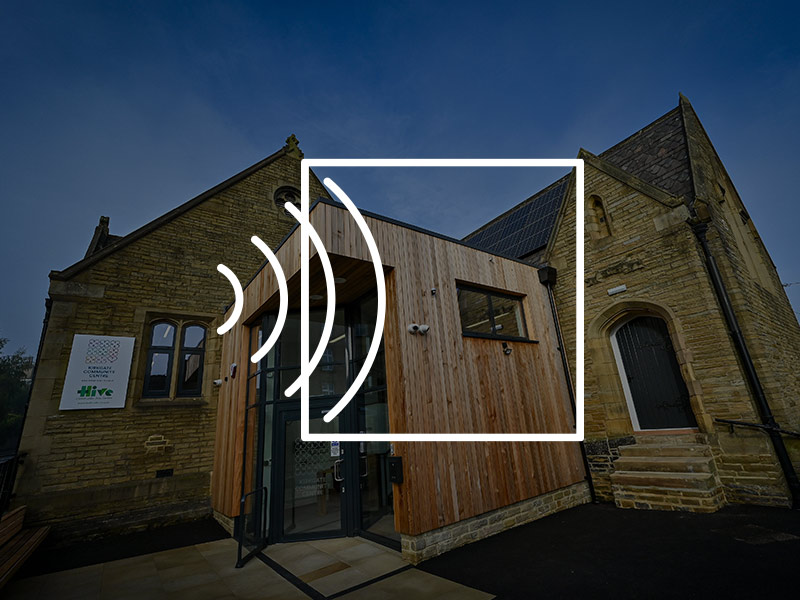
Reverberation Testing, Consultancy, Design and Installation of Acoustic Panelling.
Who we work with